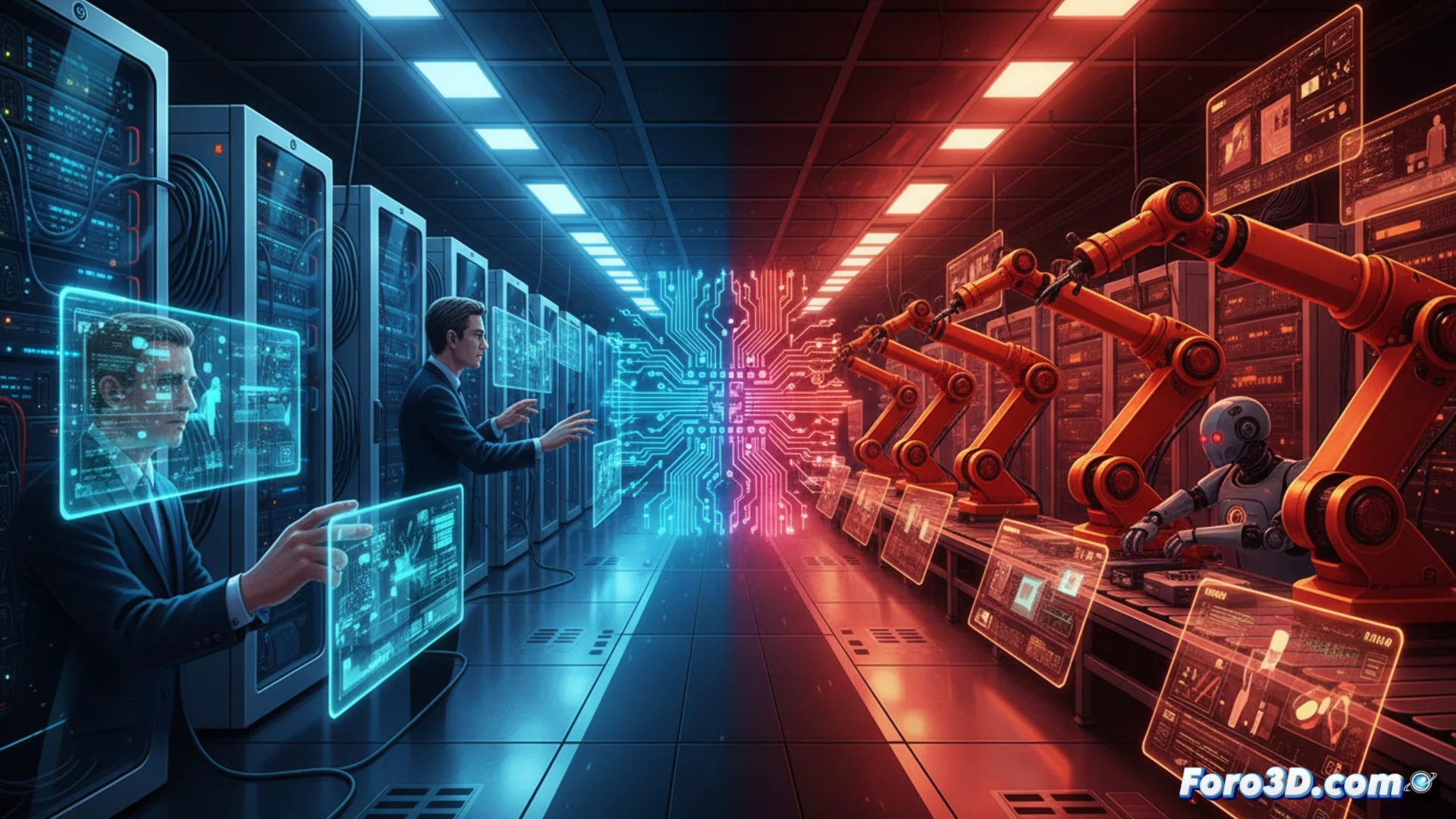
The Artificial Intelligence Rivalry Between the United States and China Maintains Divergent Strategies
The global landscape of artificial intelligence continues to be marked by the struggle between two powers. Each nation pursues a different path to achieve technological supremacy, a duel that shapes the future of this discipline. 🤖
The United States Consolidates Its Leadership at the Frontier of Knowledge
The U.S. position is characterized by its ability to innovate and create the most powerful fundamental models. This advantage is supported by key pillars: nearly exclusive access to technology for manufacturing advanced chips, a very solid network of data centers, and a massive flow of capital from companies and the government. Its strategy focuses on pushing the limits of what is possible.
Key Factors of the U.S. Approach:- Dominance in researching and developing cutting-edge AI models.
- Control over the supply chain of high-performance semiconductors.
- Large-scale investments from the private and public sectors.
True intelligence might be the one that manages to move in this complex geopolitical chessboard without destabilizing the system.
China Accelerates Its Progress with an Autonomous Ecosystem
Meanwhile, China has managed to close the gap at a remarkable pace. The country not only deploys its own high-performance models but also integrates AI aggressively into its productive fabric. Sectors such as manufacturing goods, providing services, and designing robotics adopt these technologies rapidly. 🚀
Pillars of the Chinese Drive:- An immense volume of data to train systems.
- A broad and growing base of specialized engineering talent.
- Decisive state support and long-term strategic backing.
A Competition with Profound Global Implications
This contest transcends the merely technical. It has clear geopolitical and economic dimensions. The United States has implemented measures such as imposing tariffs and limiting chip sales to try to maintain its superiority. Although there are spaces for collaboration in research and setting standards, tensions persist, especially regarding how to adopt, regulate, and use AI for industrial and defense purposes. The global scenario depends on how this rivalry is managed. 🌍