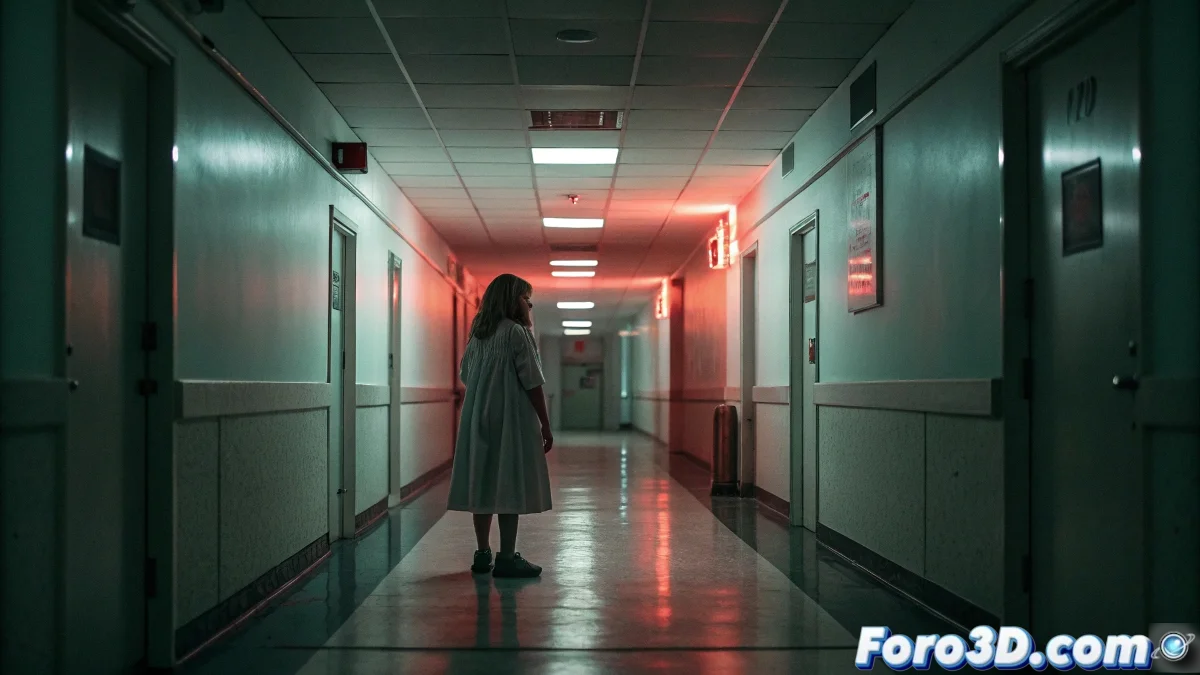
When smiles turn into nightmares 😵💫😃
The-Artery has achieved in Smile what few horror movies manage: making every frame breathe discomfort even before anything explicitly terrifying happens. Their visual effects don't jump at the viewer, but slowly seep into their perception, like the movie's cursed smile.
"We weren't creating monsters, we were cultivating visual discomfort"
Anatomy of a cursed smile 👁️👄👁️
Their most unsettling interventions:
- Facial morphing that preserves recognizable features... until it doesn't 👤
- Spatial deformations that challenge perception 🌀
- Lighting that seems to "breathe" with the character's anxiety 💡
Technology to destabilize 🖥️⚡
Horror tools:
- Compositing in Nuke with layers of altered reality 🎭
- Deformation simulations based on psychological stress 🧠
- Color treatment that induces subliminal tension 🎨
Details that burn into the retina 👁️🔪
Key elements:
- Shadows that smile when no one is looking 👤
- Mirror reflections that don't match reality 🪞
- Camera movements that generate subconscious vertigo 🎥
The true terror of The-Artery's work lies in its subtlety: when the protagonist looks at someone, you're never sure if what you see is real or her distorted perception. That visual ambiguity - achieved through almost imperceptible effects - is what makes Smile stay with you long after the credits.
Lessons for artists of fear 🎓👻
This project teaches that:
- The most effective horror is the one you can't point to with certainty 👁️
- The best visual effects are the ones the brain notices... but not the eyes 🧠
- Lighting can be as disturbing as a monster 💡
The-Artery didn't just create effects for Smile - they designed a visual infection that spreads in the viewer's mind. And if after watching it every smile seems suspicious... it's not you, it's that their digital horror works too well. 😃⚰️
Chilling fact: For the facial expressions, they studied recordings of patients with neurological disorders, replicating how the brain can distort familiar faces. 🏥👨⚕️