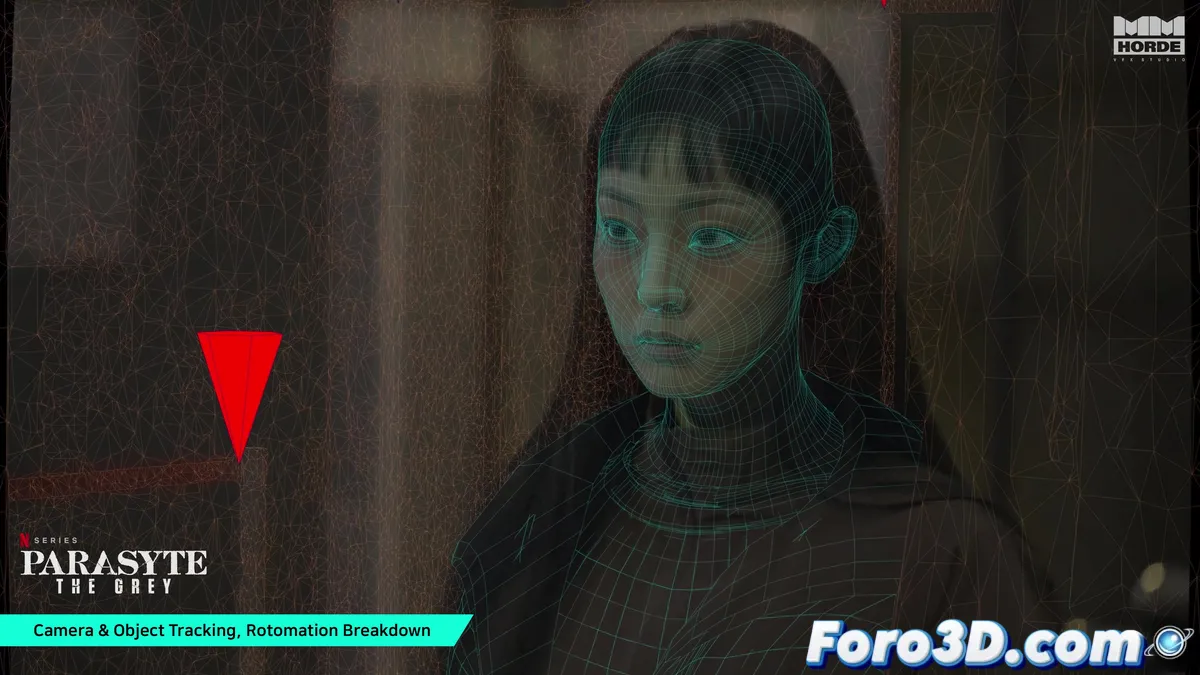
Rotoscoping is a technique that allows for the digital recreation of an actor's or object's movements in a three-dimensional environment. This process demands millimeter precision, especially in areas like the face, where any deviation can affect the scene's credibility. In the series Parasyte: The Grey, the studio MM HORDE used this technique to ensure that the digital characters integrated naturally with the live-action footage.
Challenges in Visual Effects Production
One of the most significant challenges in creating visual effects is working with scenes that feature unpredictable camera movements or abrupt lighting changes. In Parasyte: The Grey, the early scenes, filmed in a dynamic environment, required extremely precise camera tracking. This process was essential to maintain coherence between the digital elements and the real world, ensuring the characters appeared physically present in the scene.
The perfect integration between the real and the digital is the result of meticulous and detailed work.
The Importance of Precision
In most shots, the MM HORDE team applied detailed rotoscoping to key areas like the face and neck, while a more general approach was used for other parts of the body. This methodology allowed the animators to optimize their work, achieving fluid and realistic movements for the digital characters.
- Facial Rotoscoping: Essential for capturing realistic expressions.
- Camera Tracking: Key to maintaining visual coherence.
- Digital Integration: Fundamental for creating believable scenes.
This approach not only highlights MM HORDE's expertise in techniques like matchmoving but also their ability to overcome technical challenges in visually complex environments. Thanks to their work, Parasyte: The Grey achieved a perfect balance between live-action and digital effects, delivering a visually impactful experience.