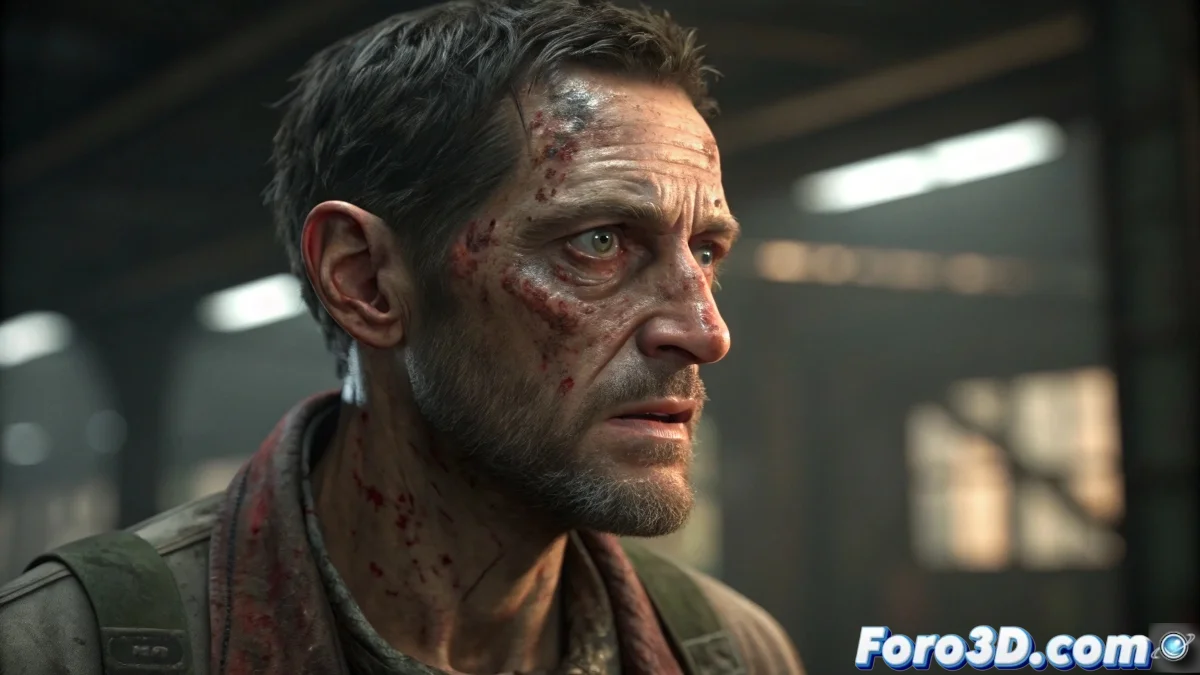
When the Grotesque Becomes (Digital) Art 🤮🎨
The breakdown of The Substance by Bryan Jones is a visual feast for lovers of well-executed body horror. What starts as practical makeup ends as a digital nightmare that would make Cronenberg vomit. And the best part: every step is meticulously documented so we can learn to replicate this repulsively successful effect.
From Silicone to Pixel: A Perfect Marriage
The secret lies in the seamless transition between:
- Physical prosthetics with markers for tracking
- Surgical rotoscoping in After Effects
- Organic 3D geometry modeled in Blender
- Perfect integration in Nuke
Key fact: "Prosthetics are not just a base; they are a reference for lighting and texture for digital elements," explains Jones.
Expressing Emotions Without a Full Face 🎭
The star technique for preserving the performance:
- Performance capture with multiple cameras
- Projection onto 3D facial mesh
- Simplified rig for "missing" areas
- Manual adjustment of micro-expressions
💡 For 3ds Max users: You can achieve something similar with Camera Mapping and the Skin Wrap modifier to transfer animation to damaged geometry.
The Details That Generate Disgust (Scientifically Proven)
Key elements of visual success:
- Metaballs to simulate liquefying tissues
- Layers of variable moisture in exposed areas
- Simulation of non-Newtonian fluids in Nuke
- Textures of subdermal layers in Substance Painter
Workflow for the Brave
-
Organic Modeling:
Professional: Blender
Alternative: 3ds Max + ZBrush -
Liquid Simulations:
Professional: Houdini
Alternative: Phoenix FD -
Compositing:
Professional: Nuke
Alternative: After Effects + Element 3D
✨ Bonus for foro3d Artists
Combine these tools in 3ds Max for your body horror:
- TyFlow - Realistic flesh simulations with dynamics
- Substance Painter + vertex maps - Organic putrefaction
- Krakatoa - "Disgustingly realistic" particles
- Morph targets - Decomposition transitions
Perfect for indie horror projects or to pleasurably traumatize in your demo reel! 👨🎨
The True Test of Quality
As a general rule in body horror: "If when reviewing your work you need a break to avoid fainting, you're on the right track." Jones not only achieved this but also documented the process so we can suffer (and learn) just like him. 👏
"In body horror, when the client asks 'Can we make it less... visceral?' that's when you know your work is done." - Anonymous, special effects artist.