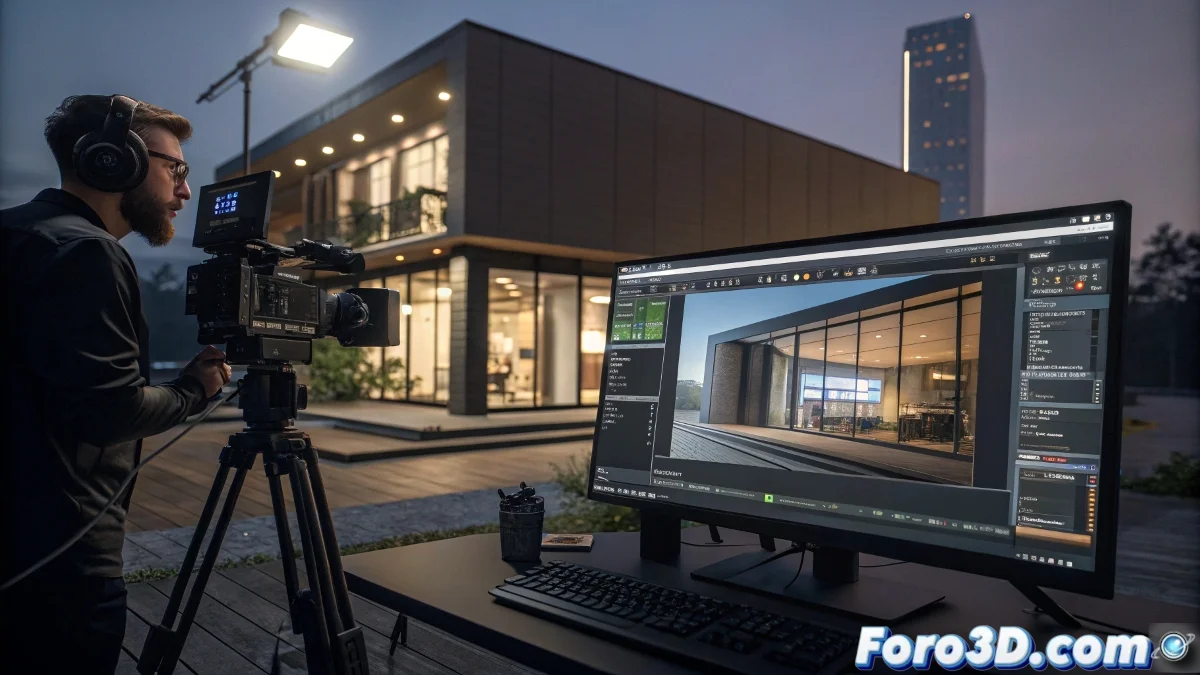
When the Real World and 3D Decide to Go Hand in Hand (Even If They Sometimes Fight)
Imagine recording a video of your house and then, like digital magic, being able to open the door and enter a 3D version of the interior that doesn't exist. This is guided animation, where reality and the virtual world give each other an awkward hug that sometimes works and others... well, let's say it requires therapy. 🏠➡️💻
The Art of Making a Camera Obey
The secret to making this real-virtual marriage work lies in camera tracking, a process that:
- Analyzes every movement of your real camera like an obsessive detective
- Creates reference points that would make a surveyor cry
- Reconstructs the movement in 3D so everything matches... or at least tries to
In Blender, the Movie Clip Editor is used, while 3ds Max prefers plugins with names that sound like magic formulas. 🧙
Tips to Avoid Looking Like a Horror Reality Show
To prevent your transition between real and 3D from looking like a B-movie effect:
- Record with smooth movements, as if carrying a full cup of coffee
- Make sure the lighting in both worlds gets along well
- Test, fail, and test again until it stops being embarrassingly awkward
In the world of guided animation, patience is not a virtue, it's a survival requirement.
When everything works, the result is magical. When it doesn't... well, you can always say it's a artistic experiment about the ephemeral nature of reality. 🎨
And remember: if your 3D camera ends up pointing at the ground while the building floats in the sky, it's not a mistake, it's conceptual art. At least that's what we tell the client. 😅