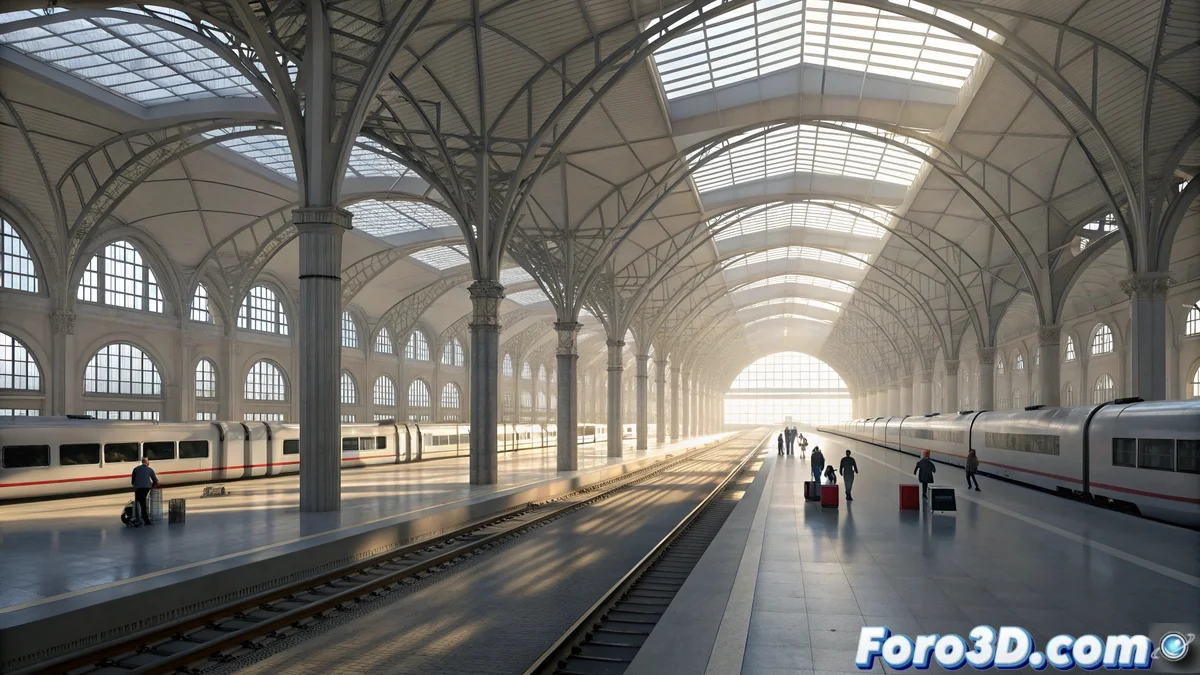
The Architectural Paradox of Spanish Intermodal Stations
In the Spanish railway landscape, a fundamental contradiction is observed where the architectural magnificence of high-speed stations contrasts with the operational fragmentation of their multimodal connections. These spaces, designed as integrated transport hubs, end up functioning as islands of modernity isolated by incomplete peripheral infrastructures 🚄.
Discrepancy between planning and operational reality
Intermodal projects usually begin with ambitious urban planning visions that anticipate complete developments of metro and bus networks. However, temporal misalignments between the construction of the main station and the development of complementary infrastructures generate this structural disconnection. While authorities argue delays due to budgetary limitations or technical complexities, users must face complicated transfers that contradict the very essence of intermodality.
Factors perpetuating the problem:- Lack of coordination between different administrations and execution timelines
- Financial difficulties that postpone secondary connection works
- Initial underutilization that makes it difficult to justify new investments
The promise of fluid mobility fades when underground corridors remain closed or accesses to other networks never materialize
Consequences for the user experience
For travelers who frequent these facilities, the experience turns into a tour through underutilized spaces where signage directs to ghost connections. Indicators promising links to the metro or bus correspondences end at closed doors or corridors leading to provisional areas 🗺️.
Direct impacts on mobility:- Additional waiting times and need for complementary transportation
- Spatial disorientation and perception of systemic inefficiency
- Deterioration of the high-speed image as a cohesive system
The duality of the contemporary traveler
In these temples of modern mobility, users can contemplate impressive architectural structures while practicing the urban sport of seeking the functional exit among multiple options leading to non-existent destinations. This experience combines the excitement of travel with labyrinthine frustration, creating a paradox where design excellence clashes with the precariousness of practical connections 🔄.