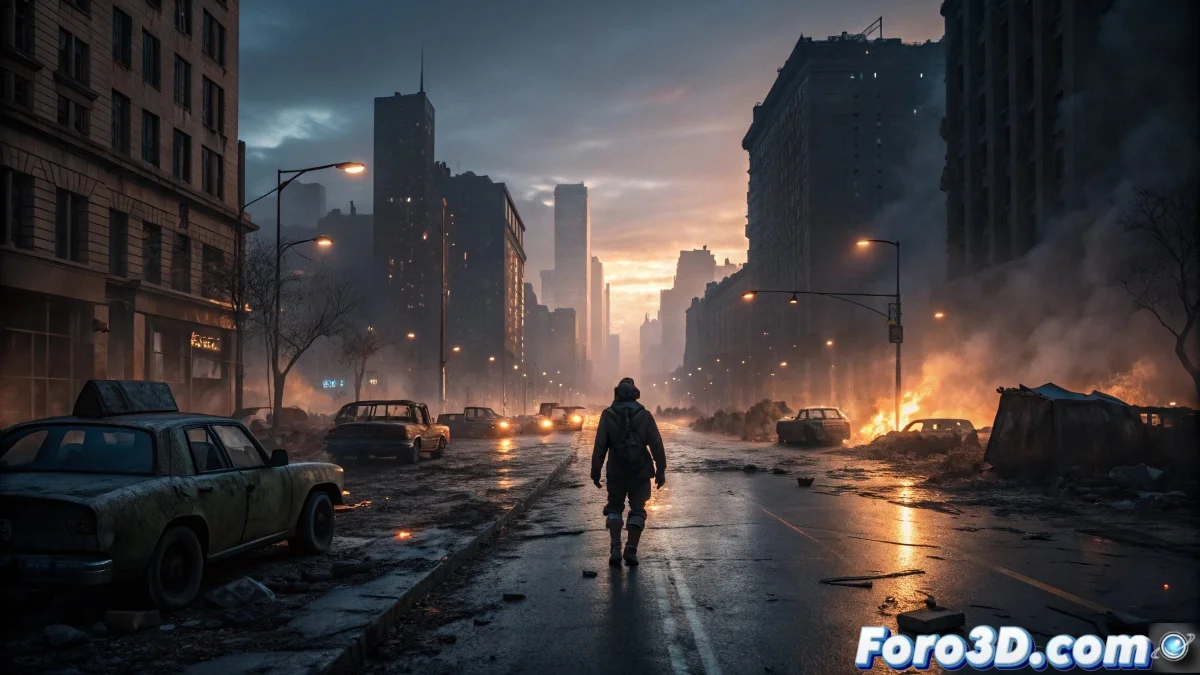
The Angriest Virus in Cinema Returns to Ruin Our Decade 🦠
Just when we thought we'd overcome the scares of the 21st century, the rage virus decides that 28 years is enough for a second round. In 28 Years Later, the pandemic returns fiercer than ever, proving that in the world of cinema, viruses never learn to stay in the lab. Aaron Taylor-Johnson joins the chaos with a role that, according to him, made him sweat more than a 4K render without proper ventilation.
When Visual Effects Are More Contagious Than the Virus
To create this luxury apocalypse, the production team resorted to the entire digital arsenal available. From Blender for modeling destroyed cities to Houdini for simulating hordes of infected running faster than delivery deadlines. The result is so realistic that some viewers might end up checking their body temperature after the screening. 🌡️
"Rendering the end of the world has never been so much fun," confesses a visual effects technician with a laugh.
Tools That Made the Chaos Possible
- Blender: For destroying cities without paying fines for illegal demolition
- Houdini: Creating digital infected who never ask for breaks
- Unreal Engine: Lighting apocalyptic scenes with enviable realism
- Redshift: Rendering terror at inhuman speeds
A Post-Pandemic World (Fake) Better Than the Real One
What's fascinating about this production is how it makes a devastated world seem more coherent than our current reality. The empty streets make more sense than some political decisions, and at least here the infected have a valid excuse for their behavior. 😅 Every detail, from gas masks to destroyed buildings, is designed to immerse the viewer in a visually stunning nightmare.
Why This Sequel Might Be Better Than Reality
- Problems are solved in two hours (credits included)
- Special effects are more predictable than the news
- At least here you know exactly what to run from
In the end, the movie leaves us with a deep reflection: if this is what happens after 28 years, maybe we should start building bunkers now. Or at least update our graphics cards for when the digital virus reaches our PCs. 🖥️💥