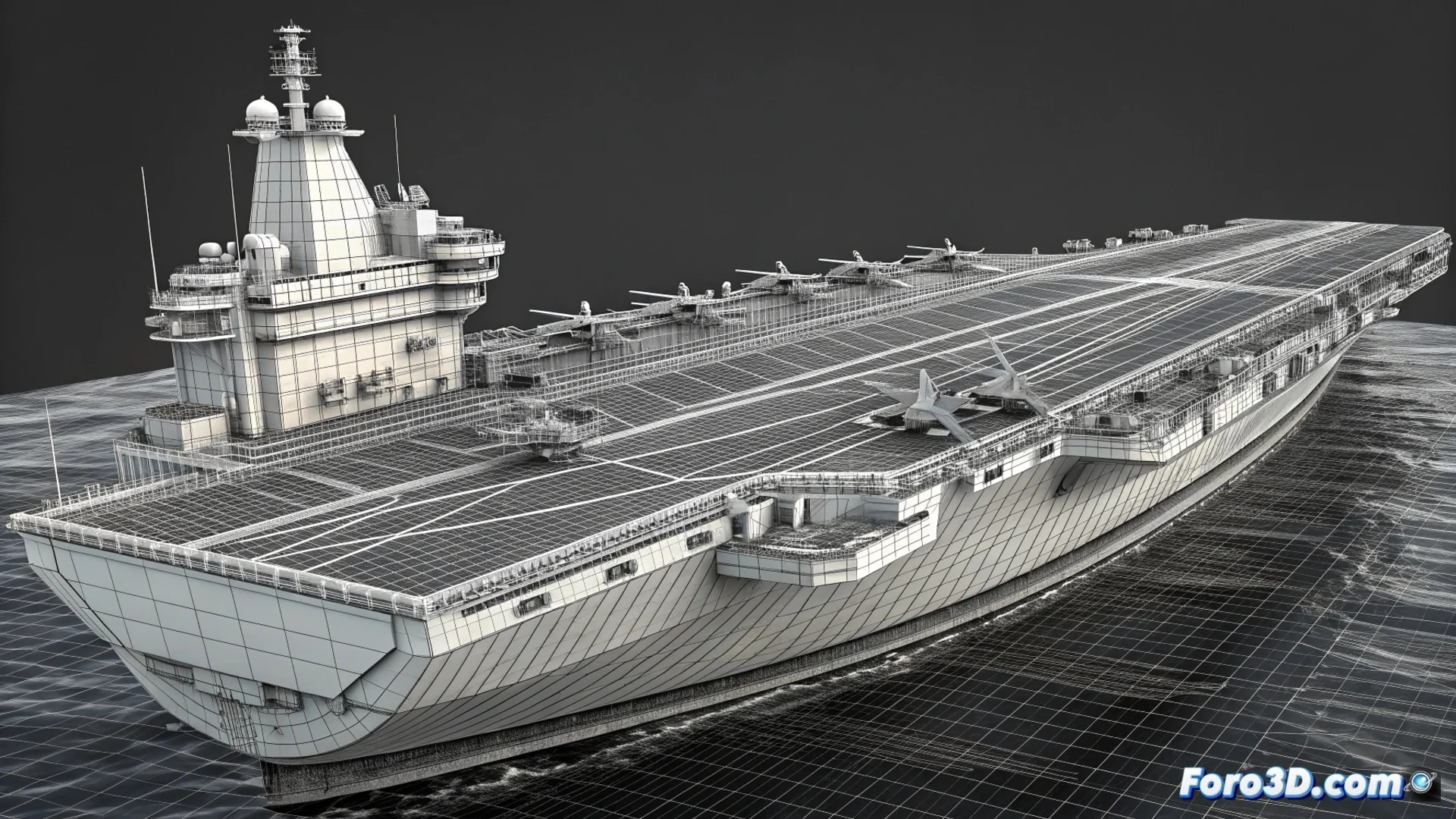
The Queen Elizabeth Aircraft Carrier Operates with Short Takeoff and Vertical Landing Aircraft
The Royal Navy deploys its flagship, the HMS Queen Elizabeth, a colossus of the sea that redefines how to project air power from the ocean. Its STOVL (Short Takeoff and Vertical Landing) architecture is fundamental for operating the advanced fleet of stealth fighters F-35B, enabling complex missions without the need for catapults. 🚢✈️
Innovation in the Flight Deck and Superstructure
One of its most distinctive features is the ski jump integrated into the bow. This design allows aircraft to take off with greater armament and fuel loads. Additionally, it breaks with the tradition of a single bridge, incorporating two separate islands. The first island handles the ship's navigation, while the second exclusively coordinates flight deck operations. This division not only better organizes the work but also makes the aircraft carrier more resilient to potential combat damage.
Key Elements of Its Operational Design:- Lateral Elevators: Two elevators on the starboard side move aircraft between the hangar and the deck, freeing up vital space in the main operations area.
- Expanded Sponsons: These structures on the sides house defensive systems and, crucially, expand the usable area of the flight deck.
- Air Capacity: It can carry and operate an air group of up to forty aircraft, combining F-35B fighters and Merlin helicopters for multi-role missions.
The separation of functions between the two islands represents a significant advance in aircraft carrier design, optimizing workflow and system redundancy.
Defensive Systems and Attack Power
To protect itself from immediate threats, the Queen Elizabeth is equipped with a set of defensive weapons. Its main shield against missiles and approaching aircraft consists of three Phalanx CIWS close-in defense systems. These are complemented by several 30 mm automatic machine guns and miniguns. However, its true offensive power lies in its embarked air wing. The F-35B aircraft are responsible for carrying out surface attack missions, air superiority, and reconnaissance, providing formidable projection capability.
Components of Its Defense and Attack:- Cap Defense