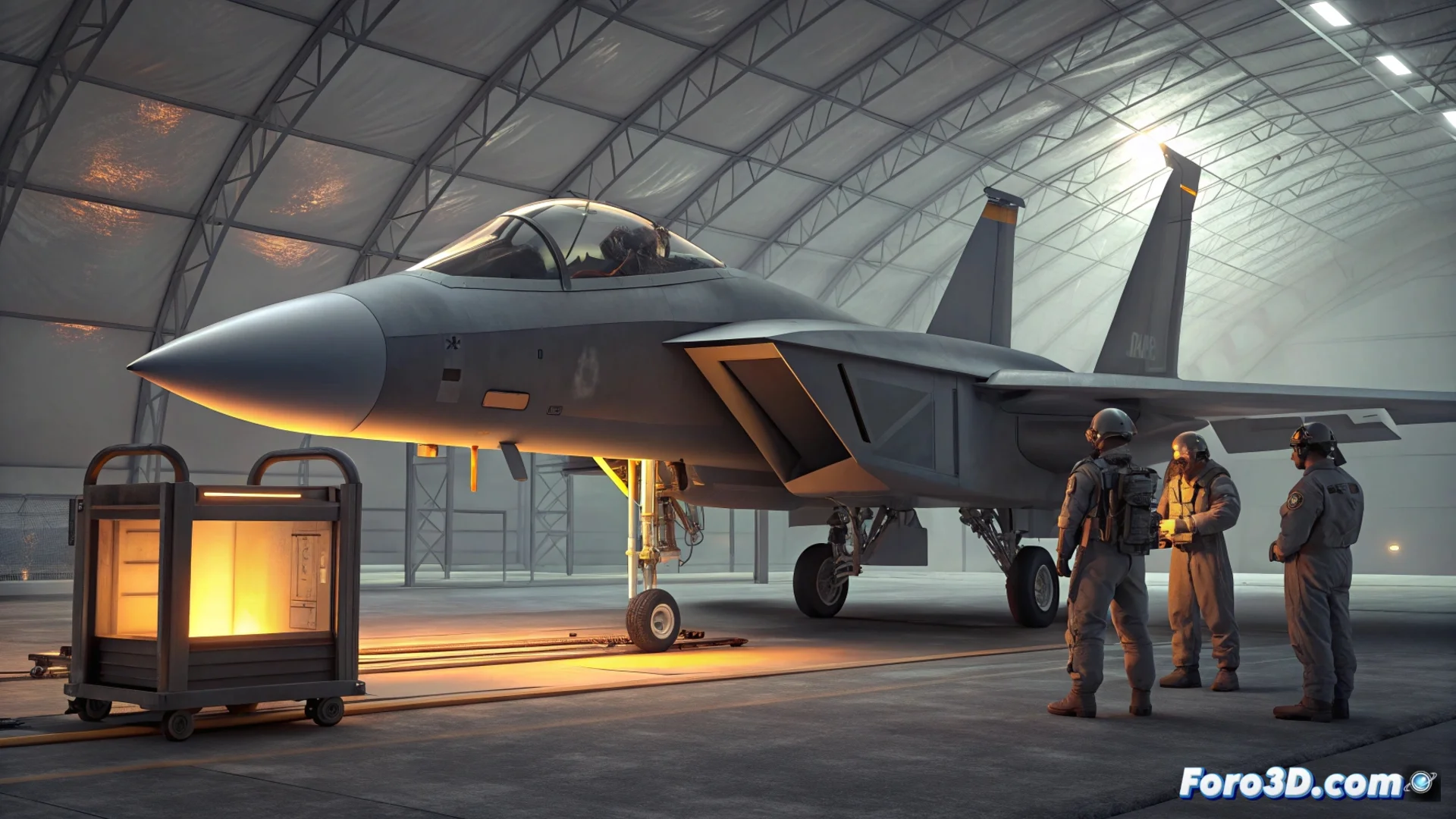
Air Force and Marine Corps Repair an F-15 in Hours Using Additive Manufacturing
A joint team from the U.S. Air Force and the Marine Corps has carried out a critical repair on an F-15 Eagle fighter jet using additive manufacturing. The damaged component, a vital support for the landing gear door, was fabricated in situ with a metal 3D printer, reducing the aircraft's downtime from days or weeks to just a few hours. This action demonstrates a radical shift in how logistical support is approached in operational environments. 🛩️⚙️
A Process That Merges Digitization and Local Production
The method avoided reliance on the traditional supply chain. The technicians did not wait for a replacement part from the original manufacturer. Instead, they scanned the damaged part in 3D to generate a precise digital model. Then, engineers redesigned the component, optimizing it specifically for manufacturing with a steel alloy 3D printer. The machine used, a directed energy deposition additive manufacturing printer, melted the metal layer by layer to build the solid part. After printing, the support only required minimal machining before being installed on the aircraft.
Key Steps in the Procedure:- Digitize the damaged component using 3D scanning to capture its exact geometry.
- Redesign the part digitally, adapting it to the parameters of metal 3D printing.
- Manufacture the new part in situ using a directed energy deposition printer.
- Finish the part with minimal mechanical post-processing for immediate installation.
Waiting months for a twenty-dollar screw while an eighty-million-dollar aircraft remains grounded is not efficient. This technology changes that equation.
Integrated into the Air Force's AeroTech Strategy
This repair is not an isolated case. It is part of the Air Force's AeroTech program, which seeks to integrate advanced technologies such as additive manufacturing and artificial intelligence to maintain aircraft. The main objective is to increase fleet availability and reduce long-term logistics costs. The success achieved at Mountain Home Air Force Base sets a precedent for applying similar methods to other systems and aerial platforms.
Strategic Impacts of the Program:- Increase the operational availability of combat aircraft.
- Reduce dependence on long and complex spare parts supply chains.
- Enable on-demand production of components in remote locations or on aircraft carriers.
- Transform military operations planning by shortening maintenance timelines.
A Future with On-Demand Logistics
The ability to manufacture critical spare parts on-site and when needed represents a significant advancement. This approach not only speeds up aircraft repairs but also redefines military inventory and supply chain concepts. Additive manufacturing enables sustaining operations in environments where access to conventional spares is limited or slow, paving the way for more agile and resilient defense logistics. 🔧✈️