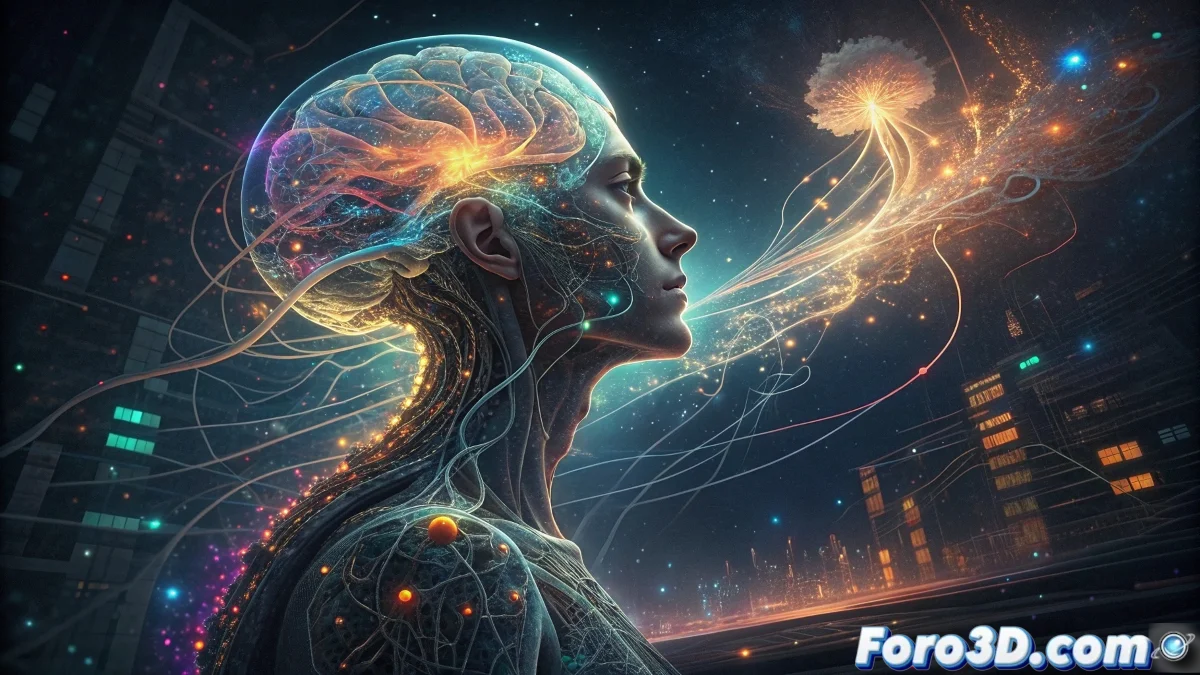
The Mirror That Devours Its Own Reflection
A disturbing phenomenon is emerging in the artificial intelligence ecosystem: generative algorithms are beginning to feed on their own output, creating a self-referential loop that worries researchers and developers. This cycle, where AI consumes synthetic content generated by other AIs, raises serious questions about the future evolution of these systems and the quality of their results. What began as a tool to expand creativity could be turning into an echo of itself.
The fundamental problem lies in the progressive loss of connection with the original human data that gave meaning and diversity to the initial models. As the percentage of synthetic content in training datasets increases, algorithms begin to repeat patterns and amplify existing biases in a cycle that feeds back indefinitely.
Training AI with AI output is like trying to learn about the world by only looking at selfies
Consequences of the Self-Referential Loop
- Degradation of quality in successively generated content
- Loss of creative and conceptual diversity in outputs
- Amplification of errors and artifacts through generations
- Stylistic homogenization that reduces innovation
The Slow-Motion Model Collapse
Researchers call this phenomenon model collapse, where AI systems gradually forget the complexity of the real world by feeding primarily on simplified representations created by their predecessors. It is similar to making a photocopy of a photocopy repeatedly: each iteration loses information and introduces distortions that accumulate until the result becomes unrecognizable compared to the original.
In fields such as digital illustration and creative writing, this effect is already observable. Artistic styles begin to converge toward predictable mediocrity, while generated language loses the nuances and peculiarities that make human expression unique. The irony is that the more successful a generative AI is, the more likely its output is to contaminate the ecosystem from which it emerged.
Proposed Solutions to Break the Cycle
- Strict human curation of training datasets
- Mandatory labeling of AI-generated content
- Preservation of archives of original human data
- Development of advanced synthetic content detectors
The community faces the technical and ethical challenge of maintaining a constant flow of genuine human data to serve as an anchor to reality. Some proposals include creating protected reserves of human content for training, similar to natural parks in the digital world, while developing mechanisms to identify and filter synthetic content from learning cycles.
Artificial creativity needs to be anchored in human experience or it will become an empty echo
And as the algorithms gaze eternally into digital mirrors, some developers wonder if they are creating the ultimate tool or the first system that will bore itself into obsolescence 🌀