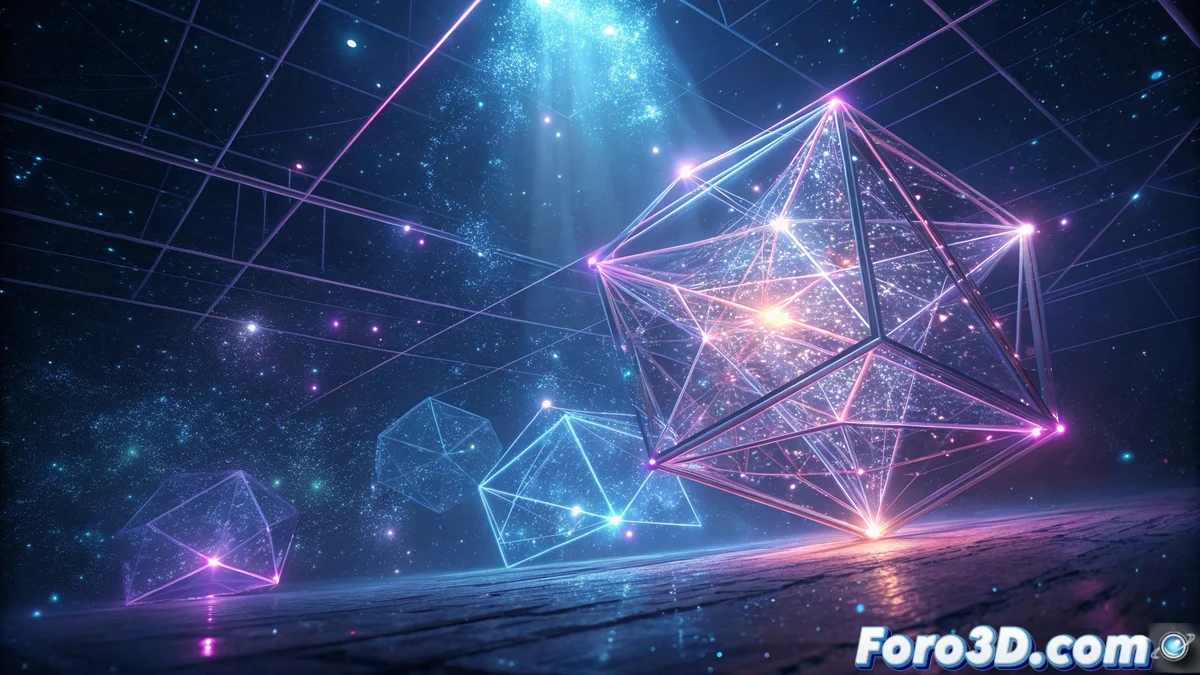
The Aesthetics of Imperfection in Contemporary Digital Art
In the current creative landscape, a transformative current emerges that grants artistic value to elements previously considered merely functional or even defects. This aesthetic revolution celebrates the hidden beauty in the intermediate stages of the digital creative process 🎨.
Wireframes as Visual Protagonists
Wireframe structures have transcended their traditional technical role to become compositional elements with intentional artistry. Contemporary creators consciously manipulate polygonal density, experiment with edge transparencies, and apply non-realistic color palettes to these structural bases.
Characteristics of artistic wireframes:- Deliberate exhibition of pure geometric complexity
- Controlled manipulation of polygon density and transparency
- Implementation of non-realistic color schemes for expressive purposes
What was once the hidden skeleton is now displayed as the main visual texture, revealing the organic beauty of digital structures
Nodes and Errors as Creative Language
Node systems in software like Blender, Houdini, and Unreal Engine abandon their exclusively technical function to transform into visual diagrams with intrinsic aesthetic value. Connections between shaders, computation nodes, and textures are organized with compositional sensitivity.
Elements of the node-glitch language:- Node diagrams designed as harmonious visual compositions
- Deliberate incorporation of calculation errors as narrative elements
- Rendering artifacts used as disruptive aesthetic resources
The Paradox of Controlled Glitch
It is particularly significant that after decades pursuing technical perfection, artists now dedicate meticulous efforts to artificially recreate those same errors they once eliminated. The glitch has evolved from a technical accident to a calculated aesthetic resource that requires both technical mastery and artistic sensitivity ⚡.
This paradigmatic shift establishes a fascinating dialogue between the planned and the accidental, between absolute control and creative chaos, generating works where controlled imperfection deeply enriches the visual and emotional narrative of contemporary digital art.