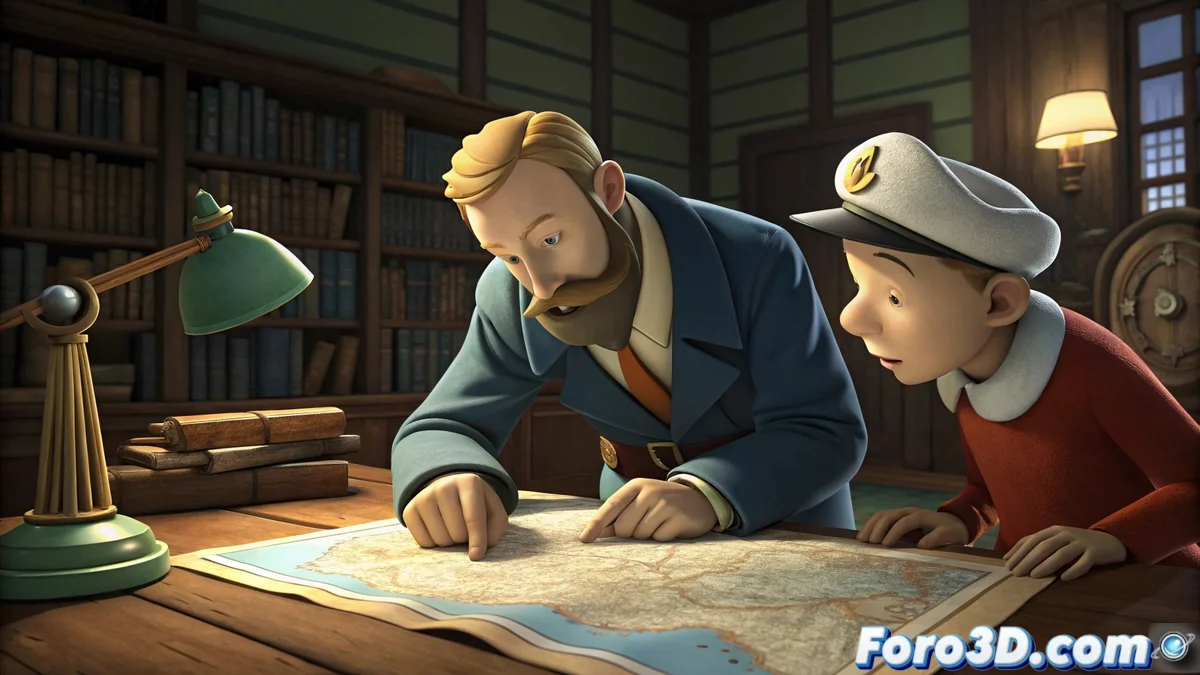
The Adventures of Tintin and the Art of the Clear Line
The comic series The Adventures of Tintin features the investigations of a young Belgian reporter and his inseparable fox terrier, Snowy. His travels lead him to solve mysteries that blend espionage, adventure, and science fiction, teaming up with memorable figures like the temperamental Captain Haddock and the brilliant but absent-minded Professor Calculus. 🌍
Hergé's Visual Signature
Georges Remi, known as Hergé, developed a distinctive graphic method called the clear line. This style is characterized by using uniform and defined outlines, avoiding cross-hatching or chiaroscuro shading. The characters' figures maintain a simple and highly expressive design, while the backgrounds and settings exhibit an exceptional level of detail. This deliberate contrast creates a coherent and easy-to-read graphic universe.
Key Principles of the Clear Line:- Clean and Homogeneous Strokes: They do not fade and define all shapes with precision.
- Expressive and Simple Figures: Characters are drawn clearly to convey emotions immediately.
- Hyper-Detailed Scenarios: Environments, from cities to vehicles, are documented and drawn with almost photographic rigor.
“Drawing is not an ornament. It is the very basis of narration.” – Reflection attributed to Hergé's approach.
Precision as Narrative
Hergé built his stories on meticulous visual research. For each adventure, he documented locations, clothing, technology, and architecture, ensuring that places like Shanghai, the Congo, or the lunar surface were represented faithfully. This rigor not only added realism but also served to narrate: a precise drawing allowed the reader to understand complex mechanisms and follow the action without confusion. 🔍
Examples of Documentation in the Work:- Authentic Scenarios: The streets of Brussels or the landscapes of Tibet are reproduced with accuracy.
- Plausible Technology: Artifacts, like the lunar rocket, are based on real science of the era.
- Culture and Costume: The outfits and environments reflect deep ethnographic research.
A Legacy of Clarity and Adventure
The result is a body of work where art and narration are inseparable. The clear line is not just an aesthetic style; it is a tool for telling stories directly and effectively. Characters like Calculus, always absorbed in improbable inventions, inhabit a visually credible world that amplifies immersion in every mystery. Hergé's work demonstrates how disciplined and well-documented drawing can build entire and enduring universes. ✨