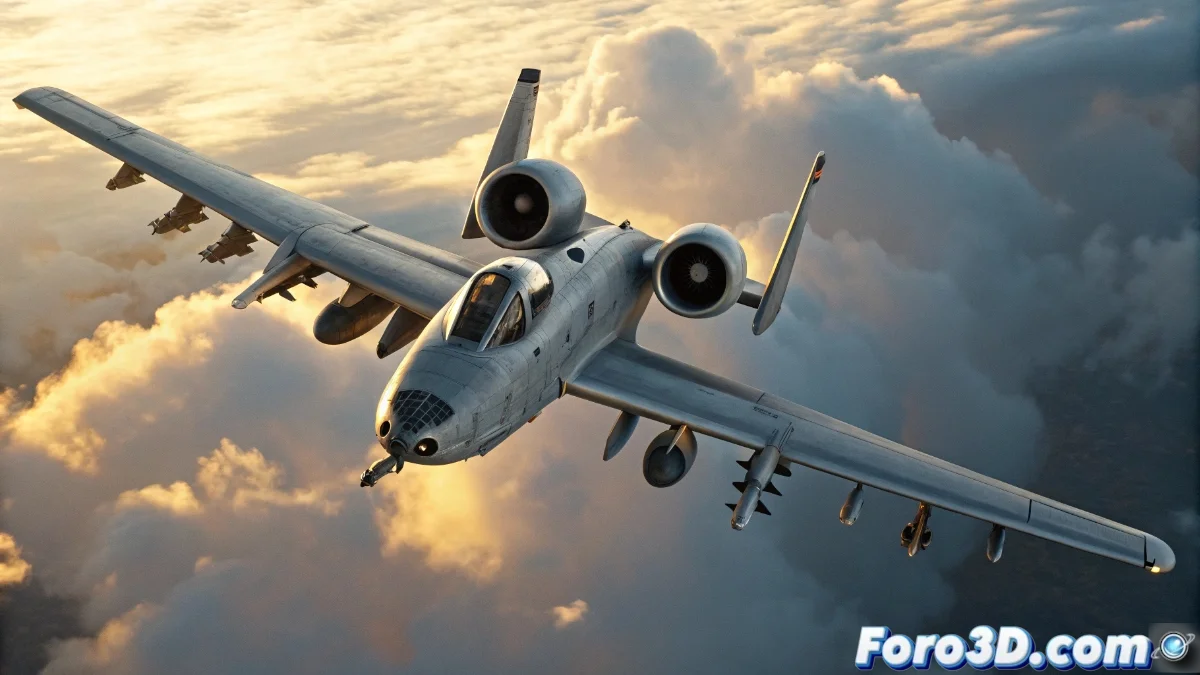
The A-10 Thunderbolt II: Features and 3D Modeling
The A-10 Thunderbolt II represents one of the most iconic ground attack aircraft of the United States Air Force, specifically designed for close air support missions with an architecture that prioritizes durability and survivability in extreme combat environments. 🛩️
Structural Configuration and Technical Dimensions
This formidable aircraft features specific measurements that make it ideal for low-altitude operations: 16.26 meters in length, 17.53 meters in wingspan, and 4.47 meters in total height. Its design incorporates straight wings that maximize stability during subsonic flight, engines positioned on top for protection against impacts, and a reinforced cockpit that safeguards the pilot from ground threats.
Distinctive Design Elements:- Straight wing configuration for optimal low-speed flight performance
- Elevated placement of the General Electric TF34-GE-100 engines
- Armored cockpit structure with integrated titanium protection
"If a cannon could fly, it would undoubtedly be the A-10 Thunderbolt II, demonstrating surprising elegance in aerial maneuvers"
Weapon Systems and Operational Versatility
The offensive heart of the A-10 lies in its 30 mm GAU-8 rotary cannon, a devastating system capable of piercing armor with high-velocity projectiles. Complementing this primary armament, it has eleven hardpoints that can carry up to 7,200 kilograms of external ordnance, including various types of missiles, guided bombs, and unguided rockets.
Military Load Capabilities:- Seven-barrel GAU-8/A cannon with a high rate of fire
- Multiple pylons for air-to-ground and air-to-air weaponry
- Adaptability for different mission profiles
Essential Guide for Three-Dimensional Modeling
To digitally recreate this aircraft with technical precision, it is essential to capture its characteristic elements such as the bubble-shaped canopy, the specific location of the engines in the rear section, and the reinforced landing gear. Textures must faithfully replicate the titanium cladding around the cockpit and the structural details of the weapon mounts under the wings. 📐
Critical Aspects for Realistic Modeling:- Exact geometry of the 360° visibility bubble canopy
- Details of the load pylons and mounting systems
- Accurate recreation of the titanium armor (bathtub)
Final Considerations for Digital Representation
Creating an authentic 3D model of the Thunderbolt II requires consulting official technical blueprints and reference photographic material to ensure exact proportions and detailed surfaces. This aircraft, although designed for an eminently functional purpose, features aerodynamic lines that defy its utilitarian appearance, offering a fascinating subject for visualization projects and realistic flight simulations. ✈️