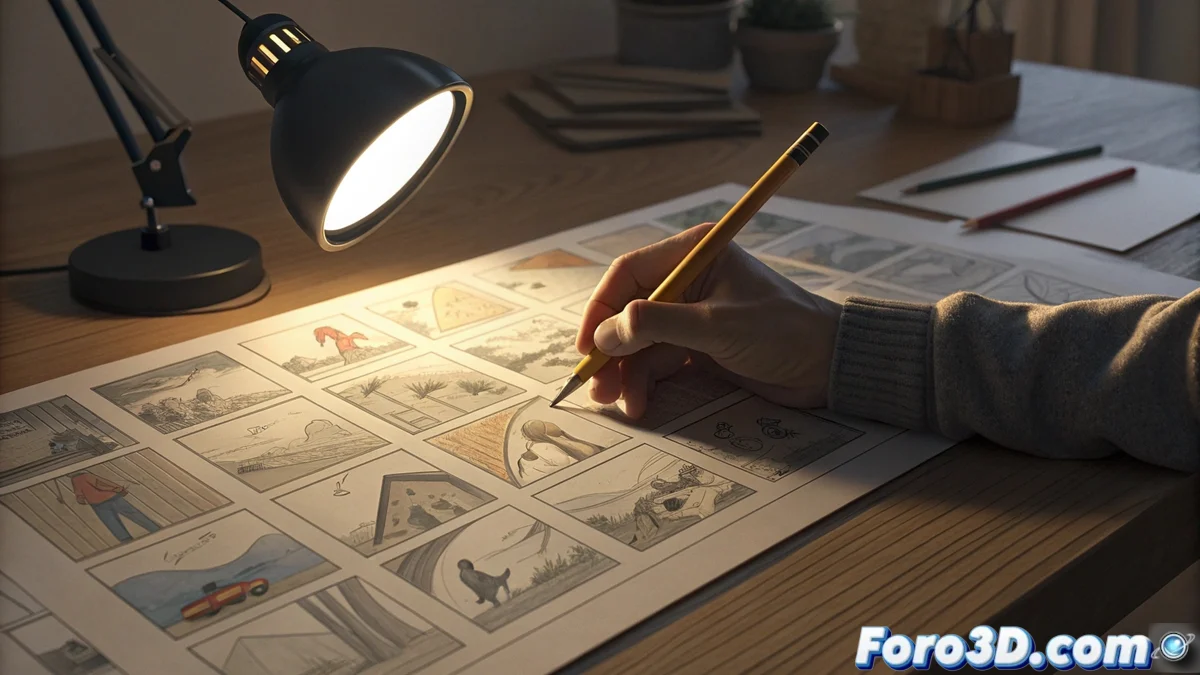
The 50 Thumbnails Technique for Exploring Ideas
In the field of design and illustration, there is a rigorous exercise known as 50 Thumbnails. This method pushes the artist to produce fifty thumbnails or quick sketches for a single theme, with the stated goal of transcending predictable solutions and finding genuinely original proposals. 🎨
A Structured Process in Three Phases
The technique is not a simple drawing marathon, but a mental journey organized into three stages that progress in complexity. Each phase has a clear goal and forces the mind to operate in different modes, gradually moving away from the conceptual starting point.
The three key stages of the method:- Phase 1: Exhaust the Immediate - The first ten sketches capture the most obvious and conventional ideas that arise when thinking about the theme.
- Phase 2: Force Variations - The next twenty sketches require altering elements, inverting compositions, and trying unusual perspectives.
- Phase 3: Think Laterally - The last twenty thumbnails are the territory of abstraction, visual metaphors, and combinations of disparate concepts.
The true value emerges after overcoming sketch number forty, when the mind seems empty and the hand works by inertia, sometimes generating the brightest spark among automatic strokes.
Deciphering Each Phase in Detail
The first stage functions as a release valve. By quickly capturing all logical and predictable ideas, the artist discards them from their mental space, creating the necessary void for new concepts to emerge. Without this step, it is difficult to escape first impressions.
What happens in the advanced phases:- The artist breaks down the main concept and recombines its parts in unexpected ways.
- They experiment with scale, placing huge elements in small contexts or vice versa.
- They seek metaphorical connections with objects, sensations, or seemingly unrelated ideas.
The Crucial Moment of Exploration
The maximum difficulty arrives toward the end, around the forty-fifth sketch. Here, the conscious repertoire is exhausted, and the artist must rely on the subconscious and the physical act of drawing. This state of "thinking with the hand" often produces the most innovative results, those that a conventional sketching process would never reveal. The technique, in essence, is a system for programming serendipity and forcing creativity to operate beyond its usual limits. 💡