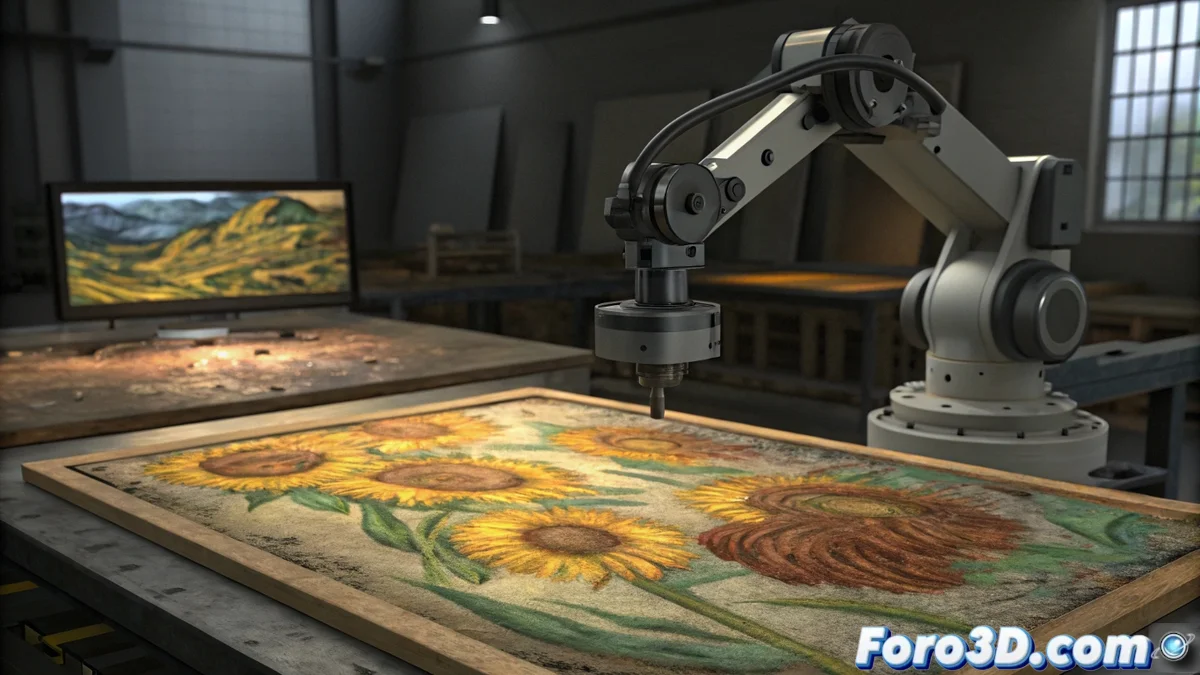
3D Technology That Detects Art Forgeries
The art world is protected with cutting-edge digital tools. To verify the authenticity of a work, 3D scanners are now used that capture the physical surface of the canvas with microscopic precision. This process documents the artist's unique fingerprint, impossible to replicate exactly. 🎨
Capturing the Painting's Topography
The first step involves using a specialized device, such as the Lucida 3D Scanner. This equipment does not photograph colors, but records the relief and texture of each brushstroke. It scans the work to generate a detailed three-dimensional map that shows the impasto, direction, and depth of the strokes. This way, an exact digital record of the physical topography of the creation is obtained.
Key Features of 3D Scanning:- Records the microtopography of each brushstroke, not just the color.
- Creates a 3D model that serves as a unique document of the work.
- Allows isolating and measuring specific regions of the canvas with great accuracy.
A forger can imitate the color or shape, but replicating the three-dimensional fingerprint of a genius is almost impossible.
Analyzing Relief Data with Specialized Software
The captured 3D data is transferred to surface analysis programs, such as GOM Inspect. In this phase, experts measure concrete parameters: the height of the impasto, the curvature of the strokes, and their spatial orientation. The power of this software lies in being able to compare the texture of a suspicious work with that of certified authentic paintings, looking for anomalies in the physical structure.
Processes in Digital Analysis:- Measure the painting's topography with millimeter accuracy.
- Isolate areas to study specific brushstroke patterns.
- Compare the microtexture with a database of original works.
Confirming Authorship with Statistics
The final stage uses tools like MATLAB to process the data statistically. Complex patterns are analyzed: how the impasto is distributed in space, the regularity or irregularity of the brushstrokes, and global textures. By comparing these patterns with the artist's known style, inconsistencies that the human eye does not perceive are detected. If the brushstrokes of a supposed Van Gogh are too orderly and statistically perfect, the technology reveals the forgery. This methodology turns the work's physical fingerprint into the definitive proof of authenticity. 🔍