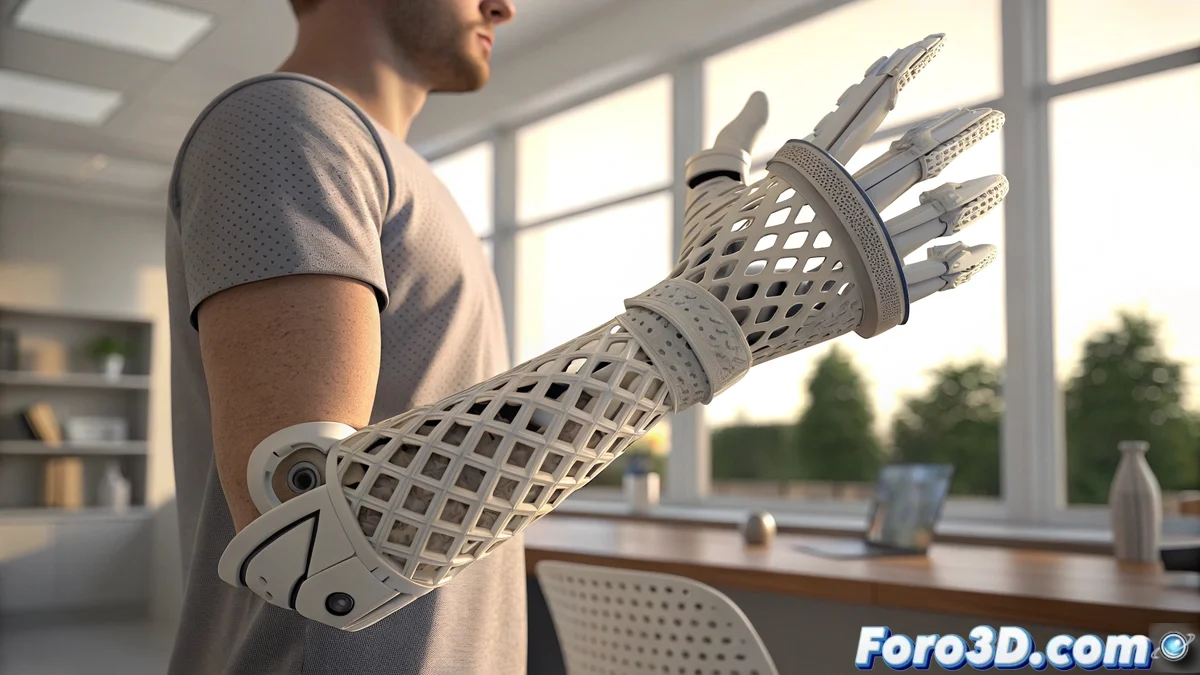
The 3D Prosthetics Revolution: Challenges and Opportunities
Additive manufacturing has burst into the field of medical prosthetics, offering completely personalized solutions that perfectly fit each patient's unique morphology. This technology enables the creation of substantially lighter and more affordable devices than conventional alternatives, radically improving user comfort and functional capabilities in daily activities. However, these promising advances coexist with significant barriers that hinder their widespread implementation and sustainable effectiveness. 🦾
Technical Limitations and Structural Performance
Although the advantages in personalization and cost-effectiveness are undeniable, prosthetics created through 3D printing often do not match the robustness and longevity of devices manufactured with traditional methods. The materials used can exhibit vulnerability to accelerated deterioration under demanding usage conditions, while structural integrity does not always meet the standards required for high-demand applications.
Main technical challenges:- Susceptibility to premature wear in intensive use situations
- Inferior mechanical resistance compared to conventional manufacturing techniques
- Complexity in incorporating advanced electronic and mechanical systems
"Sometimes it seems like we're advancing so fast with technology that we forget a prosthesis needs to withstand more than the enthusiasm of the first day, surviving falls, blows, and even the washing machine."
Regulatory and Accessibility Obstacles
The development of 3D printed prosthetics is hindered by regulatory frameworks that have not evolved at the pace of this emerging technology, generating uncertainty regarding safety and clinical efficacy parameters. Certification processes are often lengthy and costly, making it difficult for innovators to commercialize their designs. At the same time, significant inequalities persist in access to these solutions.
Implementation barriers:- Medical regulations insufficiently adapted to digital manufacturing
- Slow and economically prohibitive homologation procedures
- Disparity in access for rural and low-income communities
The Path to Technological Maturity
The evolution of 3D prosthetics requires overcoming both material limitations and systemic obstacles to reach its full potential. While advances in composite materials and printing techniques continue to improve durability, it is equally crucial to develop specific regulations and mechanisms that ensure equitable access. The future of this technology will depend on comprehensively addressing these challenges to transform promises into tangible realities that sustainably improve lives. 💡