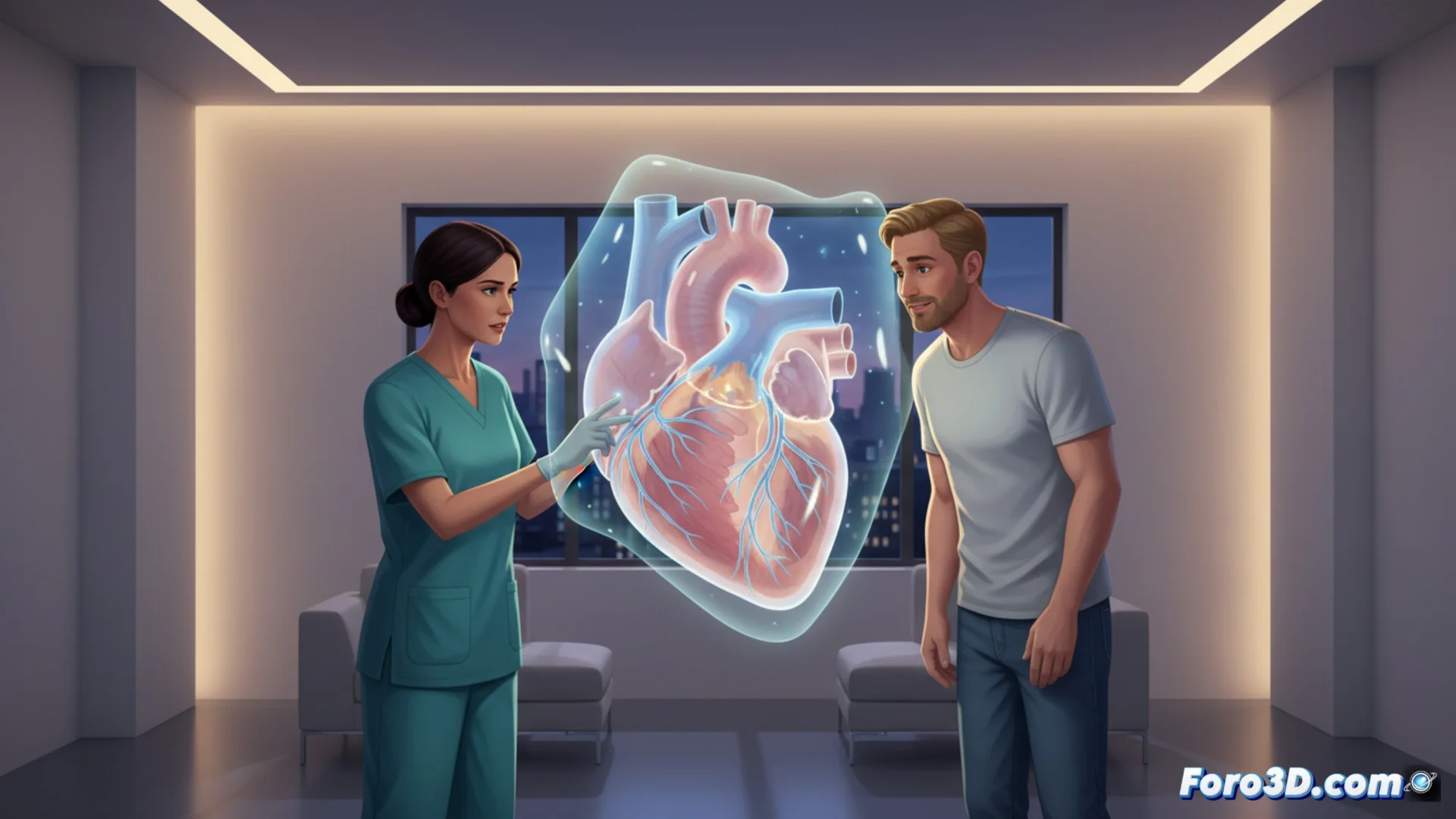
3D Animation Shows the Patient How Their Surgery Will Be
Three-dimensional animation technology is revolutionizing how patients perceive and understand their medical procedures. Instead of imagining, they can now see a precise recreation of their own operation before entering the operating room. This builds confidence and clarifies the entire process 🩺.
Creating a Virtual Replica from Scans
The starting point is diagnostic images, such as CT scans or MRIs. Specialized software processes this data to segment and digitally reconstruct the patient's specific anatomy. The result is an interactive 3D model that serves as a virtual training ground for the medical team.
Key Workflow:- Obtain and process the patient's medical images.
- Segment tissues and organs to build a faithful volumetric model.
- Plan the intervention on the model, defining trajectories and anticipating complications.
Visualizing the procedure step by step transforms an abstract explanation into a comprehensible experience.
Improving Communication and Optimizing Strategy
This tool acts as a visual bridge between the surgeon and the person who will be operated on. Customized animated simulation replaces generic diagrams, allowing the patient to give their informed consent with a much stronger knowledge base. For the professional, this planning serves as a rehearsal that can help reduce times and increase precision during the actual procedure 🔍.
Main Benefits:- The patient dispels doubts by visually understanding each phase of their operation.
- The surgeon rehearses and optimizes their strategy on a digital copy of the case.
- Realistic expectations are set, minimizing preoperative anxiety.
A Resource That Redefines the Pre-Surgical Experience
Implementing 3D animations in medicine goes beyond a simple visual. It represents a profound change in how surgery is communicated, planned, and executed. By offering a dynamic preview, it empowers the patient and provides the surgeon with an additional layer of preparation, making the path to the operating room more transparent and safe for everyone 👍.