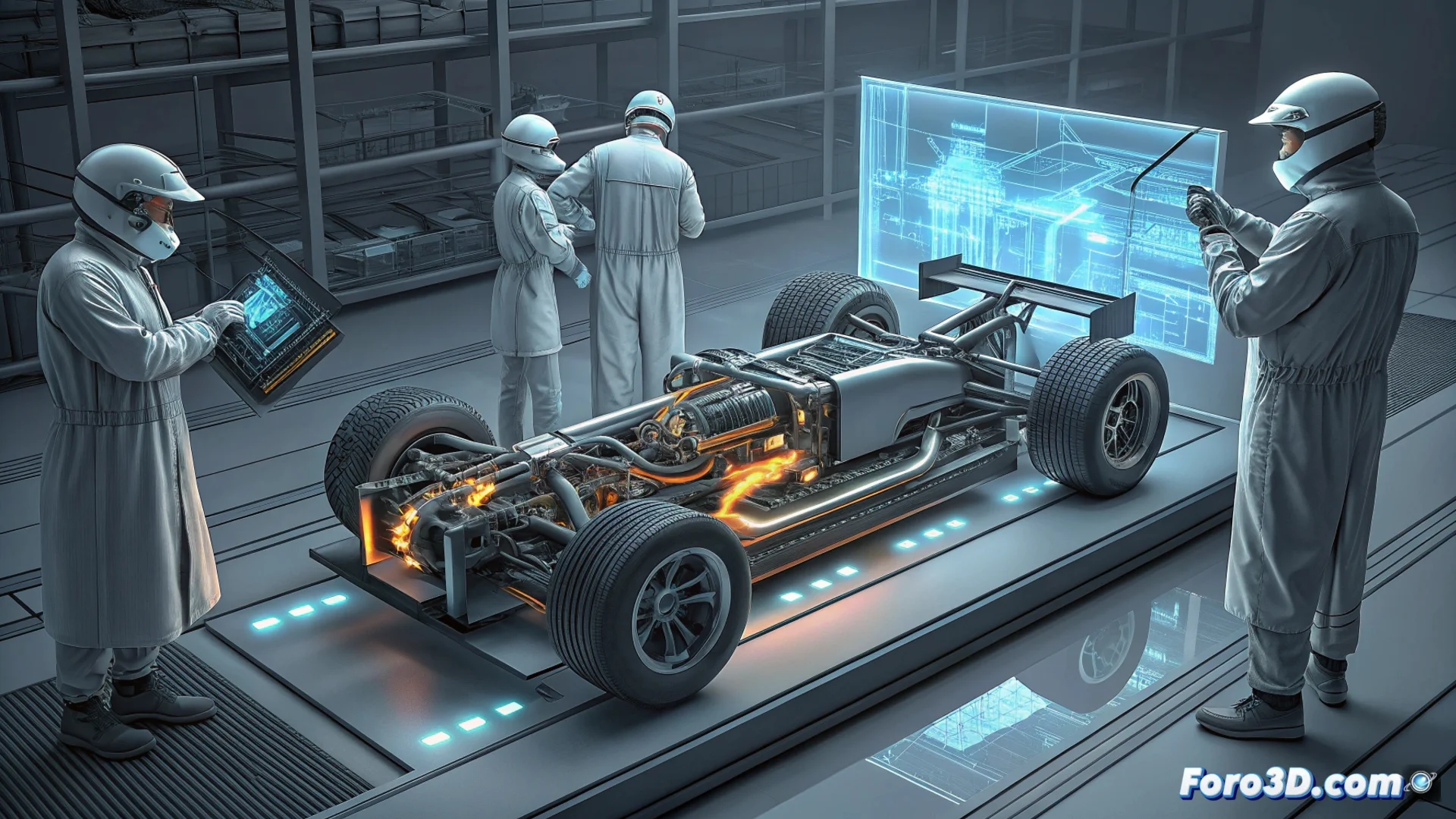
The 2026 regulations redefine power in Formula 1
Formula 1 is preparing for a radical transformation in 2026, driven by a new technical regulation that alters the fundamentals of the power units. The stated objective is to level the playing field and advance towards a more sustainable competition, but this shift hides a monumental engineering challenge that will test the manufacturers. 🏎️⚡
An energy paradigm shift
The regulations drastically modify the balance of forces under the hood. The energy contributed by the internal combustion engine is reduced, while the contribution from the electrical system increases exponentially. This forces teams to completely redesign the propulsion architecture, seeking a more compact and efficient package.
Key details of the new power balance:- The thermal engine will generate approximately 400 kW, losing its dominant role.
- The MGU-K electrical unit must contribute up to 350 kW, nearly matching the combustion block.
- Nearly half of the total power will be of electrical origin, an unprecedented leap.
Whoever best optimizes the energy flow between the thermal engine, the electric one, and aerodynamics will have a decisive advantage.
Efficiency as the new battleground
With a limited total amount of energy per lap, managing efficiency becomes the critical factor for performance. The regulations introduce active aerodynamics systems, with winglets that automatically adapt their configuration in different parts of the circuit. This allows reducing aerodynamic drag on straights to save energy, which can then be used for overtaking.
Challenges of integrating active aerodynamics:- Teams must implement these systems without adding excessive weight.
- Mechanical and electronic reliability is essential to withstand constant changes.
- Battery (ES) thermal management must evolve to release energy more aggressively.
The sound of a new era
This technological transition will also transform the sensory experience. Engineers focus on technical solutions, while fans anticipate that the characteristic roar of the V6s will give way to the hum of electric motors. This change in