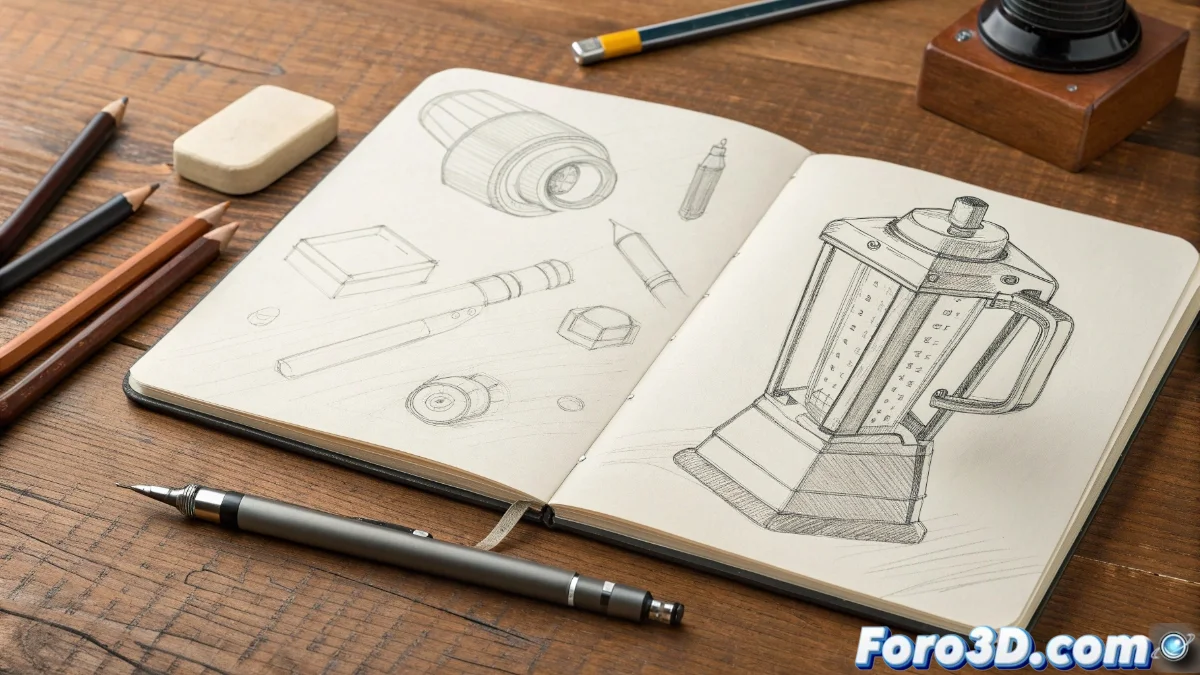
The 100 Repetitions Challenge to Master Drawing
This intensive practice methodology represents a revolutionary approach to artistic learning, where you select a specific element and create one hundred distinct interpretations of it. The fundamental purpose is to fully assimilate the anatomy, composition, and essential characteristics of the chosen subject, progressively eliminating dependence on external references and cultivating such a deep understanding that allows representing it from any imaginable perspective. 🎨
Strategic Selection and Meticulous Preparation
The choice of subject constitutes the foundation of the entire process. You must select a motif that presents significant but achievable challenges, such as facial expressions, human anatomy, architecture, or natural elements. It is crucial to start with relatively simple forms before scaling to greater complexities. The preparation phase involves compiling an exhaustive visual archive that shows your subject under different lighting conditions, viewing angles, and environmental contexts.
Key Elements for Preparation:- Selection of subjects with gradual complexity that allow progressive growth
- Creation of a diverse and comprehensive visual reference bank
- Establishment of a sustainable work pace that avoids burnout
Temporary visual saturation is a small price to pay for the mastery acquired after completing the one hundred repetitions
Evolutionary Process and Progressive Development
The path of the one hundred repetitions is divided into four distinct phases that guide your artistic evolution. During the first twenty iterations, your attention should focus on understanding and replicating the fundamental proportions and basic structure, using references constantly. Between repetition twenty and fifty, you begin to internalize the main forms, allowing you to create without needing to continuously consult your support materials.
Phases of the Creative Process:- Phase 1-20: Focus on proportions and structure with constant reference support
- Phase 21-50: Progressive internalization and gradual reduction of external dependence
- Phase 51-80: Experimentation with styles, perspectives, and artistic expressions
- Phase 81-100: Consolidation of knowledge and fluid, confident execution
Artistic Transformation and Final Results
Upon concluding this creative marathon, you will experience a remarkable transformation in your artistic abilities. Many creators discover that they can draw their chosen subject with their eyes closed, although they will likely develop temporary visual saturation. This process converts theoretical knowledge into tangible practical skill through conscious repetition, where each new version represents an opportunity to refine your perception and perfect your technical execution. ✏️