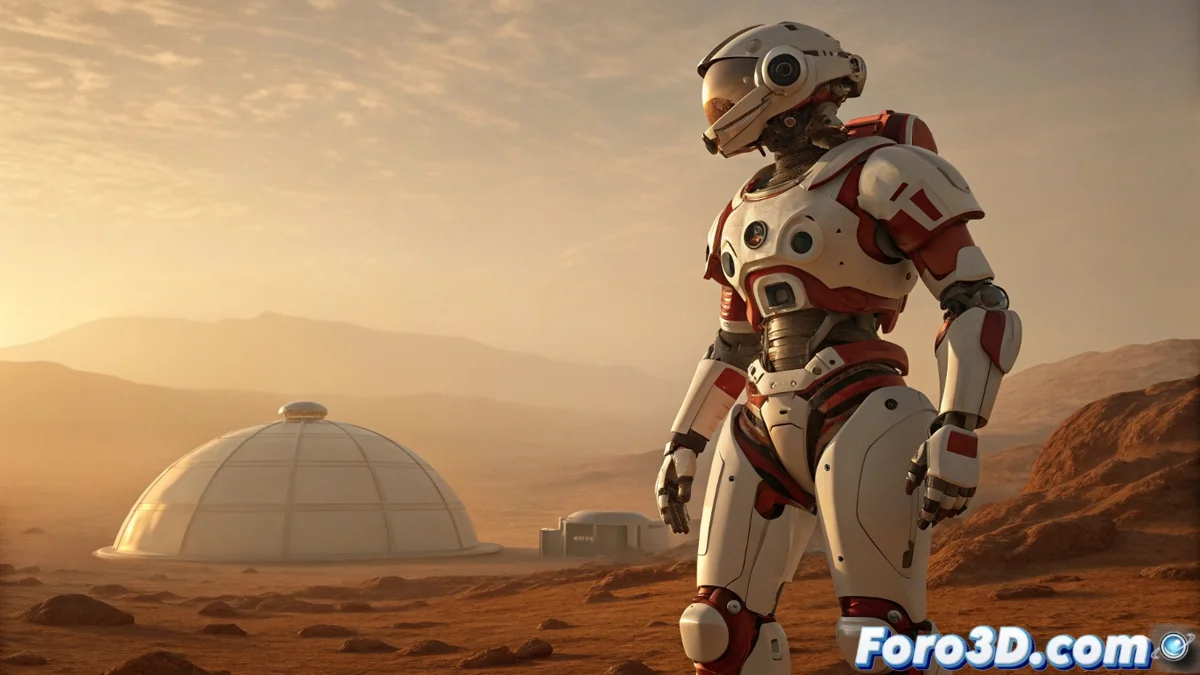
NASA Tests Valkyrie, a Humanoid Robot for Mars Exploration
The U.S. space agency designs and verifies the capabilities of Valkyrie, also known as R5. This robotic platform represents a technological effort to operate in hazardous places, paving the way for exploration missions on planets like Mars. With a height of 1.90 meters and 136 kg, its build is robust and functional. 🤖
A System Built to Perceive and Act
This humanoid integrates an extensive network of sensors, cameras, and data processing units. This combination allows it to interpret its environment in detail and make decisions. It positions itself as one of the most capable platforms worldwide, specifically focused on taking risks that could affect astronauts.
Key Features of Its Design:- Advanced Mobility: Arms and legs with multiple degrees of freedom that mimic human movement.
- Multisensory Perception: Equipped with cameras, lidar, and tactile sensors on hands and torso to generate 3D maps and manipulate objects with precision.
- Intelligence Core: Operates with complex control algorithms and machine learning to plan movements and adapt to the unexpected autonomously.
The goal is not just to create a robot, but to test technologies so that in the future they can prepare habitats on other planets before human arrival.
A Testbed for the Space Future
The Valkyrie program serves as a development laboratory for essential technologies. Engineers experiment with new methods of bipedal locomotion, techniques for grasping tools, and increasing autonomy in scenarios with communication delays. The ultimate goal is for these systems to perform preparation and maintenance tasks on planetary bases, or assist in extravehicular activities, thereby reducing crew exposure to threats.
Ongoing Research Areas:- Improving physical durability and the longevity of its systems in adverse conditions.
- Optimizing energy consumption for extended operations.
- Increasing capacity for making complex decisions without constant intervention.
From Laboratories to Martian Dust
Although its name comes from Norse mythology, its current challenges are more earthly. Its initial "battles" involve overcoming obstacles like tangled cables or resistant doors in controlled test environments. These steps are fundamental to validate its technology before facing the hostile and dusty environment of the Martian surface. Valkyrie's development marks a crucial path toward advanced robotic exploration of the solar system. 🚀