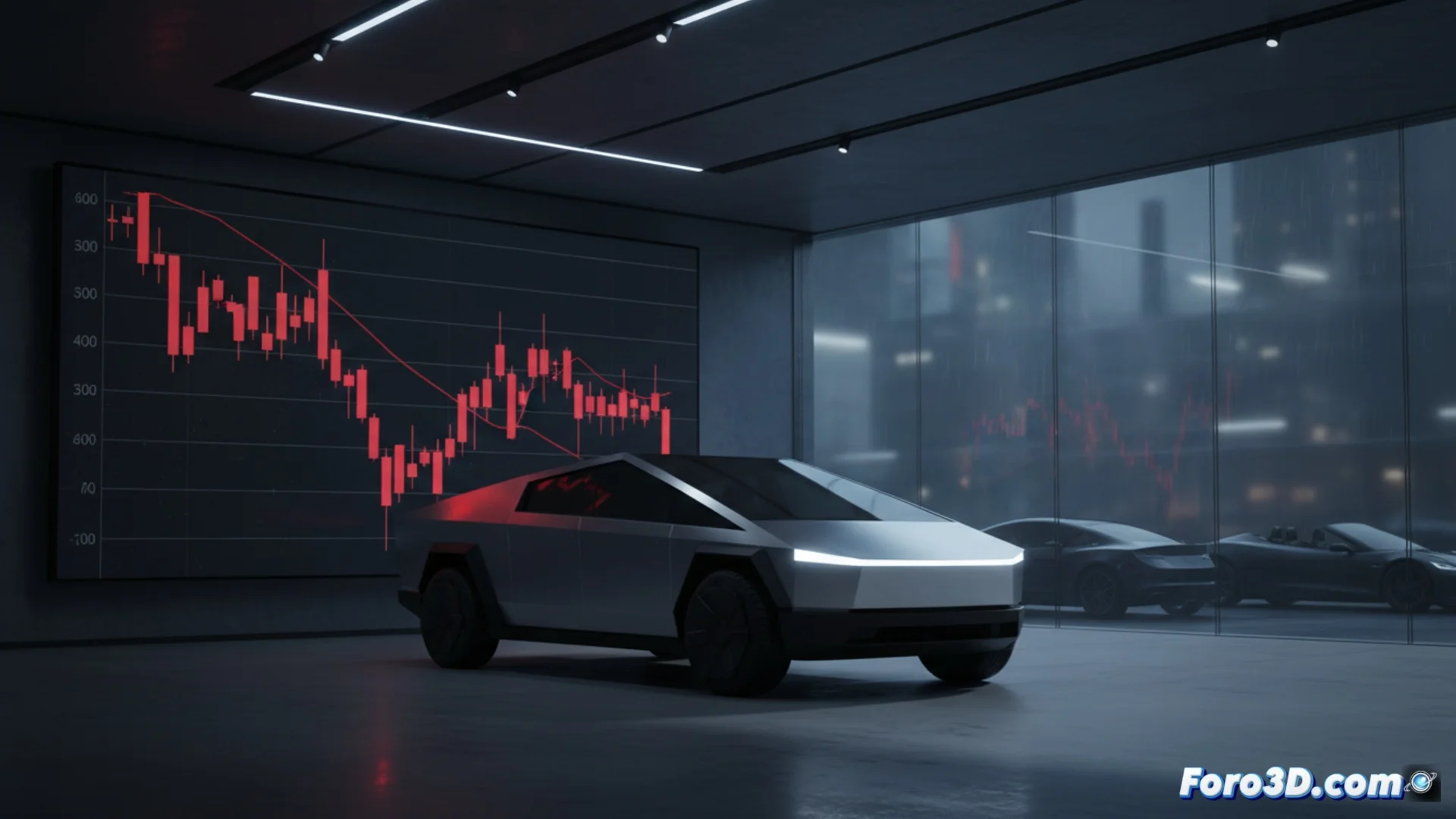
Tesla Reports a 46% Decline in Net Profits for 2025
The electric vehicle company led by Elon Musk has reported financial results for the year 2025 that show a significant contraction. Net profits decreased by approximately 46% compared to the previous year, reaching a figure of about 3.8 billion dollars. This setback represents one of the sharpest drops the company has experienced in recent times. 📉
A Complex Landscape for Electric Vehicle Sales
This sharp decline in profitability is not an isolated event, but a reflection of a more challenging market context. Tesla faces a moderating global demand for electric cars, while competition intensifies with more manufacturers offering alternative models. To defend its market share and maintain delivery volumes, the company has been forced to implement aggressive discounts that pressure its margins. Despite this scenario, the company does not halt its investment momentum in key areas for its future.
Key Factors Impacting Results:- Year-over-year drop in net profits close to 46%.
- Environment of lower demand and fierce competition in the electric vehicle sector.
- Need to apply pricing policies with discounts to sustain sales.
Even for a company accelerating toward the future, sometimes it's necessary to hit the brakes to stay on the financial road.
The Last Quarter Confirms the Downward Trend
The fourth quarter data for 2025 brought no relief, but rather confirmed the negative trend. In this period, the company recorded its first annual decrease in revenue, a milestone that underscores the magnitude of the current challenges. While navigating these more turbulent financial waters, Tesla remains firmly committed to innovating in the fields of technology and energy, adjusting its strategic course for the coming year.
Highlights from the Fourth Quarter and Strategy:- Confirmation of the downward trend in profits during the last quarter of the year.
- First year-over-year drop in the company's total revenues.
- Unwavering commitment to investing in artificial intelligence and energy solutions.
The Dual Path: Adjusting the Present and Investing in the Future
Tesla's strategy for 2026 seems designed to walk on two parallel tracks. On one hand, the company must manage precisely the immediate competitive pressure and demand fluctuations, which implies adjustments in how it produces and sells its current vehicles. On the other hand, it continues to dedicate substantial resources to developing what it considers the long-term growth engines: advanced artificial intelligence and new solutions in the energy sector. The balance between the reality of the current market and the bet on technological future defines its roadmap. ⚖️