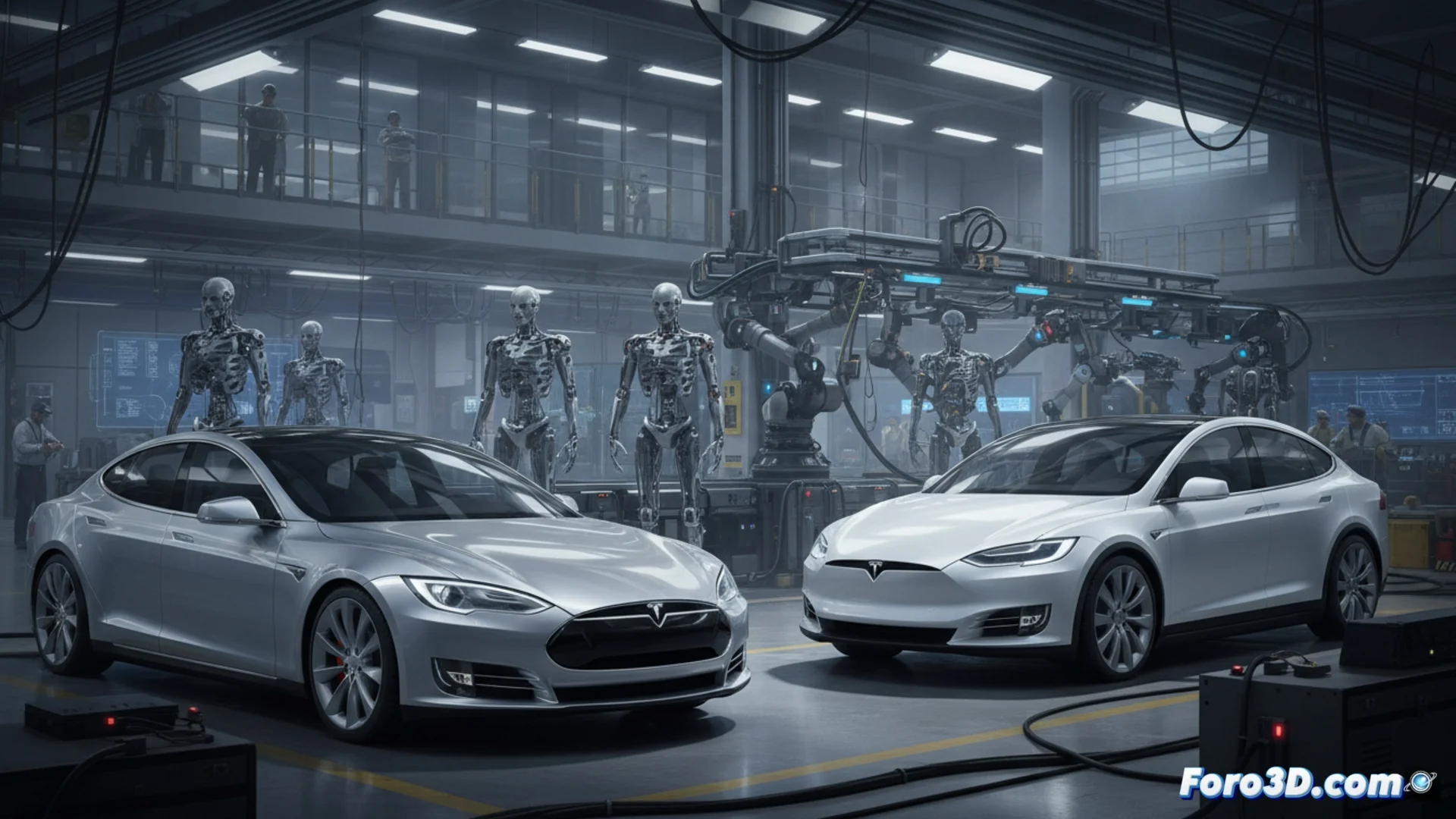
Tesla Stops Manufacturing Its Model S and X to Focus on Robots
Elon Musk's company has announced a radical change in its direction. Starting from the second quarter of 2026, it will cease manufacturing two of its most iconic vehicles: the Model S (launched in 2012) and the Model X (2015). This move is not a simple production line adjustment, but a strategic shift that prioritizes robotics and artificial intelligence over the traditional automotive business. 🤖
Reallocating Resources for the Optimus Era
The space freed up by these assembly lines at the Fremont, California plant will have a new main occupant: the humanoid robot Optimus. Tesla plans to unveil the third generation of this automaton later this year and expects to begin producing it before the end of 2026. The company aims to deploy its robots in factories and other industrial environments, completely redefining its core business model.
Key Details of the Transition:- Cessation Date: Second quarter of 2026.
- Resources Freed Up: Factory space and production capacity that will be redirected.
- Commitment to Customers: Tesla will continue support and service for all current owners of Model S and X.
For Tesla, the future is not driven, it is programmed. The anticipated redesigns of classic models are scrapped.
Closing a Foundational Chapter
Stopping production of the Model S and Model X marks the end of an era. These vehicles were pioneers in popularizing high-end electric cars and solidified Tesla's brand image. Their exit from the production line is a powerful symbol: the company is transitioning from being an automobile manufacturer to a company specializing in advanced automation and artificial intelligence.
Impact on Tesla's Legacy:- Iconic Models: The Model S sedan and Model X SUV defined the premium electric segment.
- Identity Shift: Electric mobility is no longer the sole protagonist.
- Market Expectations: Possible updates, such as a redesign of the Model X's falcon-wing doors, are canceled.
A Reprogrammed Horizon
This decision reflects Tesla's ambition to evolve beyond the automotive sector. By dedicating its efforts to developing the Optimus robot, the company is betting on a field with disruptive potential at the industrial level. The shutdown of production for two of its most legendary cars marks a clear turning point toward a future where artificial intelligence and robotics take the wheel. 🚀