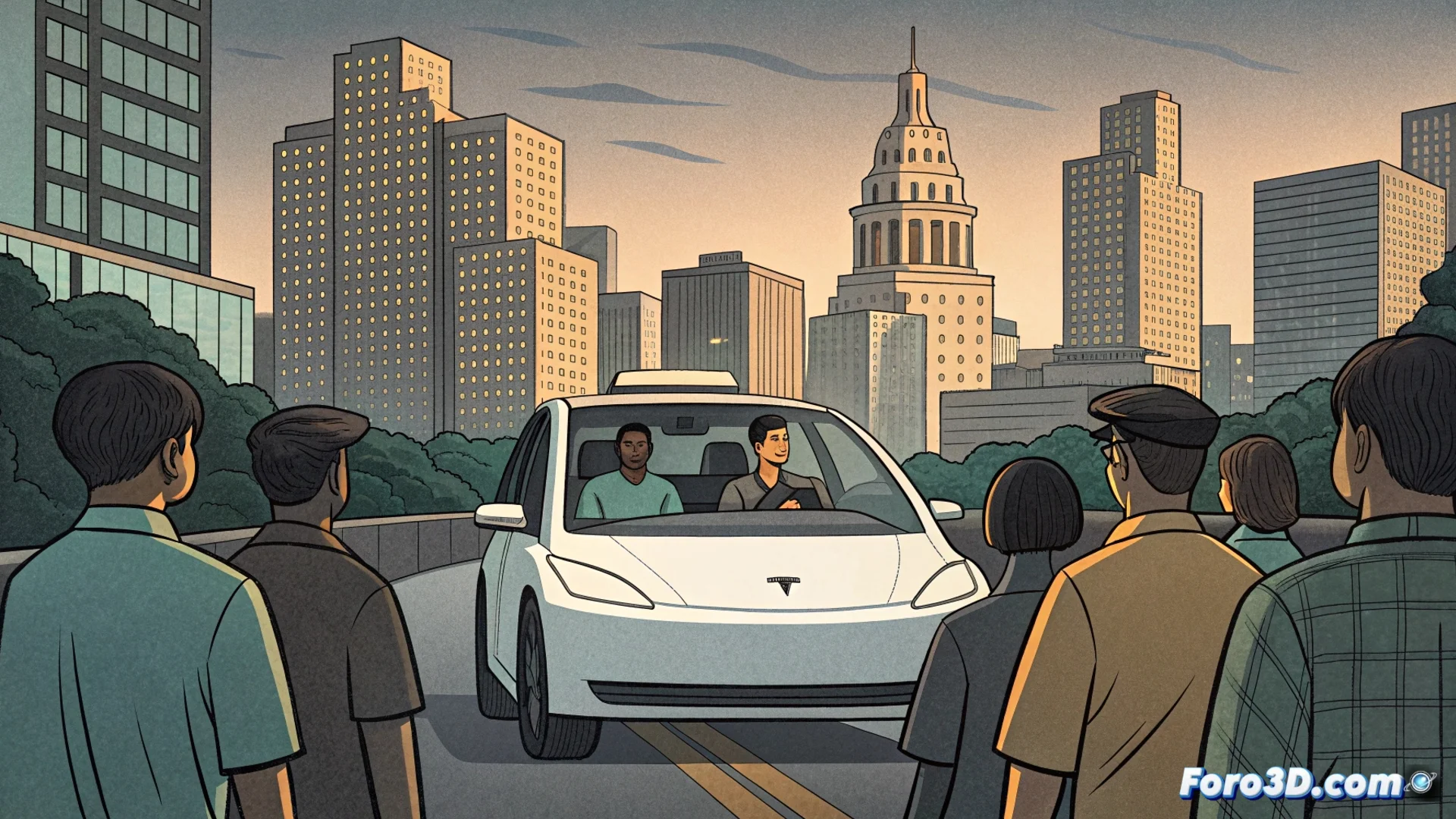
Tesla Deploys Its Robotaxi Service in Austin with a Limited Fleet
This June, Tesla began operating its robotaxi service in the city of Austin, Texas, where it has its headquarters. This launch is defined as a pilot test with extremely restricted access. To ensure safety, a company employee sits in the front seat to supervise the automated driving system and intervene if necessary. 🚗
The Real Scale of the Initial Deployment
By analyzing the data provided by Tesla's official mobile app, the true dimension of this operation is revealed. The collected information indicates that, at any given time, the number of autonomous vehicles active on the streets is very small. The data shows that only three to six driverless taxis are circulating simultaneously, confirming that the project is in an early stage with limited capacity.
Key Features of the Testing Phase:- The service is available only to a select group of users in Austin.
- Each trip is monitored in real-time by a human supervisor inside the car.
- The operational fleet is minimal, with between 3 and 6 units in circulation at the same time.
Getting one of these taxis in Austin today seems more complicated than finding a bargain on Black Friday.
Strategy Behind a Controlled Launch
Starting with a minimal fleet and restricted access is a common strategy when testing complex technologies in real environments. This approach allows Tesla to collect driving data in an authentic urban scenario, but within very controlled parameters. Meanwhile, the company can fine-tune its software and safety protocols before considering any large-scale expansion.
Objectives of This Initial Phase:- Collect valuable driving data in a real urban environment.
- Test and optimize the autonomy software in controlled conditions.
- Validate safety protocols with direct human supervision.
The Path to Full Autonomy
The constant presence of a human supervisor underscores a crucial fact: Tesla's autonomous driving system does not yet operate with full independence and requires supervision. This deployment in Austin, though modest in numbers, represents a significant step in validating the technology in the real world, away from simulated testing environments. The success of this pilot phase will be fundamental in deciding the pace and scale of future expansions. 🔄