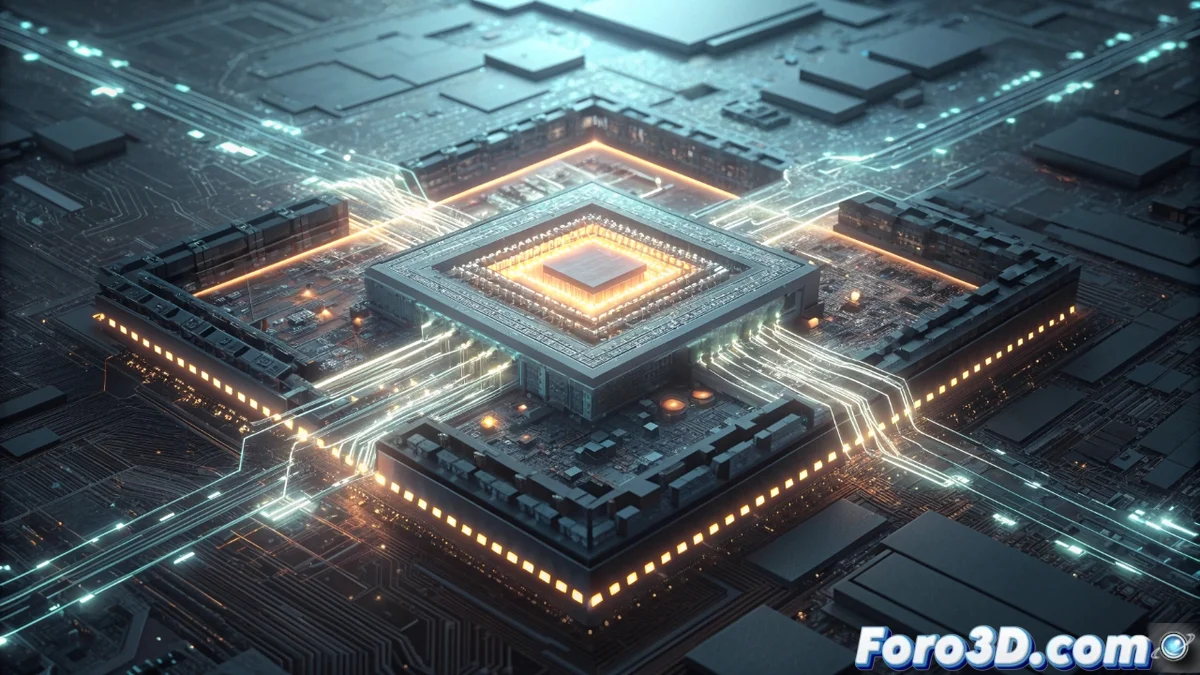
Tensor Cores: the revolution in artificial intelligence processing
Tensor Cores represent a radical innovation in the design of contemporary graphics processing units, specifically created to optimize linear algebra operations and fundamental matrix calculations in artificial intelligence and deep learning. 🚀
Specialized architecture for advanced computing
These processing cores operate in parallel with conventional shader units, focusing on specific tasks such as matrix multiplication in reduced precision, a recurring operation in neural networks and deep learning models. Their implementation enables these complex mathematical operations to be executed with energy efficiency and speed far superior to traditional computing methods. 💡
Transformative applications in current technology:- Image reconstruction: Technologies like NVIDIA's DLSS use these cores to process multiple frames and generate higher-resolution images using AI
- Natural language processing: Significant acceleration in inference of linguistic models and pattern recognition in complex data
- Scientific simulations: Optimization of intensive matrix operations in medical research and scientific computing
The ability to process tensor operations in parallel enables calculations that previously required computing clusters to be performed on a single graphics card.
Revolutionary impact on computational performance
The integration of Tensor Cores has transformed the parameters of performance in AI workloads, providing speed improvements of up to 10 times compared to previous GPU generations. This technological advancement benefits not only researchers and developers but also democratizes artificial intelligence capabilities for end users through features like intelligent upscaling in video games and real-time video processing. 🎮
Future evolution and prospects:- Greater numerical precision: Upcoming iterations promise improvements in computational accuracy for critical applications
- Optimized energy efficiency: Reduction in energy consumption for mobile devices and edge computing
- Expansion of applications: New possibilities in peripheral computing and resource-limited devices
Limitations and practical considerations
Although these cores can execute complex matrix calculations in nanoseconds, it is important to understand that they do not solve all system bottlenecks. Factors such as memory management, bandwidth, and background processes (like multiple browser tabs) can still affect overall performance in tasks like 3D rendering. ⚡