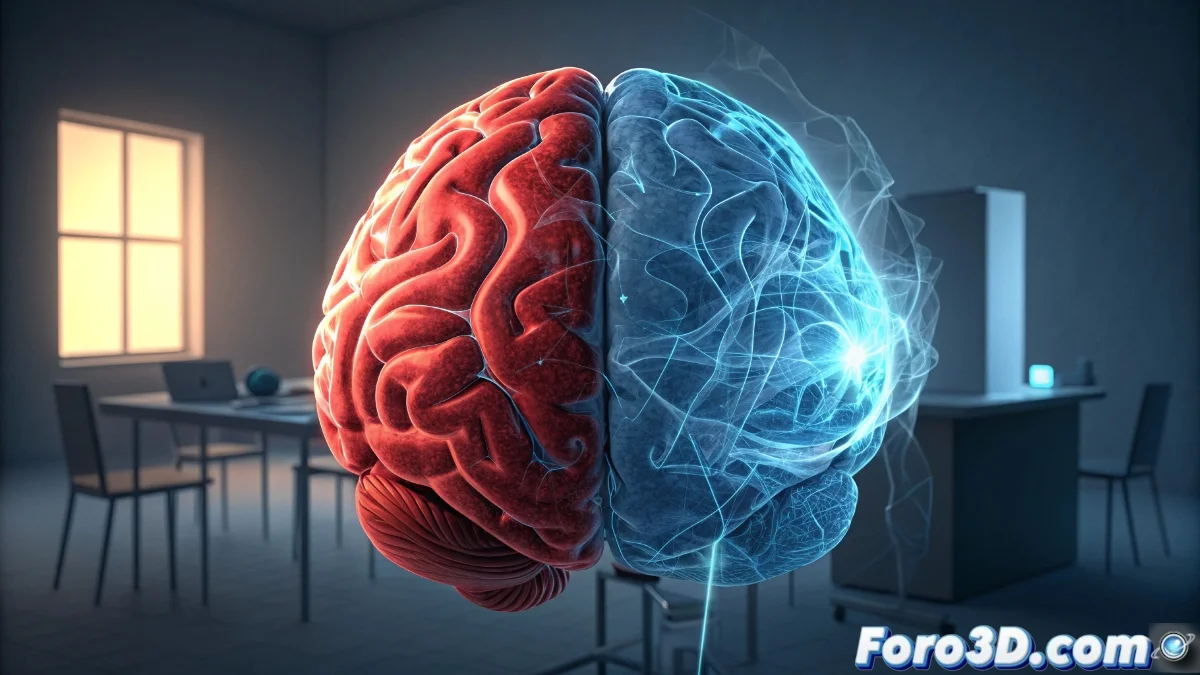
Temporal Bias in Human Decision-Making
Our mind exhibits a natural predisposition to value present threats more than tomorrow's benefits, a psychological phenomenon known as temporal bias. This cognitive tendency explains why issues like maintaining current public services generate a greater emotional response than long-term problems like ensuring housing for future generations, even though the latter represent stronger long-term economic priorities 🧠.
Brain Mechanisms Behind Temporal Valuation
This asymmetry in time perception arises from how our cognitive system processes different types of information. Immediate risk situations activate intense emotional responses and primary alert mechanisms, while future benefits require processes of abstract thinking and mental projection that demand greater cognitive resources. This fundamental difference in mental processing leads us to give greater intuitive weight to the immediate danger than to the potentially advantageous.
Characteristics of Brain Processing:- Present threats activate primary alert systems and intense emotional responses
- Future benefits require abstract thinking processes and mental projection
- There is a significant difference in cognitive resource consumption between both types of processing
Our sophisticated brain, capable of planning space missions and developing artificial intelligence, still stumbles over the same cognitive obstacle that makes us worry more about this morning's traffic than the planet our grandchildren will inherit.
Impact on Social and Political Priorities
This temporal bias has profound consequences on how societies set their collective agendas. Issues like climate change or pension system planning, whose most severe effects will manifest in the future, compete at a disadvantage for attention and resources against immediate crises like pandemics or current economic instability. The difficulty in mobilizing decisive responses to slow-developing but large-magnitude future threats reflects this disparity in our risk perception.
Consequences in the Collective Agenda:- Long-term problems like climate change receive less immediate attention
- Current crises like pandemics mobilize resources more quickly
- Difficulty in implementing preventive solutions to gradual threats
The Paradox of the Modern Mind
It is paradoxical how our evolved brain, capable of extraordinary technological feats, maintains this ancestral cognitive limitation that distorts our long-term planning capacity. This contradiction between our intellectual potential and our immediate decision-making tendencies represents one of the most significant challenges for the development of sustainable public policies and the construction of more balanced collective futures 🌍.