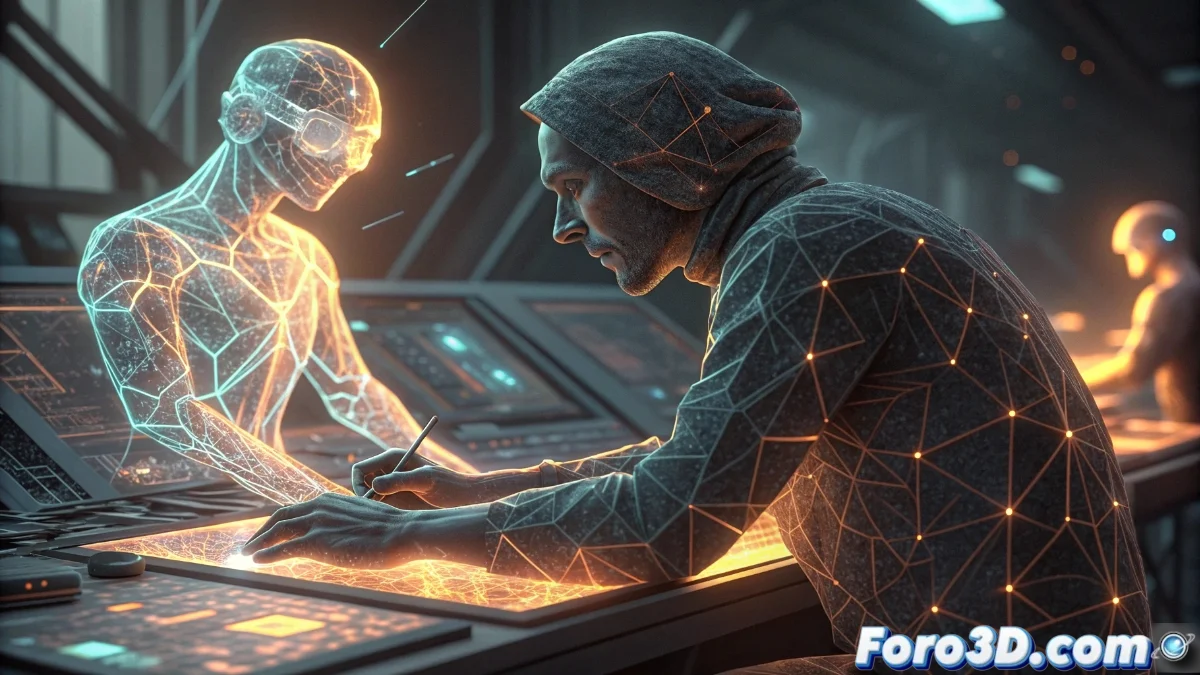
Technical Limitations as Catalysts for Creativity in 3D
In the universe of three-dimensional design, technical restrictions frequently transform into powerful engines of artistic innovation. What initially seems like an insurmountable barrier becomes the fertile ground where extraordinary solutions germinate that redefine the limits of visual expression 🎨.
When Technical Scarcity Drives Inventiveness
Contemporary digital artists demonstrate that creativity flourishes precisely when facing confines such as polygon limits, restricted lighting capabilities, or insufficient texture memory. These apparent disadvantages force a rethinking of established methodologies and the exploration of alternative paths that, under conditions of absolute technical freedom, would likely remain unexplored.
Paradigmatic Examples of Innovation Under Restrictions:- Development of advanced baking techniques and LOD systems to optimize resources in real time
- Creation of sophisticated procedural materials when conventional textures exceed available memory
- Mastery of creative post-processing techniques to compensate for shading and rendering limitations
The most ingenious solutions often emerge from working with the bare minimum, as if an excess of technological resources stifles the inventiveness that thrives in technical scarcity.
The Birth of Aesthetics from Limitations
It is fascinating to observe how numerous visual trends characteristic of different 3D eras arose directly from the creative overcoming of technical restrictions. What begins as a pragmatic solution frequently evolves into a conscious aesthetic choice that defines entire artistic movements.
Visual Styles Originating from Technical Limitations:- The low-poly art style that transformed polygon scarcity into a distinctive and recognizable aesthetic
- Simplified toon shaders that emerged as a response to limited rendering capabilities
- Minimalist lighting approaches developed to work within specific technical confines
The Technological Paradox in the 3D Industry
In an industry obsessed with the most powerful hardware and the most advanced software, there is a fundamental irony: the most revolutionary solutions often come from working with limited resources. This dynamic transforms what appear to be barriers into genuine opportunities to develop innovative approaches that end up setting new standards in the three-dimensional design industry 💡.