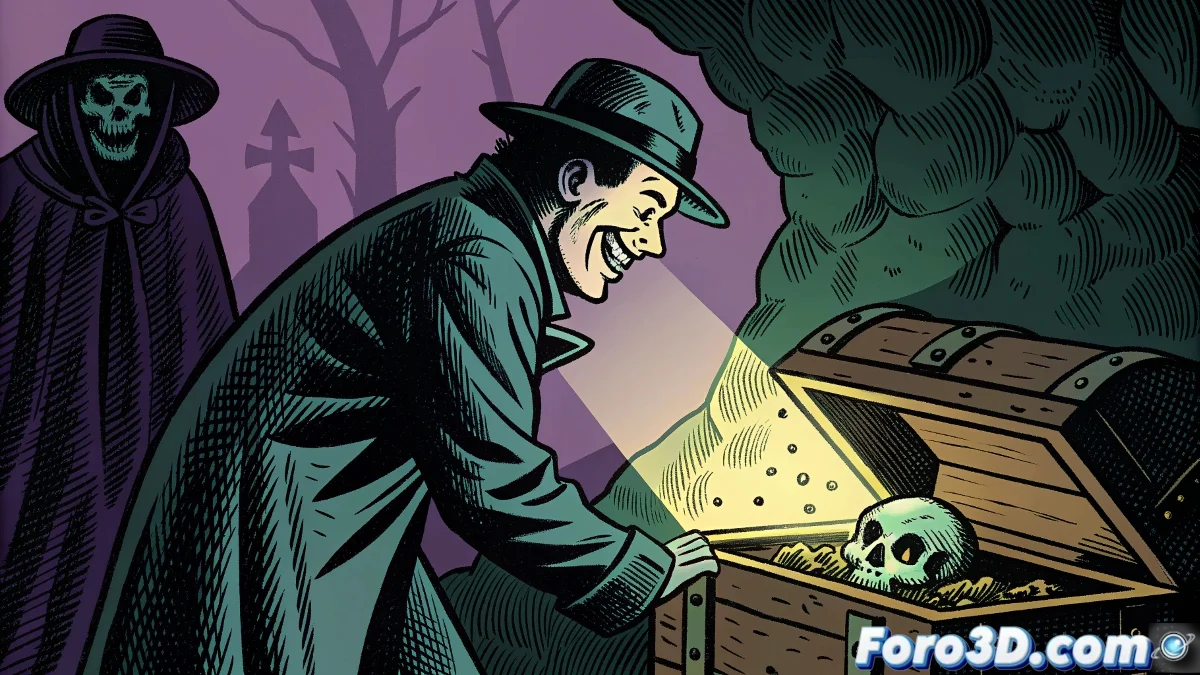
Tales from the Crypt: Laughter, Screams, and Bloody Morals
In the 1950s, while America was shrouded in a blanket of conservatism, EC Comics opened the doors of its crypt to offer something radically different: intelligent horror with a sense of humor. "Tales from the Crypt" wasn't just another horror anthology; it was a cultural phenomenon that mixed the suspense of Universal films with the cynicism of O. Henry, all wrapped in artwork that was seared into the collective memory. And all of it, of course, presented by three hosts who became legends: the Crypt-Keeper, the Old Witch, and the Vault-Keeper. 💀
The Perfect Formula: Crime, Punishment, and Irony
William Gaines and Al Feldstein perfected an impeccable narrative structure: in just 8 pages, they established a character with moral flaws, led them to commit an atrocity, and then deployed a final twist where poetic justice arrived in the most creative and cruel way possible. Murderers were betrayed by their own victims, misers found cursed riches, and the arrogant discovered that the universe has a peculiar sense of humor. Each story was a perverse moral lesson where the punishment always outdid the crime in ingenuity. ⚖️
Characteristic elements of the series:- macabre narrators with black humor and social commentary
- final twists that completely subverted the plot
- expressionist art with dramatic shadows and forced angles
- social criticism disguised as terrifying entertainment
The Artistic Dream Team: When Style Defined an Era
The EC house gathered some of the most innovative artists of their time. Graham Ingels and his rotting corpses, Jack Davis and his caricatured expressions of terror, Reed Crandall with his classic and elegant linework, and Wally Wood with his cinematic compositions. Each artist brought a unique personality, but they all shared that unmistakable EC style: high contrast, bold framing, and an attention to detail that turned every panel into a complete work of art. 🎨
Good evening, comic book readers of any age!
The Hosts of Horror: Charisma from the Tomb
The Crypt-Keeper, with his cavernous laugh and sinister humor, became the most recognizable face of horror in comics. Meanwhile, the Old Witch brought a more supernatural tone and the Vault-Keeper a more refined, aristocratic style. These narrators didn't just present the stories; they commented on the action with direct complicity to the reader, breaking the fourth wall decades before the concept became popular. Their charisma was so powerful that they survived censorship and returned in future adaptations. 🎭 Memorable stories from the anthology:
- "Reflection of Death" with its perfect temporal twist
- "'Taint the Meat... It's the Humanity!" and its vengeance from beyond the grave
- "The Master Key" and its irony about greed
- "Fatal Caper" and its instant curse
The Fall and the Legacy: Born from the Ashes
The success of EC Comics attracted the attention of psychiatrist Fredric Wertham and his campaign against comics, culminating in the Comics Code which essentially banned horror in the medium. But like a ghost that refuses to rest, "Tales from the Crypt" resurfaced in other forms: the legendary magazines of the 70s, the HBO television series in the 90s, and films that kept