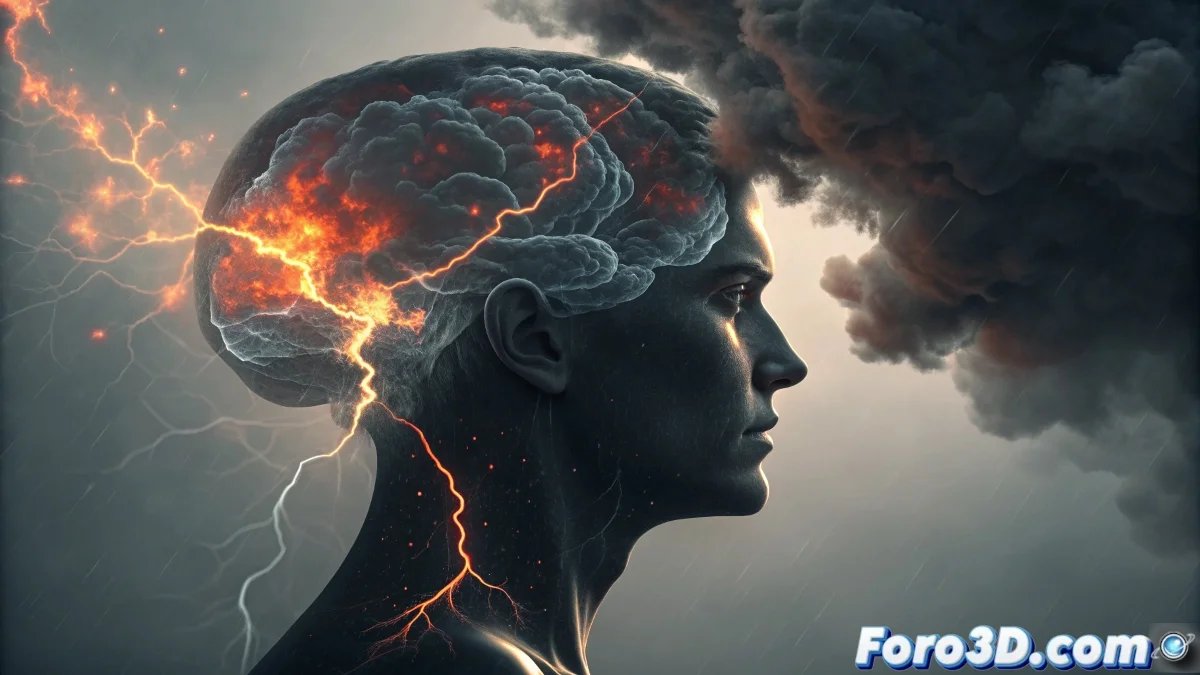
The Invisible Signals That the Body Screams
Psychologists have identified a consistent pattern of symptoms that reveal chronic stress, that silent companion that settles into our lives. Unlike acute stress, this prolonged variant literally modifies human physiology, leaving visible traces for the trained eye. The person may not perceive them initially, but their body displays them as red flags of alarm.
Among the most revealing indicators is persistent muscle tension, particularly in the shoulders and jaw, which ends up modifying the natural posture. The digestive system becomes another reliable thermometer, with alterations ranging from loss of appetite to laborious digestions. But perhaps the most intriguing is how the face acquires a permanent mask of fatigue, even after apparently adequate rest.
Chronic stress is not a mental state, it is a physical condition with anatomical consequences
Preparing the Sculptural Concept
Representing chronic stress through digital sculpture requires a conceptual translation of abstract symptoms into tangible forms. ZBrush offers the ideal set of tools for this task, allowing organic and expressive distortion of human anatomy. The process begins with visual research of medical and artistic references.
Selecting the human bust as the format allows focus on the areas where stress manifests its most evident signals: face, neck, and shoulders. The posture must convey that invisible burden that we all recognize but few can describe precisely. Each sculpting tool will be chosen for its ability to convey psychological tension.
- Collection of references for facial expressions under prolonged tension
- Study of muscular anatomy in states of chronic contraction
- Selection of a human base mesh with suitable topology for deformations
- Basic lighting setup to visualize volumes during sculpting
Anatomy of Permanent Tension
Sculpting begins with the areas where chronic stress literally sculpts the human body. The trapezius muscles enlarge and rise, creating that characteristic profile of permanently hunched shoulders. The jaw develops hypertrophied masseters from constant nighttime clenching, even in those unaware of this habit.
The eyebrows furrow slightly but constantly, creating expression wrinkles that seem etched in fire. The upper eyelids show that slight droop that betrays adrenal fatigue, while the lip corners orient subtly downward, even in absolute rest.
- Facial mask modification with Move Brush tool
- Volumetric increase of trapezius and sternocleidomastoid muscles
- Creation of visible tension in temporal and masseter areas
- Adjustment of cervical posture to convey invisible burden
Textures That Speak of Wear
The skin under chronic stress develops unique characteristics that go beyond conventional wrinkles. Altered microcirculation creates irregular coloration patterns, particularly around the eyes and lips. The texture becomes thinner in some areas and thickened in others, showing the impact of cortisol on tissues.
Using Polypaint along with custom alphas, it is possible to recreate this cartography of psychological wear. Dark circles adopt bluish-grayish tones that no concealer can completely disguise, while the forehead skin develops that characteristic opacity of poor sleep quality.
Details That Tell Stories
The subtlest signs are often the most eloquent. The slight facial asymmetries that accentuate under prolonged stress, the different eye opening between both eyes, the slight deviation of the lip corner. These microgestures, when fossilized, create a more truthful portrait than any dramatic expression.
The hair also participates in this visual narrative, showing that brittle and lifeless texture that accompanies deficiency states. The nails, if included in the sculpture, show horizontal ridges and breaks that speak of months of silent physiological aggression.
- Sculpting of expression wrinkles with Dam Standard Brush
- Creation of superficial vascular pattern with Alpha 08
- Texturing of periorbital bags with Inflate Brush
- Detailing of pores and skin texture with Standard Brush
Pose and Emotional Composition
The bust's posture conveys as much as the anatomical details. A slight forward lean suggests that progressive collapse under invisible weight. Shoulders rounded forward create a defensive profile, as if anticipating imaginary blows. The slightly lowered head avoids eye contact, reflecting that characteristic social withdrawal.
The overall composition must avoid excessive dramatism, seeking instead that sad everydayness of someone who has normalized discomfort. The final lighting will accentuate volumes without turning them into caricature, using soft chiaroscuros that suggest more than they show.
Materials and Rendering to Convey Emotions
The choice of materials in ZBrush deeply affects the emotional reading of the piece. A matte material with slight light absorption conveys that emotional opacity of burnout. Controlled reflections in specific areas can direct attention to the most significant details.
The final render uses camera angles that emphasize the psychological narrative, avoiding heroic or glamorous poses. Post-production maintains fidelity to the original concept: showing chronic stress not as a dramatic moment, but as a slow erosion of the self.
By sculpting stress, we may discover that the best art is that which helps us recognize what we would prefer to ignore 🎭