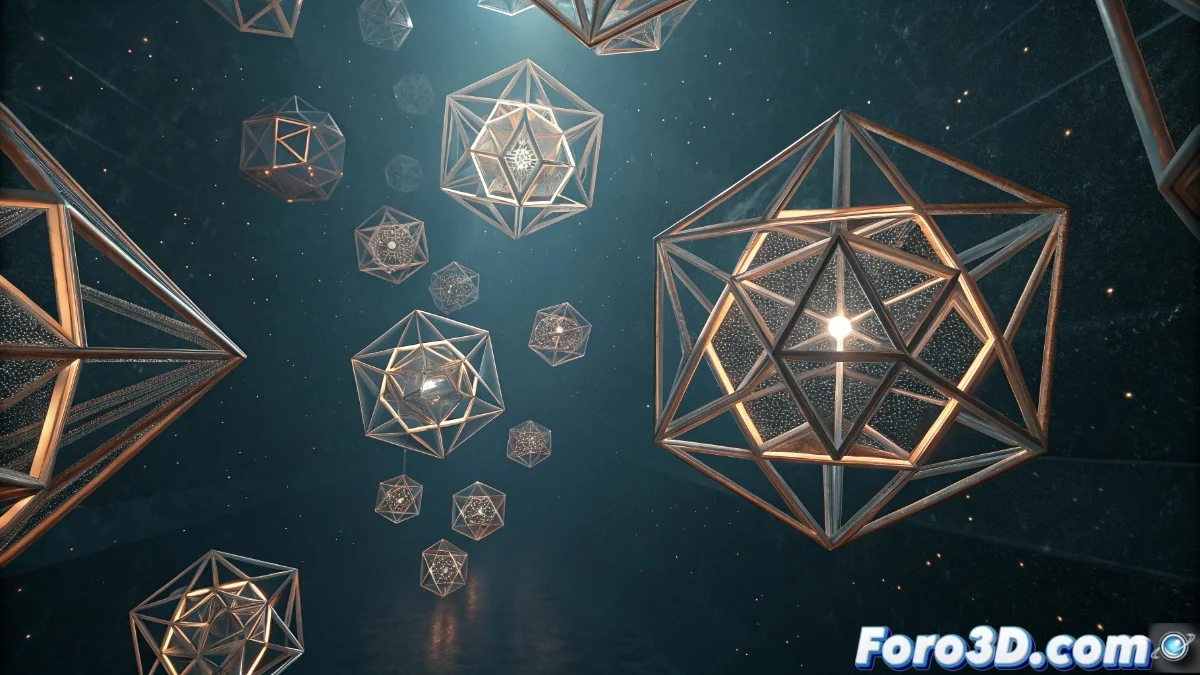
Symbiotic Design in 3D Modeling: When Parts Gain Meaning by Coming Together
In the fascinating universe of three-dimensional modeling, symbiotic objects represent a revolutionary paradigm where individual elements lack complete visual identity until they establish meaningful interconnections with other components. 🧩
Fundamentals of Relational Design
This creative methodology is based on the construction of integrated visual systems where forms, textures, and negative spaces complement each other. Designers employ sophisticated techniques of three-dimensional scanning, additive printing, and parametric design to ensure these visual connections are precise and aesthetically coherent.
Essential Principles:- Perfect physical fits that generate visual continuity between separate elements
- Chromatic harmonies that only manifest when joining multiple components
- Hidden patterns that emerge exclusively through specific compositions
Symbiotic design transforms traditional perception, demonstrating that the visual whole far exceeds the mere sum of its individual parts.
Multidisciplinary Applications
This creative philosophy finds extraordinary implementations in various professional fields. In contemporary architecture, walls, floors, and ceilings interact to create transformable perspectives depending on the viewing angle.
Notable Implementations:- Product design where seemingly unrelated components reveal their real function when correctly assembled
- Art installations that combine digital projections, physical sculptures, and sonic elements for immersive experiences
- Cinematic set designs where scattered elements acquire recognizable forms through narrative combinations
Final Reflections
It is profoundly significant how this approach to three-dimensional design reflects human relational dynamics, where certain entities find their genuine purpose by connecting with others. The advantage in the digital world lies in our ability to reconfigure the pieces infinitely until achieving the perfect visual composition. 🔄