Currently, furniture design is undergoing a significant transformation thanks to the incorporation of technologies such as 3D printing and the use of sustainable materials. A clear example of this innovation was presented at the Add Wood exhibition, which took place in the city of Prague, where four designers stood out for their creative use of 3D printed wood as the main material in their works.
The EconitWood Material
At the center of these innovations is the EconitWood material, developed by the German company Additive Tectonics. This sustainable material combines sawmill waste with a natural magnesium carbonate binder, making it an ecological alternative to traditional materials used in furniture manufacturing.
The Works Presented at the Exhibition
The proposals presented at the Add Wood exhibition are a clear example of how technology and sustainability can merge to create innovative and functional design pieces. Below are some of the most outstanding pieces:
- Finalform.stl by Esmée Willemsen: A customizable coffin that addresses both environmental concerns and the need for personalization. This design eliminates traditional metal components and adapts to different body sizes, facilitating the optimization of decomposition according to local soil conditions.
- Lumo by Friedrich Gerlach: A stackable sofa designed to maximize space on the 3D printing bed. This sofa features a completely biodegradable seat and filling made of 100% wool, making it a sustainable option without sacrificing functionality.
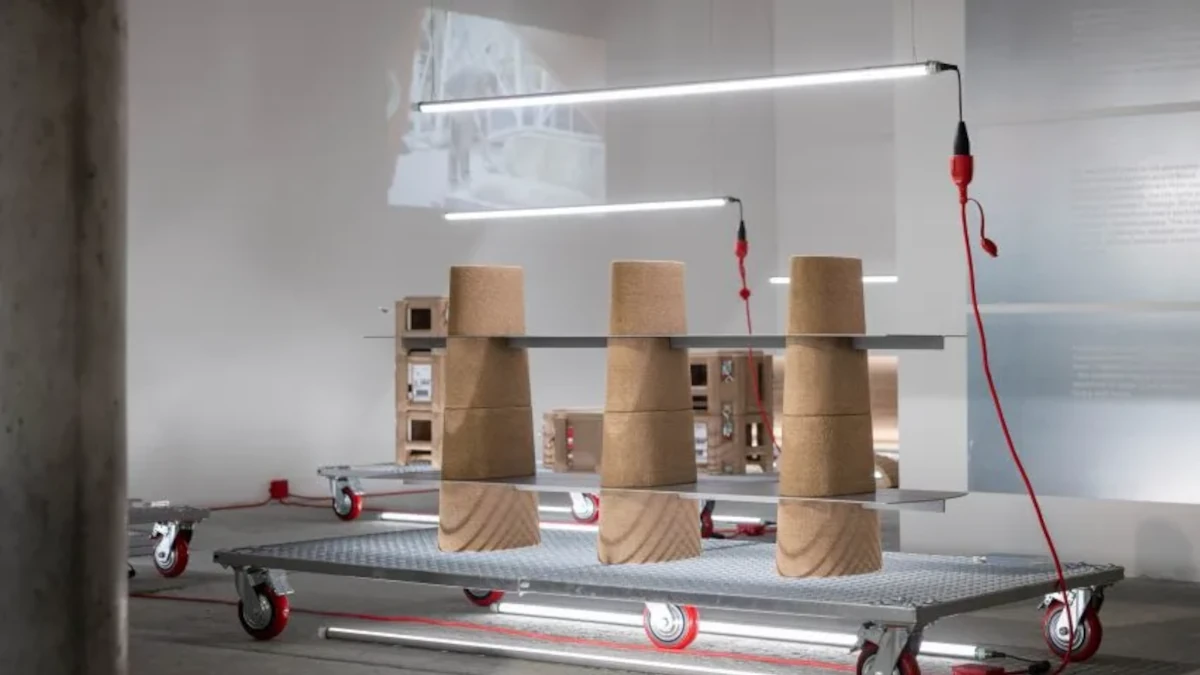
- Offset by Julia Huhnholz: A shelving unit composed of three conical posts, designed to facilitate a nested printing process, optimizing production efficiency. The system uses laser-cut aluminum plates and a geometric design for simple and efficient assembly.
- Sandbox by Janek Beau: A modular stool that allows combining units to create chairs or tables, providing flexibility and versatility in furniture design.
Collaboration and Recognitions
The collaboration between these designers, all awarded the Designblok Diploma Selection 2023, was made possible through their partnership with Additive Tectonics. This collaboration resulted in an exhibition that not only showcases the versatility of 3D printed wood but also underscores the importance of integrating sustainability into modern design.
The Add Wood exhibition was recognized with the Designblok 2024 Award for Best Design Presentation, an accolade that highlights the practical applicability of these new materials and manufacturing processes in furniture and everyday object design.
Impact on the Future of Furniture Design
This exhibition demonstrates how 3D printing not only offers new customization opportunities in design but also promotes the creation of more environmentally responsible solutions. By using materials like EconitWood, designers achieve a combination of technological efficiency with a commitment to sustainability, paving the way for a future where recycled materials and efficient production become the norm.
"The future of design must not only focus on aesthetics but also on how it impacts the environment and communities. The integration of 3D printing and sustainable materials is creating a new paradigm in the furniture industry." - Esmée Willemsen
Conclusion
The Add Wood exhibition is a clear example of how technological innovation and sustainability are reshaping furniture design. By combining creativity with respect for the environment, designers showcase the potential of 3D printed wood to transform the future of interior design, creating more responsible, customizable, and efficient products.