In Thailand, an innovative sustainable construction project is gaining attention for its focus on reducing environmental impact. This project uses advanced technology to create modular buildings through 3D printing, which not only improves efficiency but also contributes to the reduction of carbon emissions.
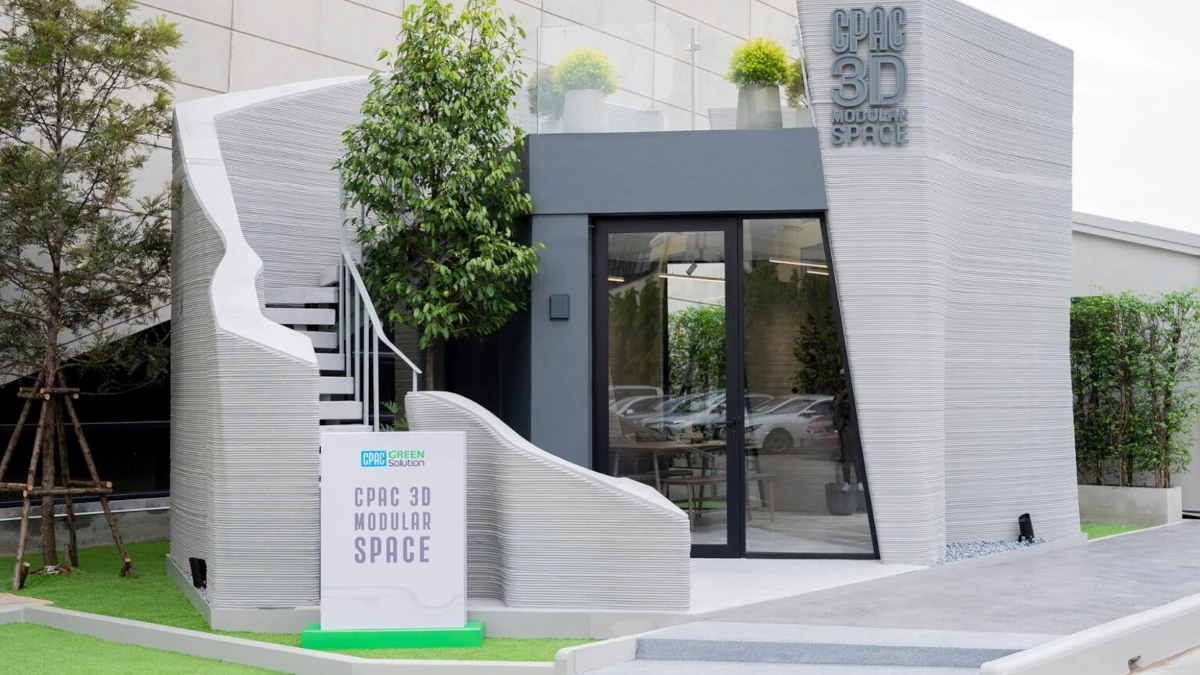
Use of 3D Printing and Eco-Friendly Materials
The key to this project lies in the combination of 3D printing with a special mortar that has a low carbon footprint. This innovative material is designed to replace traditional cement manufacturing methods, contributing to greener construction.
- 3D printing allows for the creation of modular structures.
- The special mortar significantly reduces the carbon footprint.
- The process is faster and more efficient, with less waste.
Advantages of the Modular and Sustainable Approach
One of the main advantages of this approach is that modular construction allows for a much faster build time, reducing on-site work times and increasing the overall efficiency of the project. Furthermore, by using sustainable materials, the use of non-renewable resources is minimized and energy consumption is optimized during the manufacturing stages.
Waste Reduction and Resource Optimization
Another important benefit is the significant reduction of waste generated during construction. Thanks to the precision of 3D printing and the use of reusable materials, a construction process with less waste and greater resource utilization is achieved. This aligns with global efforts to promote more sustainable practices in the construction industry.
"Technology can collaborate with nature to make construction more environmentally friendly, without sacrificing quality or durability." – Sustainable Construction Project in Thailand
Thailand as a Leader in Sustainable Construction
This technological advancement positions Thailand as a leader in creating sustainable solutions for the construction industry. With the use of 3D printing and eco-friendly materials, the country is demonstrating how innovation can be used to create solutions that are not only efficient but also environmentally respectful.
The combination of these technological advances and ecological awareness marks an important milestone on the path towards a greener and more sustainable future in the construction industry.