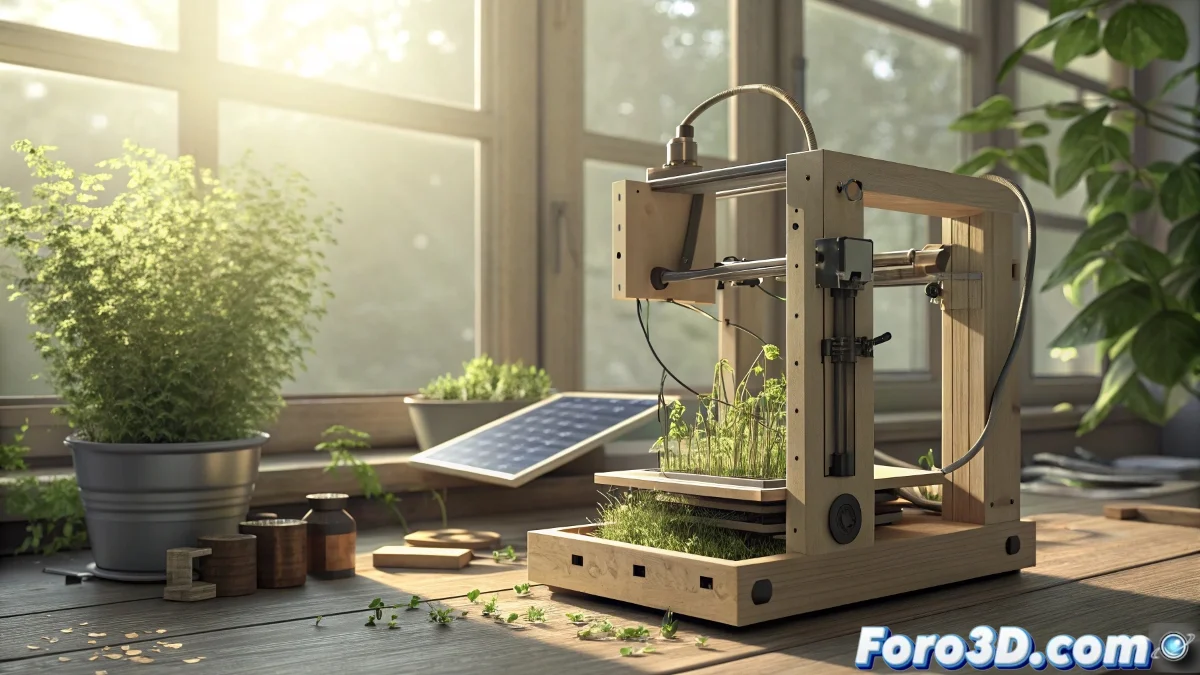
The Green Revolution in 3D: When Sustainability is Printed Layer by Layer
The 3D printing industry is experiencing an unprecedented ecological transformation, with technological advances that are redefining what it means to manufacture sustainably. From biodegradable materials from natural sources to integrated circular economy systems, the new generations of 3D printers are demonstrating that digital manufacturing can be an ally of the environment. This evolution is not just technical—it represents a fundamental philosophical shift in how we conceive the creation of objects. 🌱🖨️
Materials that Give Life Back to the Planet
Innovation in sustainable materials is leading this green revolution, with options that drastically reduce the environmental footprint of 3D printing.
Next-Generation Biopolymers
Filaments like PLA (Polylactic Acid) derived from corn and sugarcane offer controlled biodegradability without compromising mechanical properties. New formulations incorporate natural fillers like bamboo, algae, and coffee that enhance sustainability and aesthetics.
Transformed Waste Materials
Innovative companies are developing filaments from recycled PET bottles, discarded fishing nets, and agricultural waste, creating closed cycles where waste becomes valuable raw material.
Highlighted Sustainable Materials:- PLA from renewable sources
- Filaments based on marine algae
- Recycled wood composites
- Mushroom mycelium-based materials
Low-Consumption Printing Technologies
New 3D printers incorporate significant advances in energy efficiency that reduce the environmental impact of digital manufacturing.
Optimized Heating Systems
Innovations in precise thermal control and improved insulation allow reducing energy consumption by up to 40% compared to previous models, while maintaining exceptional print quality.
Smart Standby Modes
Modern printers incorporate sensors that detect inactivity and automatically adjust energy consumption, eliminating the vampire energy drain that plagued previous generations.
Sustainable 3D printing is not just about what materials we use, but about redesigning the entire product life cycle—from raw materials to the end of its useful life.
Integrated Circular Economy
The on-demand and local manufacturing model inherent to 3D printing is being enhanced by circularity systems that close the materials cycle.
In-Situ Recycling
Systems like filament shredders and recycling extruders allow users to convert failed parts and print supports into new usable filament, drastically reducing waste.
Materials Exchange Platforms
Community networks are emerging where filament surpluses can be shared or exchanged, minimizing waste and promoting sustainable collaboration.
Ecological Generative Design
Artificial intelligence is revolutionizing how we design for sustainability, with algorithms that optimize material usage while maintaining structural integrity.
Topology Optimization
Generative design software creates structures that use only the strictly necessary material, reducing weight and resource consumption by up to 70% compared to traditional methods.
Integrated Life Cycle Analysis
Modern design tools include real-time environmental assessment, allowing designers to make informed decisions about the ecological impact of their creations.
Innovations in Sustainable Software:- Topology optimization algorithms
- Integrated carbon footprint analysis
- Design tools for easy disassembly
- Digital repair and upgrade systems
Applications with Positive Environmental Impact
Sustainable 3D printing is finding applications that actively contribute to environmental regeneration.
Conservation and Restoration
From coral reefs printed with materials that promote growth to structures for reforestation, the technology is being used to repair damaged ecosystems.
Sustainable Agriculture and Food
Optimized irrigation systems, customized agricultural tools, and compostable packaging printed in 3D are transforming food production toward more sustainable models.
The Future of Regenerative Manufacturing
Emerging trends point toward a future where 3D printing not only reduces environmental damage but actively contributes to regeneration.
Self-Repairing Materials
Advanced research develops polymers that can self-repair or be easily recycled multiple times without significant degradation of properties.
4D Printing with Environmental Response
Materials that change shape or properties in response to environmental stimuli promise to create products that adapt to changing conditions, extending their useful life and functionality.
Sustainability in 3D printing is no longer an option—it is the new standard toward which the entire industry is advancing. Every layer printed with eco-friendly materials, every watt of energy saved, every optimized design represents a step toward a future where digital manufacturing not only creates objects but contributes positively to the ecological balance of our planet. 🌍✨