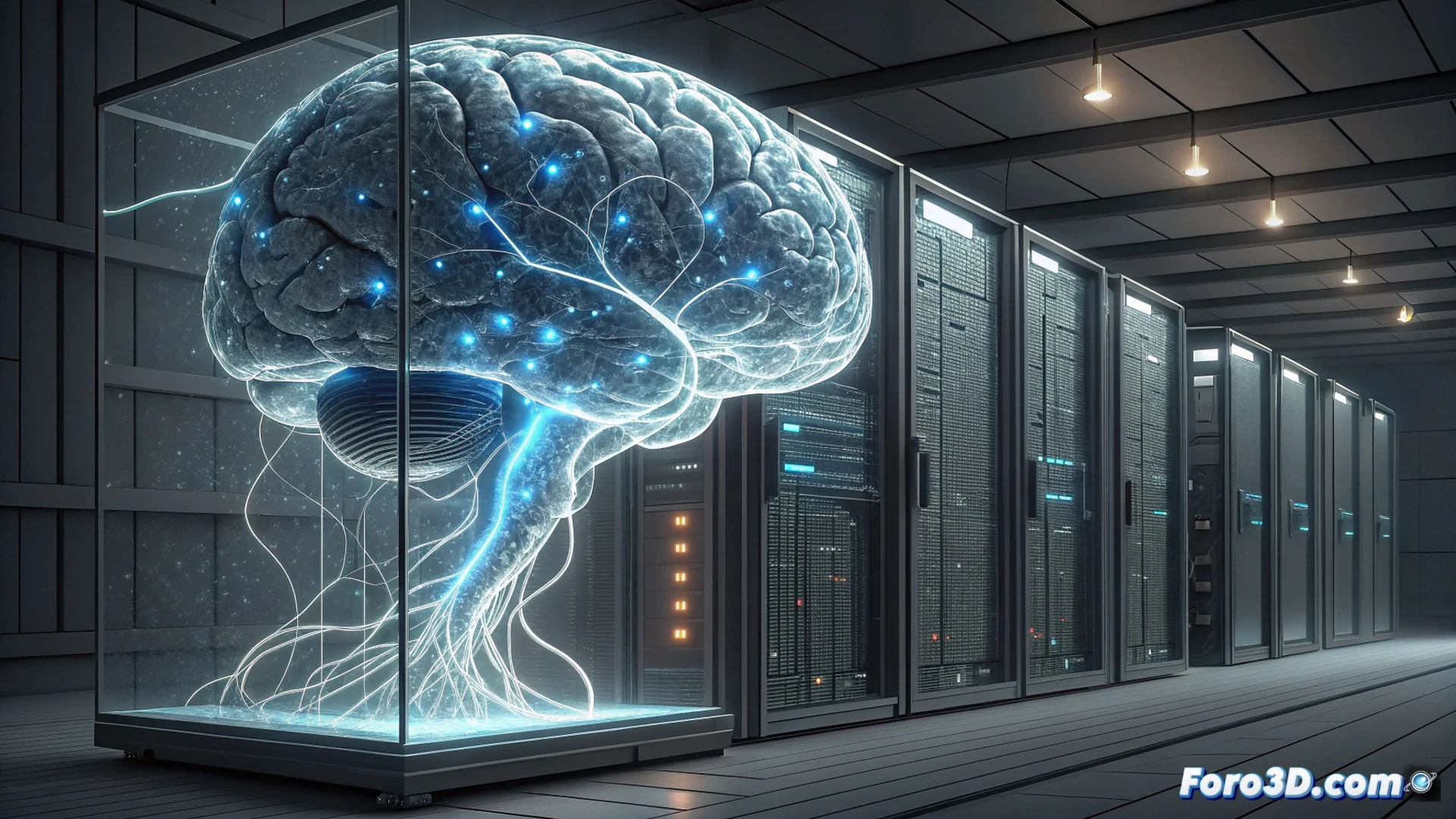
Supercomputers Simulate Billions of Neurons
The computing power of the most advanced supercomputers has reached a milestone, now enabling the execution of simulations that represent networks with billions of neurons. This quantitative leap transforms computational neuroscience, offering an unprecedented window into the complexity of the brain. 🧠
A New Paradigm for Exploring the Brain
The main goal is no longer just to count cells, but to understand how the human brain organizes and processes information. Researchers use these massive models to observe brain dynamics that were previously impossible to replicate digitally, analyzing emerging patterns on a global scale.
Fundamental Pillars of Simulation:- Large-Scale Connectivity: Replicating the intricate connection patterns between neurons, beyond mere quantity.
- Communication Principles: Modeling how nerve cells communicate to give rise to complex functions.
- Bridge Between Scales: Closing the gap between the activity of a single neuron and the behavior of complete brain systems.
Now scientists can test hypotheses about how the brain works at speeds and with detail never seen before.
Technical Challenges and Convergent Future
Simulating a biological brain with total fidelity remains a colossal challenge. The model must include trillions of synapses and the diversity of cell types, demanding constantly evolving hardware and algorithms. Each new generation brings us closer to this goal.
Expected Impact and Applications:- Revealing Brain Secrets: Discovering the mechanisms behind memory, learning, and other cognitive functions.
- Inspiring New AI: Discoveries could inspire more efficient and powerful artificial intelligence architectures.
- Feedback Loop: Creating a continuous dialogue between advances in biology and progress in computing.
The Path to Brain Emulation
This capability represents more than a technical achievement; it is a fundamental tool for unraveling the mysteries of the mind. Advances in neuronal simulation not only expand our knowledge but also redefine the boundary between biology and technology, promising to revolutionize both fields. ⚡