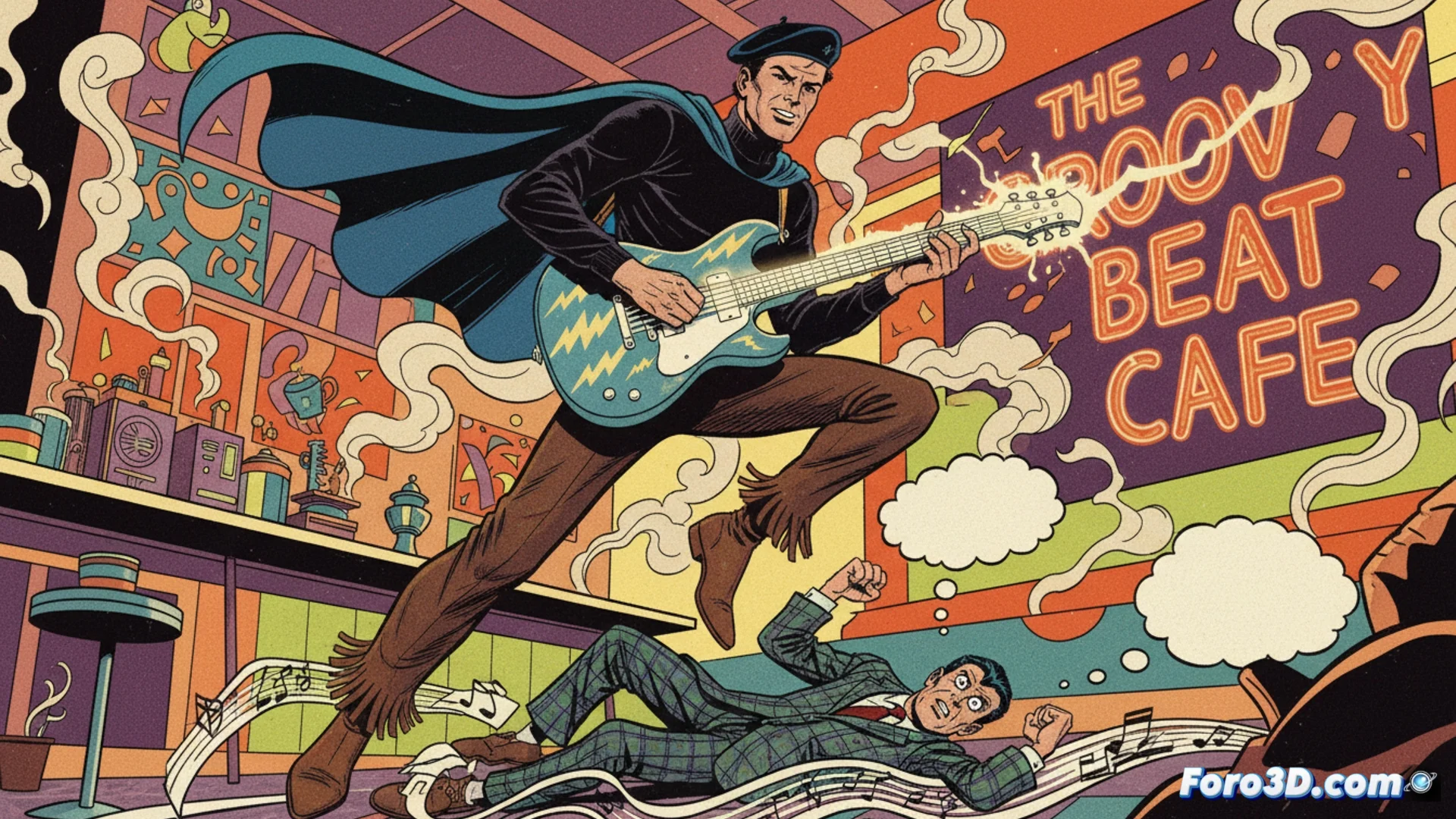
Super-Hip: the beatnik satire in 1965 comics
The year 1965 saw the birth of one of the most peculiar parodies in the comic book world. Writer Arnold Drake and artist Bob Oksner conceived Super-Hip for the pages of The Adventures of Bob Hope #95. This hero was born to mock two simultaneous phenomena: the youth beatnik fad and the omnipresence of superheroes. 🎸
The origin of a musical antihero
Within the comic book, Super-Hip presents himself as Tadwallader Jutefruce, the nephew of the famous comedian Bob Hope. This young man embodies the beatnik stereotype, but his life takes a turn thanks to an unusual object: a magic guitar. This instrument is not just for playing music; it is the key to his transformation into a defender of the "cool."
Key character features:- Secret identity: Tadwallader Jutefruce, nephew of Bob Hope within the comic book universe.
- Power origin: A magic guitar that activates his metamorphosis.
- Cultural context: A direct satire of the beatnik aesthetic and attitude, already in decline by the mid-60s.
A hero whose main power was playing guitar solos that knocked out villains.
A design that ridicules heroic codes
Upon playing his guitar, Tadwallader adopts the identity of Super-Hip. His superhero suit deliberately absurdly mixes genre conventions with countercultural elements. The classic cape clashes with details like fringed boots, creating a costume intended to look modern but resulting in something deeply anachronistic and funny. This design reinforces the parody, showing a champion who fights evil with a supposedly laid-back style. 🦸♂️
Transformation elements:- Activation: The act of playing the magic guitar.
- Costume: Fusion of heroic cape with beatnik accessories (fringed boots).
- Aesthetic purpose: Highlight the comic and outdated within the serious superhero world.
Legacy and impact of the parody
Super-Hip appeared when the beatnik wave was already receding, adding a layer of humor about a trend starting to be perceived as obsolete. Although he did not enjoy a long run in publications, his figure is a clear example of how Silver Age comics could laugh at themselves and the social currents of the moment. His creation humorously reflects how the industry tried to connect with a younger audience through self-criticism and satire. Perhaps he was the "coolest" hero, though his effectiveness depended more on the rhythm of a guitar solo than on brute force. 😎