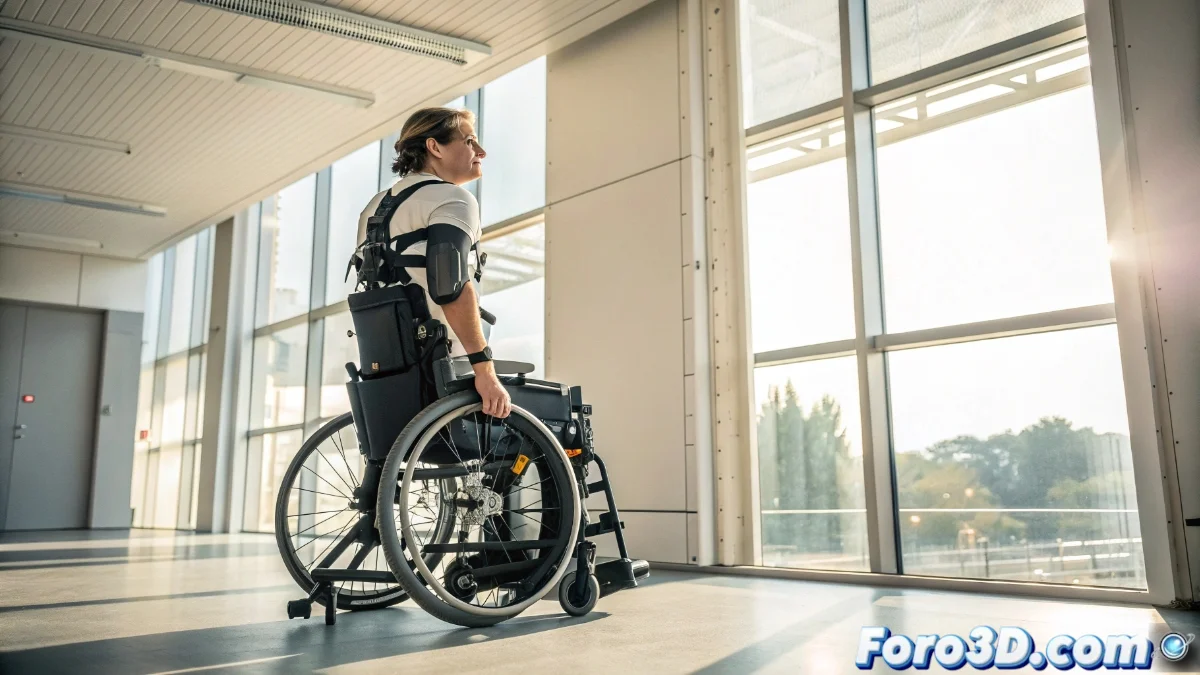
SuitX Phoenix Exoskeleton: Accessible Technology for Reduced Mobility
The company SuitX has revolutionized the field of motor assistance with the development of the Phoenix exoskeleton, an innovative solution that combines lightness, adaptability, and affordable cost for people with mobility limitations in the lower extremities. This device represents a significant advance in personal autonomy, allowing basic activities to be performed with integrated motorized support 🦿.
Ergonomic Design and Modular Configuration
The Phoenix stands out for its ultra-lightweight architecture that does not compromise structural durability, incorporating specialized actuators in hip and knee joints that respond to the user's micro-movements through high-sensitivity sensors. The modular configuration facilitates personalized adjustments according to body morphology, significantly reducing the initial adaptation period.
Main technical features:- Structure composed of lightweight materials with strategic reinforcements at support points
- Movement intention detection system using inertial sensors
- Interchangeable modules for adaptation to different sizes and specific needs
The true innovation is not in creating complex technology, but in making it accessible to those who need it most - SuitX Design Philosophy
Practical Applications and Everyday Benefits
The economic accessibility approach differentiates the Phoenix from conventional exoskeletons, expanding its reach to a wider spectrum of users. Its applications range from rehabilitation sessions to the development of household activities, providing customizable gait patterns that improve integration into everyday environments.
Areas of use:- Motor rehabilitation in specialized centers and at home
- Assistance for indoor displacements and daily tasks
- Progressive training of residual motor abilities
Impact on Quality of Life and Autonomy
The implementation of the Phoenix exoskeleton transforms the experience of reduced mobility, granting recovered independence for actions as simple as getting up to fetch objects or moving through familiar spaces. This technology brings the future of motor assistance to the immediate present, demonstrating that innovation can be practical, economical, and transformative 💫.