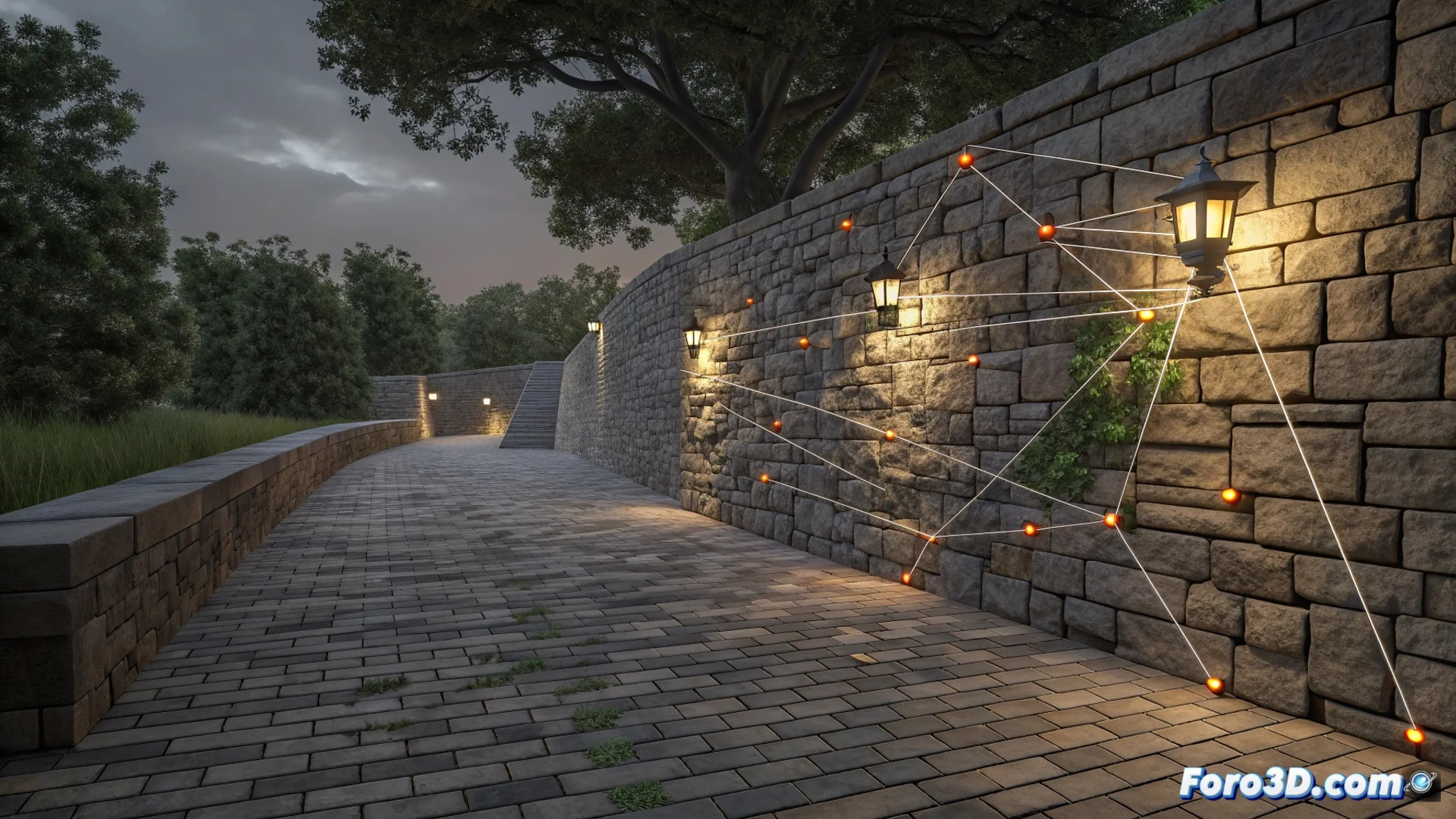
Substance Designer: Create Procedural Materials with Nodes
In the 3D industry, Substance Designer stands out as the essential tool for generating complex PBR materials parametrically. Its core is a procedural environment where nodes are linked to produce noise, transform data, and apply filters. This non-destructive method is the standard for producing high-quality tileable textures, widely used in video game development and visual effects for cinema. The assets you create are fully editable and can be exported to a wide variety of rendering and game engines. 🧱
The Heart of the Process: The Node Graph
The user builds materials by connecting different nodes in a visual graph. Each one performs a specific task, such as generating a pattern, blending channels, adjusting levels, or simulating a surface. When modifying any parameter in a node, the material updates instantly. This system allows for rapid iteration and efficient production of variations from the same asset. The final result is typically a set of texture maps (albedo, roughness, metallic, normal) that fully define the visual appearance of the material.
Key Advantages of the Nodal System:- Real-time updates when adjusting parameters.
- Ability to create multiple variations from the same base graph.
- Automatic generation of ready-to-use PBR texture maps.
Mastering this workflow allows you to control every detail of a surface, from the grain of wood to the oxidation of metal.
Parametric and Non-Destructive: Total Flexibility
A fundamental advantage is that the entire process is non-destructive. You can go back to any point in the graph and adjust values without losing previous work. Materials are parametric, meaning their properties are governed by numerical values and logic. This simplifies creating libraries of smart materials where you can alter, for example, the tone of a metal or the intensity of wear with a single control. The option to package complex graphs into reusable custom nodes greatly streamlines the production pipeline.
Features of the Parametric Approach:- Edit at any stage without compromising previous work.
- Create master controls to manage multiple properties.
- Develop reusable and customizable assets for future projects.
Power for Professional Production
Substance Designer goes beyond being a simple texturing tool; it is an engine for producing visual assets systematically and scalably. Its integration with other software in the Substance suite and with engines like Unreal Engine or Unity makes it a pillar of modern development. Although sometimes spending hours refining a single virtual brick may make you reflect, the final result always justifies the process. 🎨