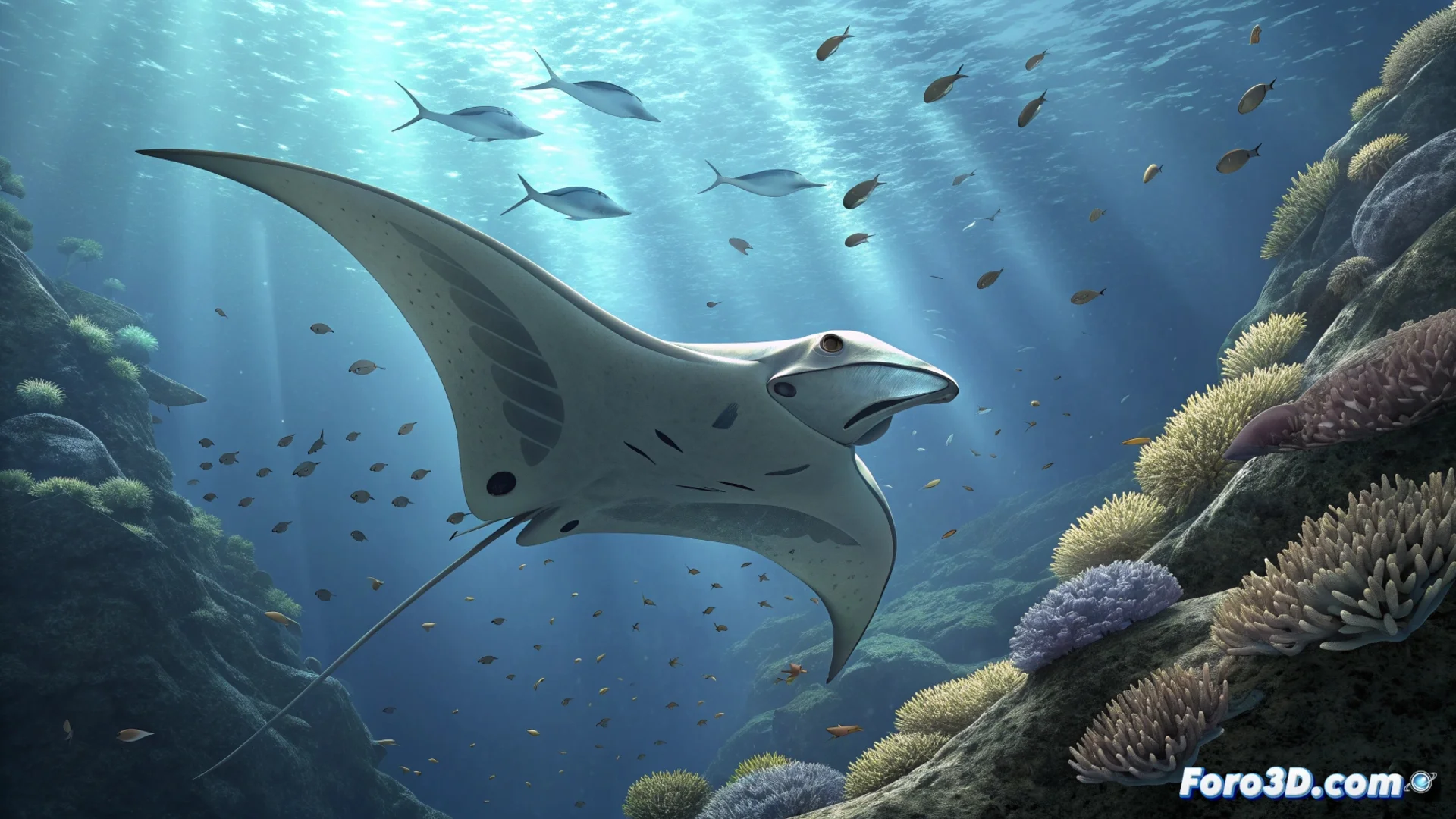
Submarine Robots Imitate Rays to Explore the Sea
Robotics inspired by biology creates water robots that copy the swimming of rays. These devices use undulating fins to advance with little effort, ideal for intricate underwater areas. They avoid propeller failures that alter delicate habitats or get tangled in algae
The technical challenge is in scaling the design
Small models prove they work well, but making large versions brings serious problems. They require strong materials, robust power sources, and advanced controls to ensure balance and agility in the water.
Key aspects for scaling:- Materials that withstand high pressures
- Systems that deliver more power ⚙️
- Mechanisms that adjust movements in real time
Sure, because the ocean needs more objects that simulate animals but serve to monitor. Ideal when fish notice and question what that device chasing them is doing.
Practical uses vary
These soft and quiet robots examine corals without causing damage, monitor pipelines or cables on the seabed, and collect ocean data discreetly. They approach wildlife without disturbing it, which helps in biology studies.
Improvements in development:- Increase operational independence ️
- Deepen extreme operations
- Improve interactions with the environment
Conclusion
This advance in bio-inspired robotics promises efficient submarine robots for scientific and maintenance tasks, with a focus on autonomy and low environmental impact