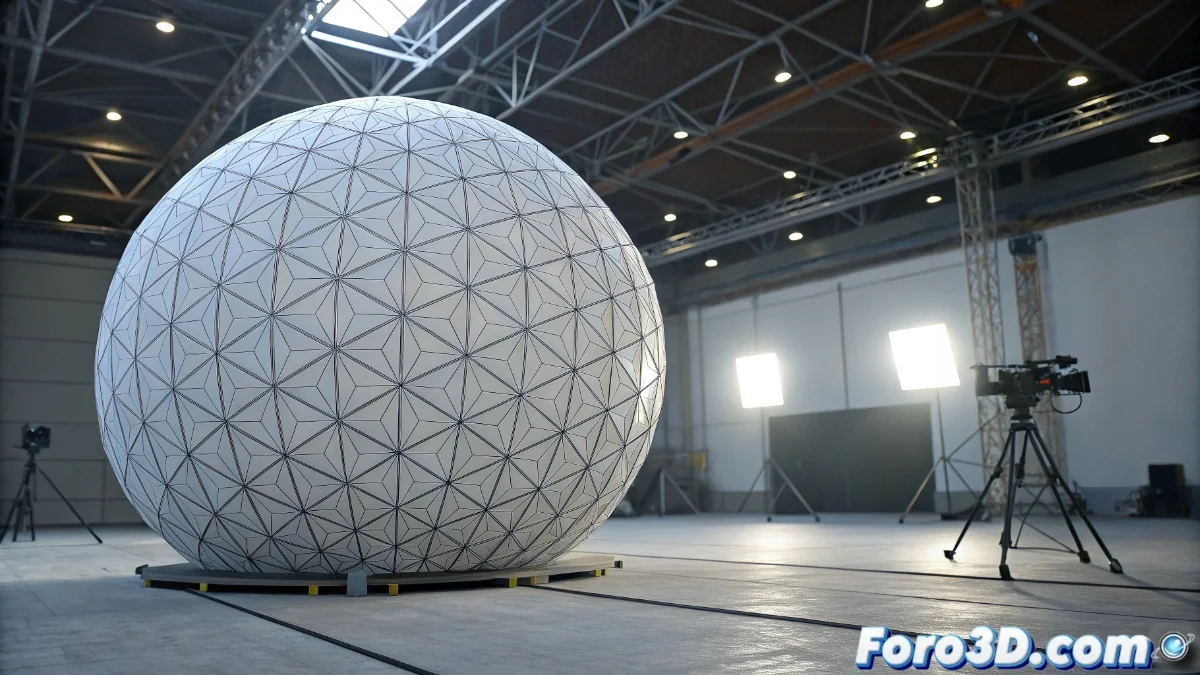
Subdivision Surface in Blender 5: Revolutionary Advances in Organic Modeling
The subdivision surface tool in Blender 5 marks a milestone in organic modeling, providing unprecedented control over the creation of smooth and natural surfaces. This evolution allows artists to visualize final results in real time while working with low-resolution meshes, significantly optimizing the creative workflow 🎨.
Improved Algorithms for Greater Efficiency
The renewed implementation includes optimized algorithms that reduce system resource consumption without sacrificing visual quality. These advances facilitate the modeling of characters and complex objects with organic curves, maintaining smooth performance even in detailed scenes.
Main algorithmic improvements:- Accelerated calculation of adaptive subdivisions for faster processing speed
- Superior handling of sharp edges and transitions between subdivision levels
- Significant reduction of common artifacts from previous versions
The subdivision surface seems to have a mind of its own, choosing critical moments to create spectacular visual artifacts when you least expect it
Seamless Integration with the Blender Ecosystem
This tool connects fluidly with Blender 5's modifier system and shading workflow. Artists can combine subdivision surface with the multiresolution modifier to sculpt fine details, maintaining the flexibility to dynamically adjust subdivision levels.
Integration advantages:- Improved compatibility with displacement maps and normal maps for high-quality results
- Performance optimization in complex scenes through simplified geometry
- Maintenance of visual realism without compromising rendering efficiency
Impact on the Creative Workflow
The evolution of subdivision surface in Blender 5 represents a paradigm shift in 3D modeling, offering artists more intuitive and powerful tools to materialize their creative vision. The ability to maintain defined details in specific areas while smoothing other sections opens new possibilities for creating complex organic models with an unprecedented level of control ✨.