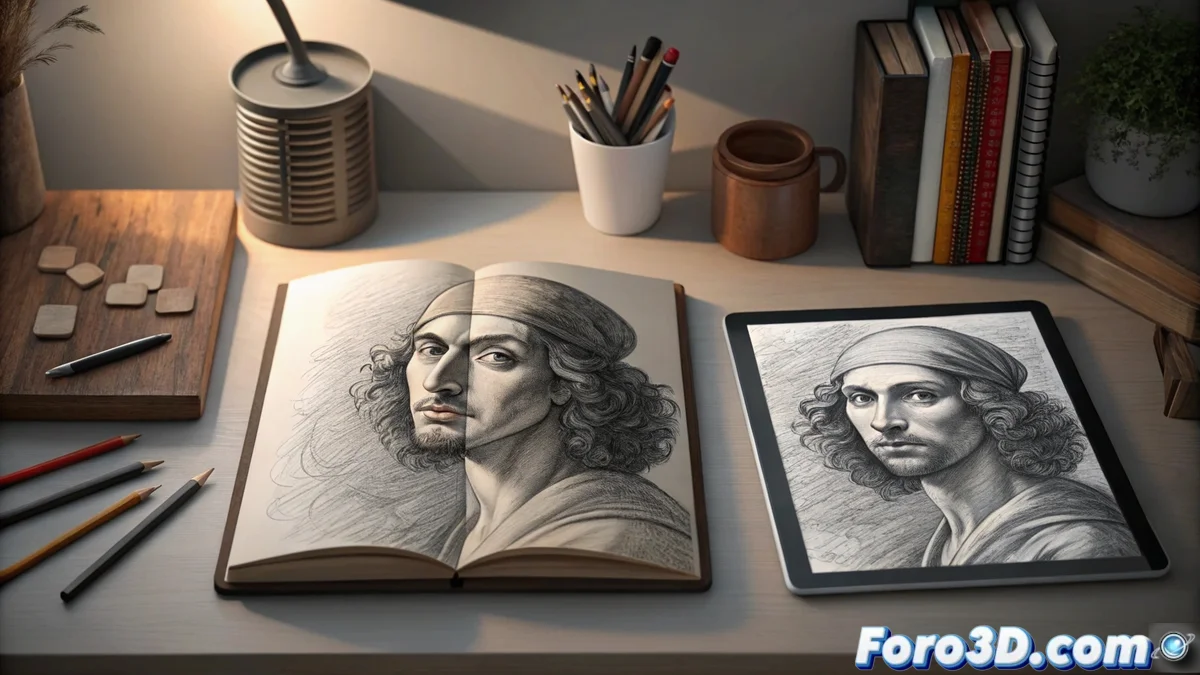
Study of Artistic Works to Improve Your Drawing Skills
Exploring how other artists approach visual problems is a key strategy for any developing drawer. This methodology allows breaking down the creative process into components such as lines, shading, compositional structure, and personal style, recognizing the specific choices each creator implements to convey their ideas effectively 🎨.
Detailed Analysis of Visual Components
The approach begins with a meticulous observation of how various artists handle concrete elements. Lines can range from firm strokes and outlines to more free and expressive approximations, while the treatment of shadows reveals the construction of volume and three-dimensionality. The composition illustrates the organization of elements within the space to direct the viewer's attention, and the style reflects the unique identity that each artist imprints on their creation. This methodical decomposition facilitates understanding not only the decisions made, but also why they are successful in the global context of the work.
Key Elements to Consider:- Stroke variation: from defined lines to gestural and loose approximations
- Shadow treatment: essential for building volume and depth in illustrations
- Spatial composition: organization of elements to guide the observer's gaze
True learning occurs when theory meets practice on paper.
Practical Application in Artistic Growth
Once these visual solutions have been identified, the next step is to experiment with them in your own projects. It is not about literal copying, but about internalizing the fundamental principles and adapting them to your personal style and specific needs. You can try various approaches to solve similar challenges, integrating techniques from multiple artists to develop hybrid solutions that align with your creative vision. This continuous practice significantly accelerates learning and contributes to discovering your artistic voice more quickly, as you are building on the collective knowledge of those who have already faced analogous obstacles.
Implementation Strategies:- Experimentation with different technical approaches without copying directly
- Combination of methods from various artists to create customized hybrid solutions
- Constant practice that accelerates the discovery of your unique style
Balance Between Analysis and Practice
It is crucial to remember that if you analyze excessively others' works without applying it actively, you might become an excellent art critic but continue drawing like a beginner. Meaningful learning arises when theory materializes through constant practice on paper, transforming observed knowledge into tangible skills and authentic artistic development ✏️.