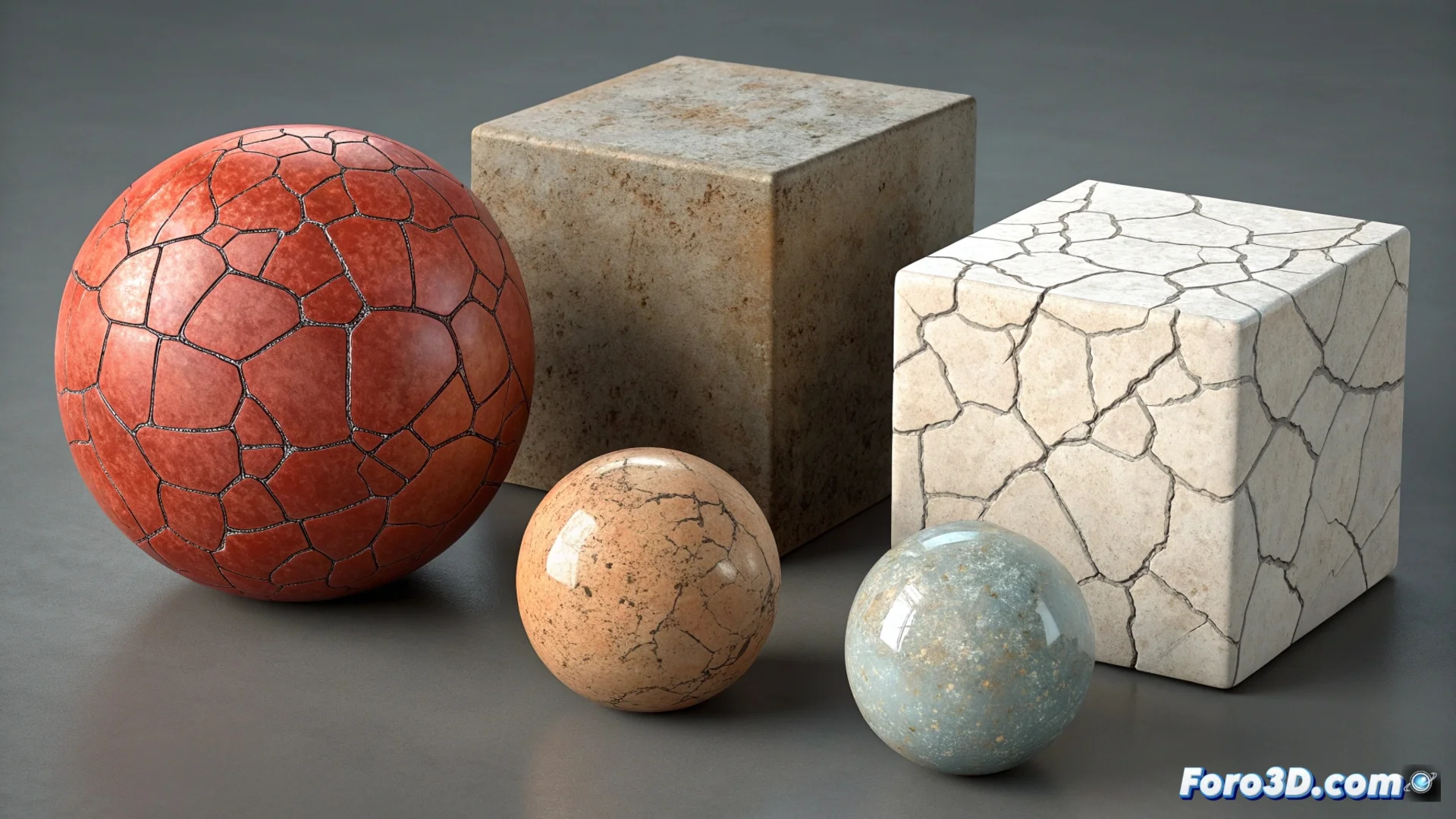
Studying How Materials Deform to Improve Drawing
This method goes beyond capturing the static shape of an object. It proposes analyzing and simulating how different materials react when a force acts upon them. The key is understanding that the material dictates the final shape, forcing the artist to consider properties like viscosity or elasticity. It is training to observe and predict physical behavior in an image 🎨.
Process to Apply the Deformation Technique
The exercise is structured in clear steps. First, a basic geometric shape and a constant force, such as gravity, are selected. Then, a material with extreme physical properties is assigned, and the resulting transformation is drawn.
Examples of Material Behavior:- Clay: Gravity causes it to sink and flatten at the base. The edges round off and flow to the sides.
- Water: It seeks its level. A sphere spreads out, forming a low puddle with a reflective surface.
- Red-Hot Metal: It bends and stretches downward, almost dripping. The surfaces shine irregularly.
- Ice: When falling, it cracks and fractures. It maintains defined volumes but with clean break lines.
- Foam Rubber: It compresses unevenly, generating deep folds. It shows partial elastic recovery that distorts the original silhouette.
A foam rubber cube under a hydraulic press may not be the most heroic subject, but its elastic struggle against the force is a drama in itself.
Advantages of Mastering This Study
Practicing this method regularly develops a intuitive understanding of physics applied to art. It allows communicating the weight, texture, and even the history of an object solely through its deformed shape.
Key Practical Applications:- Animation and 3D: It is essential for creating believable characters, creatures, or scenarios, where materials must behave as the viewer expects.
- Concept Art: It adds depth and realism to designs, moving beyond copying outlines to simulating reality.
- General Illustration: It improves the ability to draw any object subjected to forces, from clothing moved by the wind to structures under stress.
Integrating Material Thinking into Your Workflow
This approach transforms the way drawing is approached. Instead of just representing, the artist analyzes and synthesizes the interaction between force and matter. This practical knowledge is an essential layer for anyone who wants to produce visual works with a solid and credible foundation, elevating the narrative and technical quality of each piece ✏️.