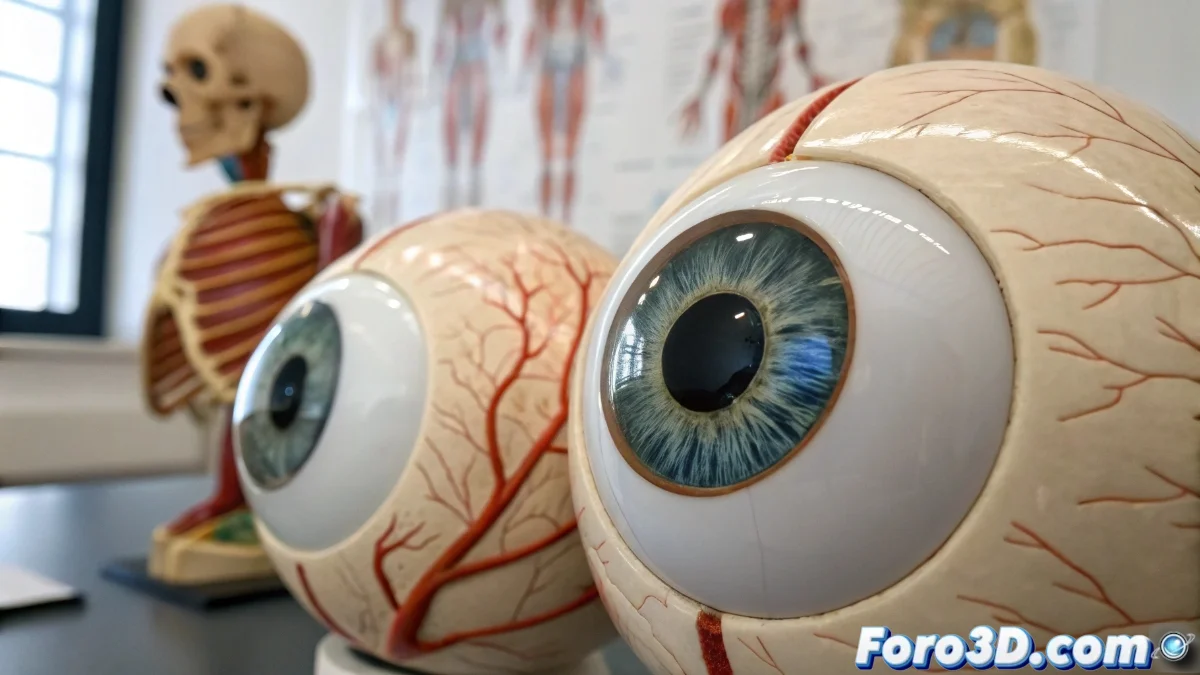
Strabismus: when the eyes do not align correctly
Strabismus represents a visual disorder where there is an evident lack of coordination in the gaze direction of both eyes when focusing on a specific object. This condition arises because the extraocular muscles responsible for eye movement do not function in a synchronized manner, generally due to neurological or muscular issues. The brain then receives two different images that cannot fuse properly, generating double vision or, in prolonged situations, the suppression of one image to avoid confusion, which can lead to amblyopia or lazy eye if not intervened in a timely manner 👁️🗨️.
Classification of strabismus and triggering factors
The manifestations of strabismus are categorized mainly according to the direction of the ocular deviation, presenting various variants with particular characteristics. The causes can be congenital, appearing from birth, or develop later due to multiple triggering factors.
Main types of deviation:- Esotropia: convergent deviation toward the nose
- Exotropia: divergent deviation outward
- Hypertropia: vertical deviation upward
- Hypotropia: vertical deviation downward
Untreated strabismus in childhood can cause permanent vision loss, so early diagnosis is essential to preserve visual function.
Diagnostic evaluation and therapeutic alternatives
The diagnostic process requires a comprehensive ophthalmological evaluation that includes specific tests for ocular alignment, measurement of visual acuity, and complete analysis of eyeball motility. Treatment options are selected based on the severity of the case, the patient's age, and the specific characteristics of the deviation.
Available therapeutic approaches:- Corrective glasses: to compensate for associated refractive errors
- Visual therapy: orthoptic and occlusive exercises to improve coordination
- Surgical intervention: adjustment of ocular muscles in severe cases
Visual impact and social considerations
Some people humorously describe strabismus as a defective three-dimensional vision, where instead of perceiving depth, two visual realities that do not match are experienced. Although conceptually it could be imagined as an advantage for observing multiple directions simultaneously, the reality is that the human brain chooses to suppress one of the images to maintain perceptual coherence and avoid sensory confusion 🧠. Early detection remains the most important factor in preventing permanent visual complications, especially during childhood when the visual system is still developing.