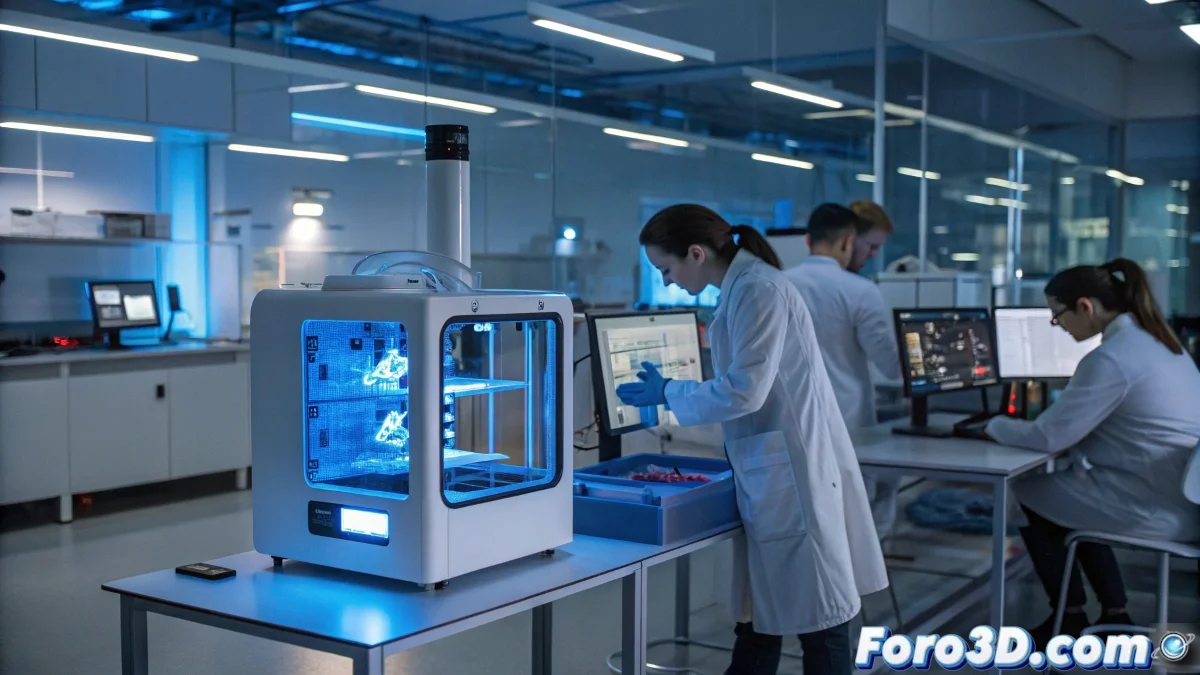
STOMP: when 3D printing serves biology
In a lab at the University of Washington, someone had a brilliant idea: what if we use 3D printing to play with human cells like Lego pieces? That's how STOMP was born, a device that's revolutionizing the way scientists model human tissues. It's like going from building sandcastles to constructing cellular cities with microscopic precision. 🔬
Scientific gelatin with cells instead of fruit
Imagine preparing gelatin, but instead of strawberry chunks you use cardiac cells. That's basically what STOMP does, though with much more precision and less risk of someone eating it by mistake. This device allows organizing cells into complex 3D structures, creating tissue models that behave almost like the real ones. The difference is that these don't complain or ask for sick days.
"It's like having a biological construction set where each piece is a living cell" - explained some scientist who clearly played a lot with Lego as a kid.
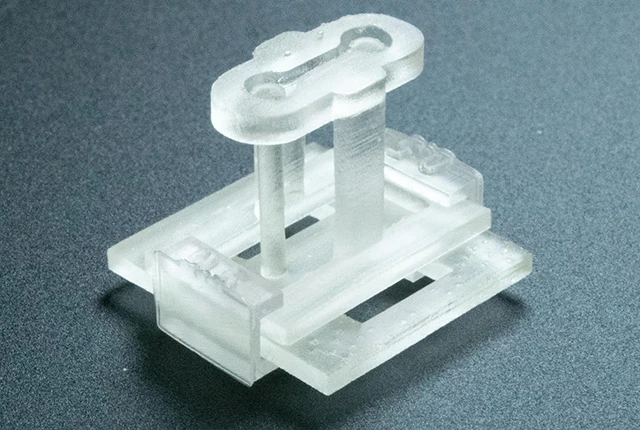
Why this should matter to 3D artists
Although it sounds like a lab-exclusive topic, STOMP has a lot to do with digital design:
- 3D modeling at a microscopic scale with millimeter precision
- Biological texturing where the "textures" are real cells
- Layer systems more complex than any Photoshop project
It's basically the final project that a 3D design student would make if they had access to a biology lab. 🧪
The trick is in the disappearing walls
The magic of STOMP lies in its hydrogel molds with superpowers:
- They keep the cells in place during the "assembly"
- They dissolve when no longer needed, like 3D printing supports
- They leave no residues that bother the cells (which are quite finicky)
It's like having a box that self-destructs once you've finished storing your things, but in an elegant and scientific way.
A multidisciplinary team for a revolutionary project
Behind STOMP is a dream team of scientists that proves innovation happens at the intersections:
- Engineers who design the microscopic molds
- Biologists who understand cellular behavior
- Chemists who develop the special hydrogels
It's like when in a 3D production modelers, animators, and technical artists come together, but with lab coats instead of video game t-shirts.
So the next time you're modeling in 3D, think that in some lab scientists are doing something similar, but with real cells. That said, they can't just hit Ctrl+Z if they make a mistake. 😅