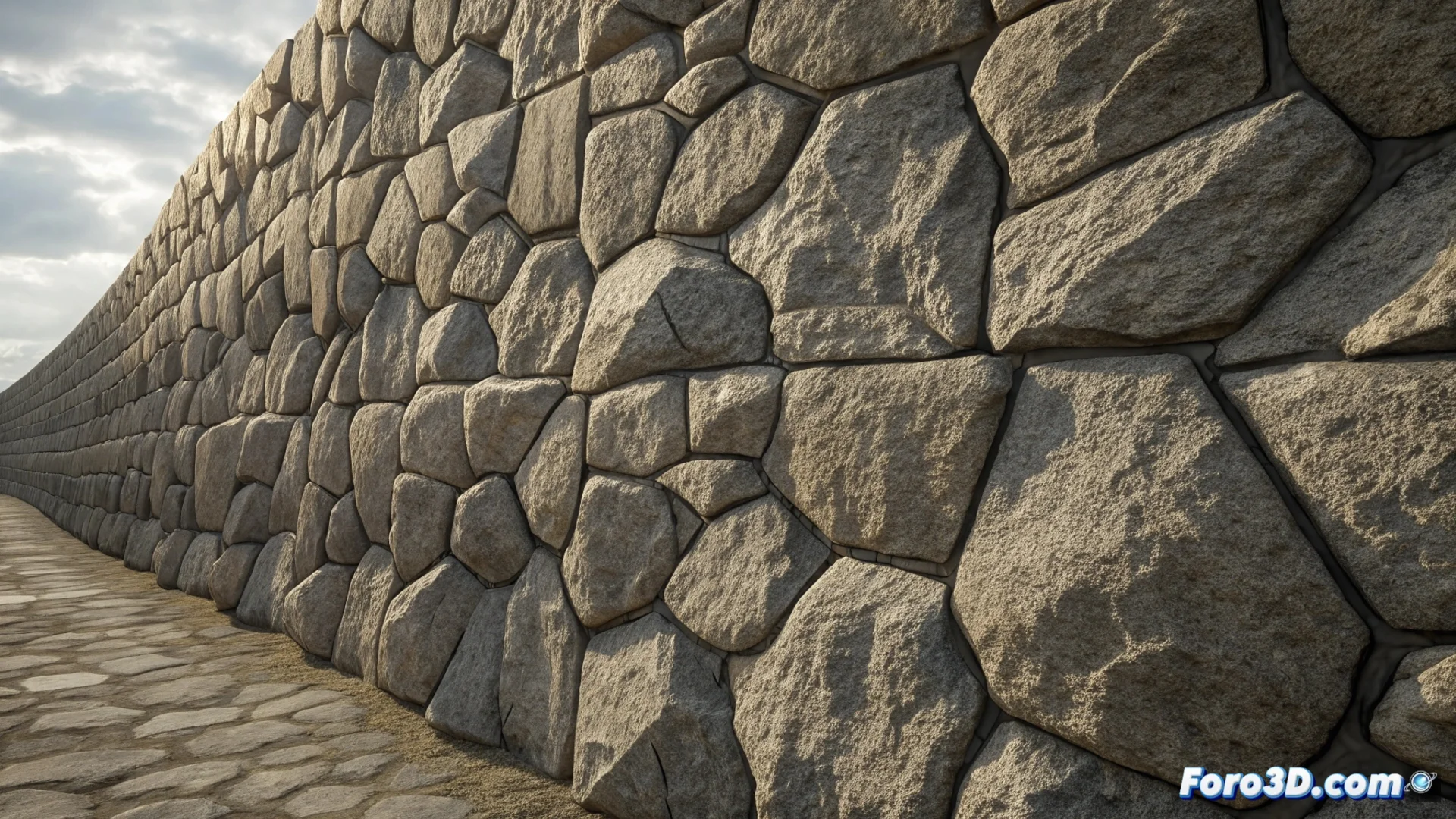
Stochastic Texturing to Solve Repetitive Patterns
In the world of 3D graphics, a persistent challenge is avoiding textures looking repetitive when covering large surfaces. Stochastic texturing emerges as an elegant solution, generating or blending maps through random patterns that the artist can direct. This approach transforms how we create extensive and detailed environments 🎨.
The core of the method: controlled randomness
The technique does not rely on pure chaos, but on using coherent noise functions, such as Perlin or Simplex, to distribute texture samples. A shader takes several small detail maps and combines them according to random values that change with the UV position or world coordinates. This produces variation in color, micro-surface, and relief, mimicking natural materials like stone or wood. The key is that this randomness is deterministic: it looks the same from any fixed viewpoint, preventing visual artifacts like flickering.
Key advantages of the stochastic workflow:- Eliminates repetitive patterns: Breaks the visibility of edges when tiling, creating unique and believable surfaces at large scales.
- Frees artists: They no longer depend on a single huge texture map, but can procedurally combine several smaller details.
- Engines process it in real time: Allows covering extensive terrains or complex buildings without perceiving edges or repetitions.
The real challenge is not generating chaos, but taming it so it doesn't look like a pixel salad on a wall that should be brick.
Implementing and optimizing the process
Integrating this workflow drastically optimizes memory usage, as small texture assets are reused. Stochastic packages usually include sets of maps that share scale and distribution. To implement it, the material is adjusted to sample multiple textures and blend them using a procedurally generated mask map.
Practical steps and considerations:- Set up the material: Adjust it to sample multiple textures and blend them with a procedural mask or a stochastic tiling texture.
- Use authoring tools: Many engines and material editors already include specific nodes for this purpose, speeding up material setup.
- Control the result: The goal is to direct the randomness to maintain material coherence, ensuring that a brick wall is perceived as such and not as an abstract pattern.
A leap in creating scalable materials
Stochastic texturing represents a significant advance for creating scalable and efficient materials. By solving the problem of visible repetitions and reducing memory load, it allows artists and developers to build vaster and more detailed worlds without compromising performance. It is a technique that balances the power of procedural generation with the necessary artistic control 🚀.