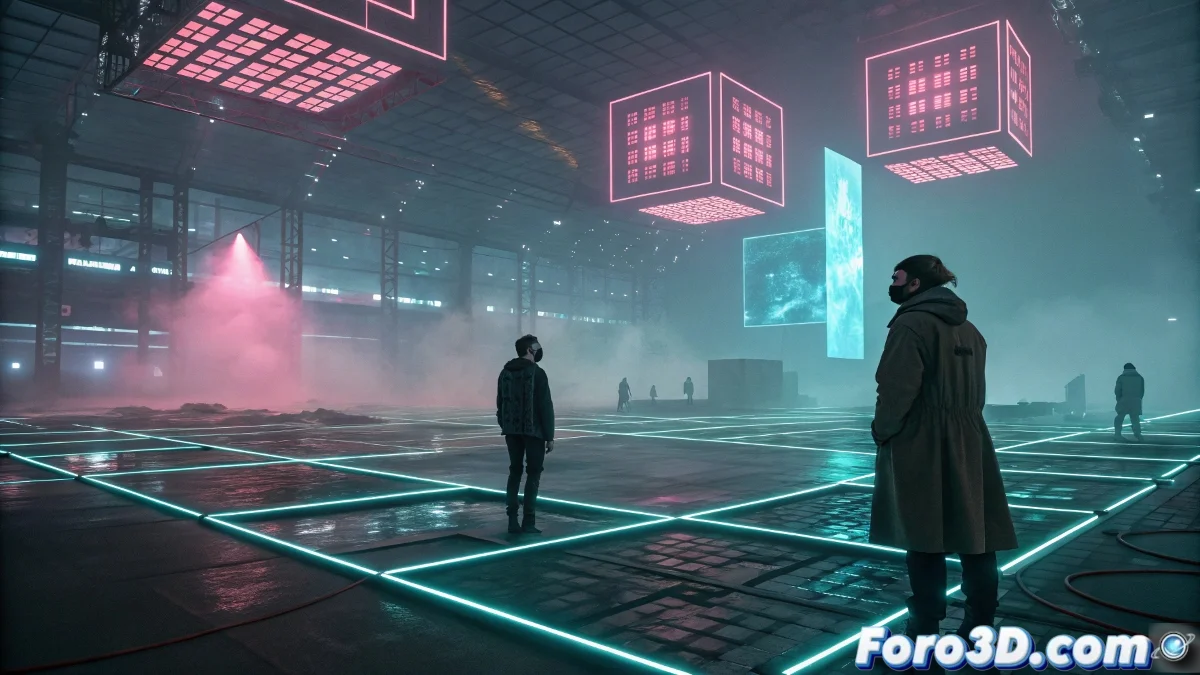
Squid Game: Innovations in Visual Effects by Gulliver Studios
The third season of Squid Game not only marks a dramatic return of Gi Hun, but also a more ambitious visual display thanks to the meticulous work of Gulliver Studios, responsible for the visual effects (VFX) that bring this twisted competition to life.
VFX that expand the psychology of the game
Gulliver Studios has achieved more than creating stunning scenarios: they have transformed the environment into another character. The new arenas combine architectural surrealism with an oppressive atmosphere that intensifies the players' emotional tension. From environments that decompose in real time to dreamlike sequences that reflect Gi Hun's guilt and paranoia, the effects not only impress but also narrate.
Technology and unsettling realism
The technology used by Gulliver Studios includes:
- Advanced physics simulation for real-time environment destruction.
- Digital compositing of hybrid scenarios, blending real sets with 3D matte painting and CGI.
- Integration of emotional FX, such as fog, particles, dynamic lighting, and floating camera, all synchronized with the characters' mental state.
- Deep compositing and 3D tracking, which allowed extending the scenarios beyond what was physically built.
It's not just about making everything look impressive. Gulliver's team has used visual effects to represent themes like psychological collapse, manipulation, and distortion of reality within the game. The transitions between the real world and the game world are smoother, visually hallucinatory, and emotionally raw.
In Squid Game, the visual effects are not just a complement, but a fundamental part of the narrative that transports viewers to a world of tension and complex psychology. Every visual detail is carefully designed to immerse us in a unique experience. 🎮