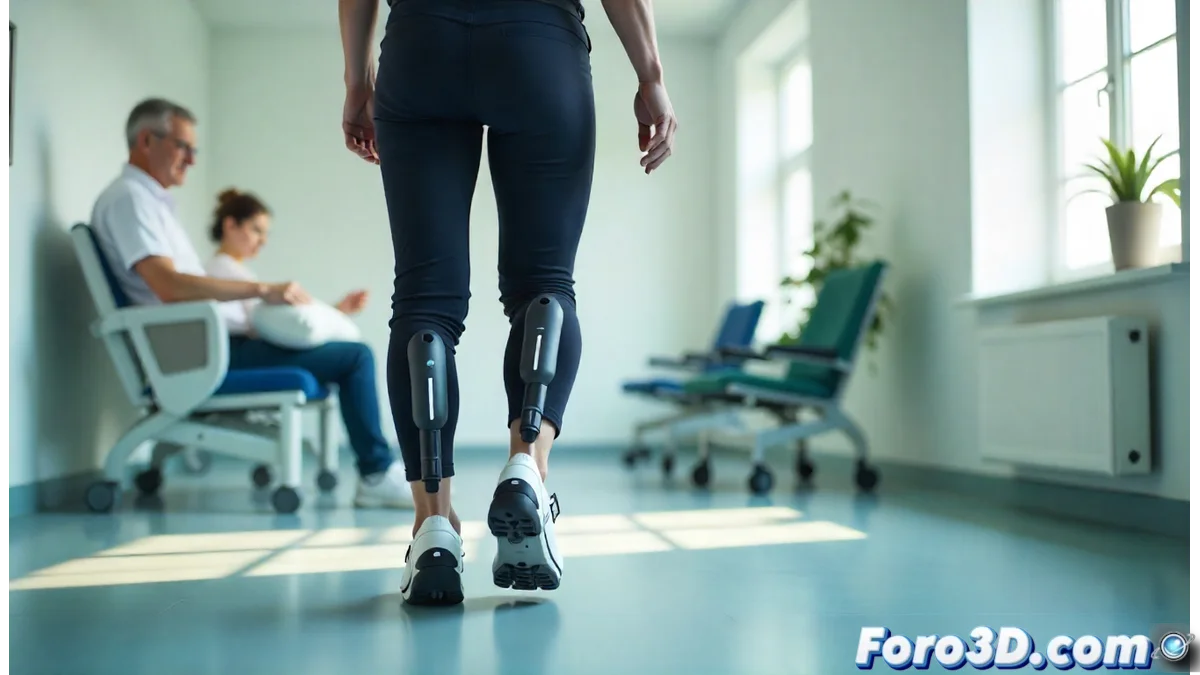
SpringWalker Exoskeletons in Physical Rehabilitation: Technology and Applications
The SpringWalker exoskeletons represent a revolutionary innovation in the field of motor rehabilitation, offering personalized mechanical support for people with mobility limitations. These devices embody the convergence of biomedical engineering and therapy, marking a before and after in human movement assistance 🦿.
Technical Classification and Operating Mechanisms
SpringWalker technology is divided into two main variants according to its power source and mechanical complexity. Active models incorporate electric motors and advanced sensor systems that generate supplementary force to enhance user movements. In contrast, passive systems use energy storage mechanisms such as springs and elastic elements that redistribute biomechanical loads without requiring external power. Both approaches have proven effective in gait recovery protocols and muscle strengthening programs, progressively adapting to each patient's evolution.
Differentiating Features by Type:- Active exoskeletons: Include electromechanical actuators, rechargeable batteries, and real-time control algorithms for dynamic assistance
- Passive exoskeletons: Utilize elastic elements and lever systems that optimize energy expenditure during walking
- Hybrid systems: Combine active and passive technologies to maximize efficiency in different phases of movement
The integration of exoskeletons into rehabilitation therapies not only improves mobility but redefines the limits of functional recovery in neurology and orthopedics
Clinical Implementation and Therapeutic Benefits
In hospital settings and rehabilitation centers, SpringWalker devices are primarily used for patients with spinal cord injuries, stroke sequelae, and neurodegenerative conditions such as multiple sclerosis or Parkinson's. Therapists configure specific assistance parameters that enable the execution of physiological gait patterns with greater safety and less fatigue. Recent scientific evidence confirms that periodic use significantly accelerates functional recovery, increases muscle endurance, and promotes greater autonomy in daily activities. The integrated sensory feedback provides essential quantitative data to monitor progress and adjust interventions in a personalized manner.
Specific Applications in Pathologies:- Post-stroke rehabilitation: Gait re-education and prevention of anomalous compensatory patterns
- Incomplete spinal cord injuries: Enhancement of residual musculature and improvement of postural stability
- Neurodegenerative diseases: Maintenance of ambulatory capacity and slowing of disabling progression
Technological Advances and Future Perspectives
The clinical efficacy of SpringWalker exoskeletons critically depends on factors such as ergonomic fit, adaptability to individual needs, and the user's learning curve. Ongoing research focuses on developing ultralight materials and predictive control algorithms that automatically respond to variations in each patient's biomechanics. Next-generation devices could incorporate brain-machine interfaces for more intuitive control, expanding their applicability to more complex cases. However, challenges such as high cost and the need for technical specialization persist as barriers to the democratization of this technology, driving developments toward more scalable and economically accessible solutions.