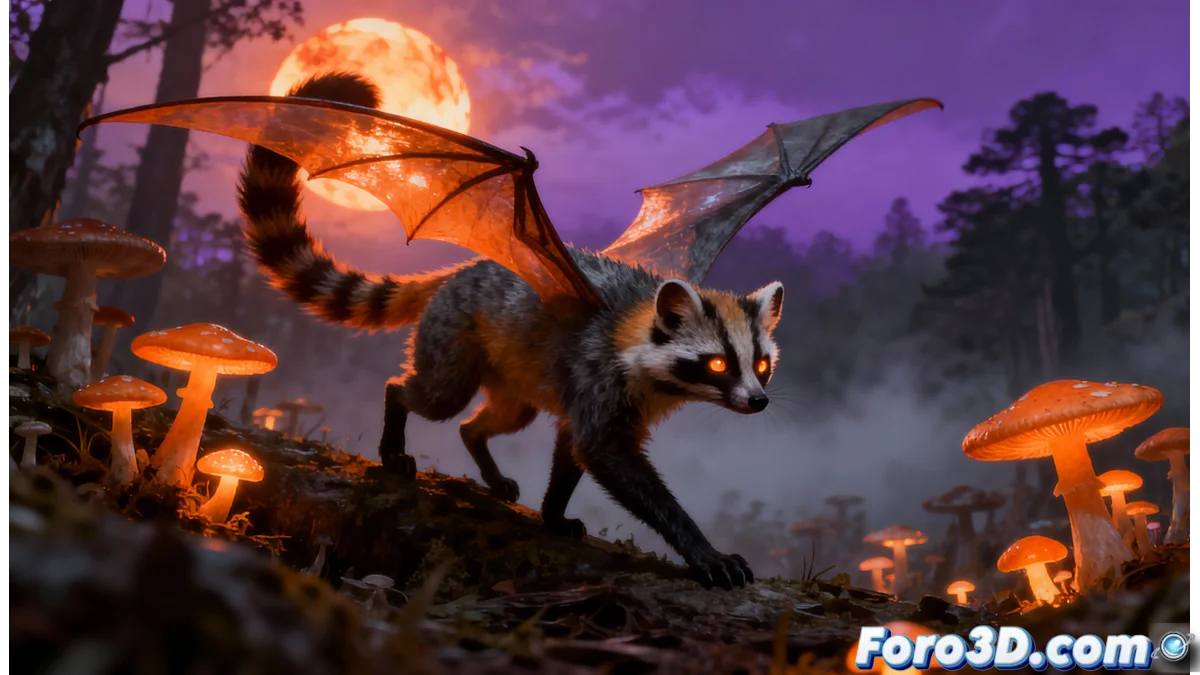
Speculative Creature Design with Evolutionary Foundations
The creation of credible alien beings requires understanding how environmental factors such as gravity, atmospheric composition, and available resources determine biological morphology and functionality through prolonged evolutionary processes. 🪐
Scientific Bases for Convincing Designs
This method begins by selecting a terrestrial organism as a reference and examining its current adaptations. Subsequently, we project how these characteristics would transform under new selective pressures. A mammal in a low-gravity world would develop elongated limbs and demineralized skeleton, while in dense atmospheres it would evolve air filtration mechanisms or acoustic amplification. Internal coherence is fundamental: each anatomical modification must correspond to a specific adaptive advantage, building a solid evolutionary narrative that explains everything from skeletal structure to instinctive behaviors. 🧬
Fundamental Principles of Evolutionary Design:- Exhaustive analysis of the base terrestrial organism's adaptations
- Realistic projection of modifications under new environmental conditions
- Biomechanical justification for each morphological and behavioral change
True mastery in speculative design occurs when your imaginary creature seems so perfectly adapted that it could give productivity advice on social media.
Interaction of Environmental Variables
Gravitational intensity defines body mass and skeletal architecture, the atmosphere conditions respiratory and sensory systems, while the ecosystem determines feeding strategies and defensive mechanisms. A predator on a planet with giant flora would develop mimetic camouflages with bark textures, while aquatic organisms in liquid methane oceans would exhibit specialized cryogenic adaptations. These elements interact synergistically, generating unique designs that reflect the complex organism-environment relationships, avoiding the random mixing of traits that characterizes many conventional fantastic creatures. 🌍
Determining Environmental Factors:- Gravity: direct influence on skeletal structure and locomotion
- Atmospheric composition: determines respiratory systems and communication
- Available resources: shapes feeding strategies and ecological relationships
The Final Challenge of Speculative Design
The culminating point of this creative process occurs when the imaginary creature achieves such a degree of adaptive coherence that its design seems inevitable under the proposed conditions, transcending mere speculation to become a biologically plausible entity that perfectly reflects its fictional environment. 🎨