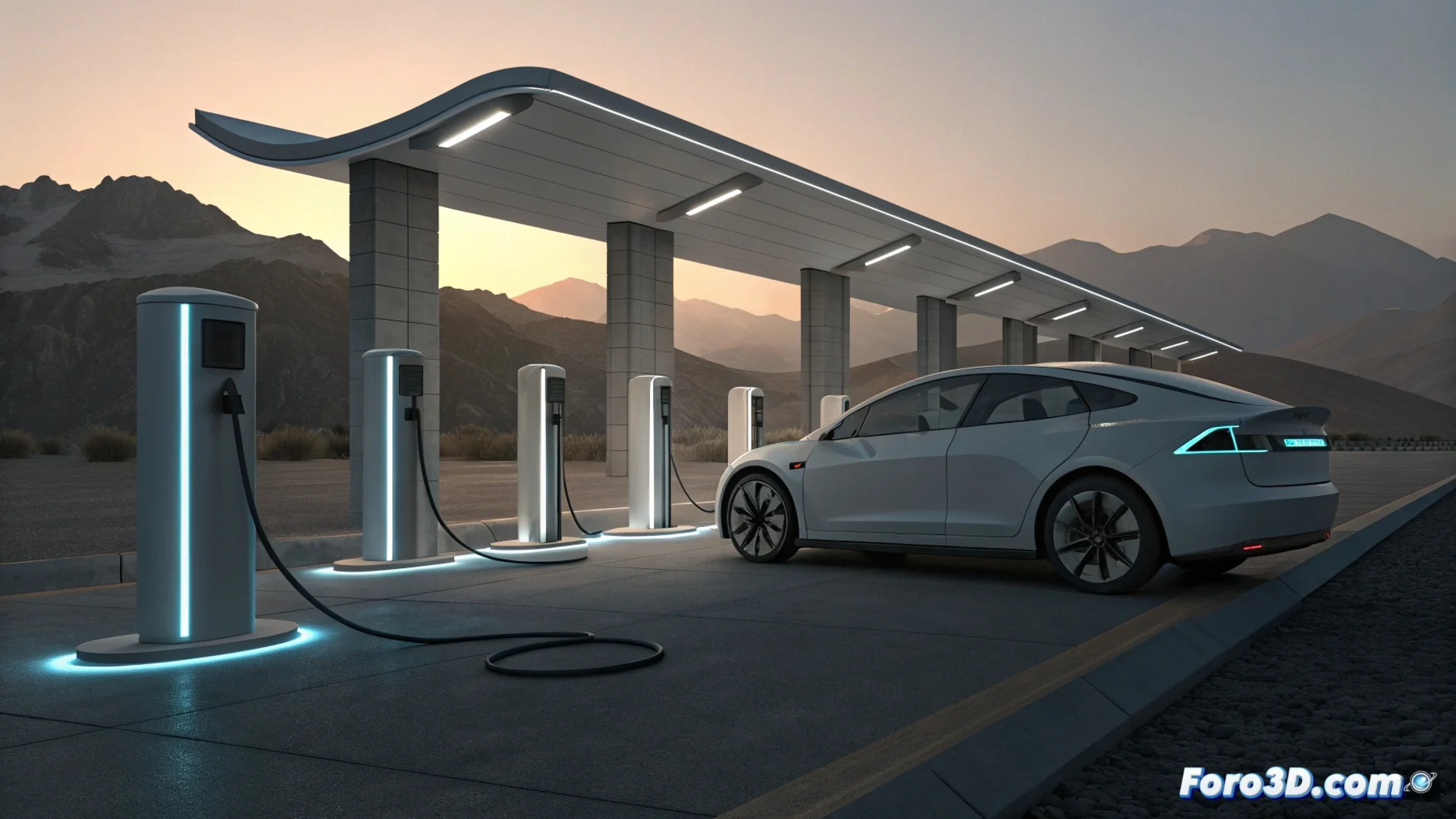
Spain Expands Its Electric Car Charging Point Network
The pace to deploy infrastructure that supports electric vehicles in Spain is accelerating notably. 📈 Current figures confirm a sustained increase in the number of operational plugs throughout the country, a direct response to rising demand and European commitments to achieve sustainable mobility. This strategic expansion aims to cover urban areas, key interurban routes, and rural regions, in order to enable long trips and mitigate range anxiety among users. 🔌
Geographic Coverage Advances, but Challenges Persist
Although the charging map is becoming denser, its distribution does not yet achieve total uniformity. Some autonomous communities have a greater number of stations, while others exhibit a looser and more dispersed network. The current challenge is not limited to installing more points; it is also crucial to ensure their operation, that different systems can interoperate, and that the available power for charging is adequate. In this context, fast and ultra-fast chargers are fundamental elements, as they enable recharging energy in time frames comparable to a traditional fuel stop. ⚡
Main Obstacles to Overcome:- Uneven Distribution: Concentration of stations in specific regions versus others with lower density.
- Maintenance and Operability: Need to ensure that installed points function correctly and are accessible to all users.
- Interoperability: Importance of networks from different operators working together seamlessly for drivers.
Creating a robust and accessible network is key to convincing more users to take the step toward electrifying their mobility.
Regulatory Push and Public Subsidies
Administrations are activating various incentive programs aimed at companies and individuals to install charging points. These financial aids, combined with regulations that are beginning to require this infrastructure in new buildings and large parking lots, act as catalysts for change. The purpose is clear: to establish a solid and easily accessible charging network that persuades more people to opt for electric mobility. 🏗️
Key Impetus Mechanisms:- Aids and Subsidies: Public programs that finance part of the installation of private and public charging points.
- Regulatory Framework