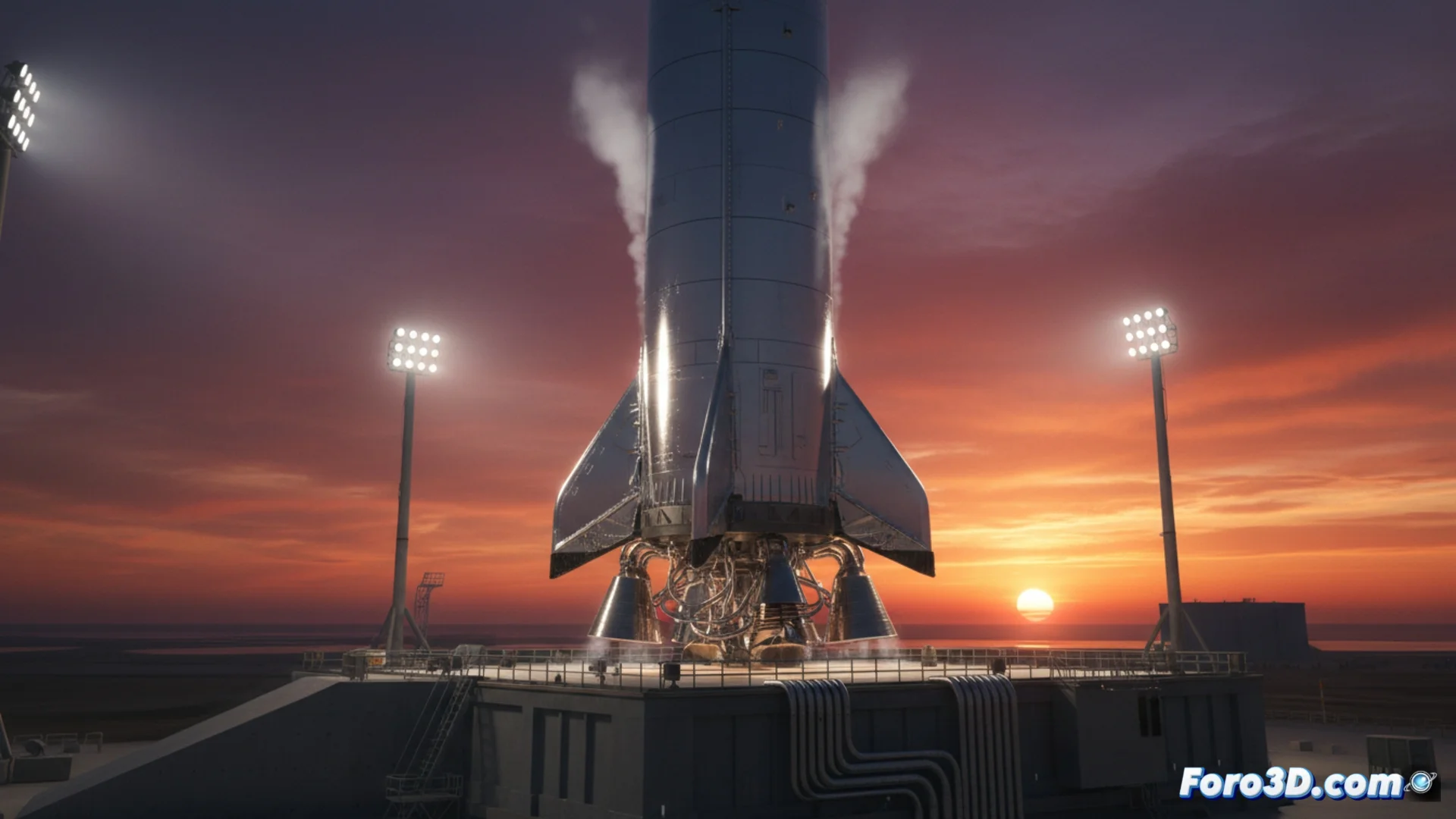
SpaceX Schedules Third Starship Launch for Mid-March
SpaceX CEO Elon Musk has announced via a post on the social network X that the first flight test of the new variant of the Starship vehicle is scheduled for mid-next month. This event, which was previously delayed, corresponds to the third generation of the rocket, identified as Starship V3. 🚀
A Larger Ship with Greater Power
Musk has confirmed that this renewed model surpasses previous designs in dimensions and thrust power. The corporation intends to test the essential capabilities of the system in this flight, which are fundamental for future plans including moon landings and expeditions to the planet Mars.
Main Features of Starship V3:- It features increased size and propulsion power compared to previous versions.
- It incorporates for the first time the systems necessary to dock with other ships while orbiting Earth.
- This technical advancement is essential for carrying out long-range missions beyond our planet.
To travel to the Moon or Mars, the ship will need to refuel in space, which requires multiple Starships to rendezvous and transfer fuel between them.
The Key: Docking in Space for Refueling
The ability to dock in orbit represents a technical milestone. It is a mandatory requirement for SpaceX to organize extended journeys. To reach distant destinations, the spacecraft must refuel in the vacuum of space, a procedure that demands two or more Starship units to approach and perform a propellant transfer. This achievement brings the company closer to its stated goal of establishing a permanent human presence on other worlds.
Design Evolution to Meet Objectives:- Each new iteration of Starship integrates knowledge gained from previous flight tests.
- The V3 not only increases scale and thrust but also adds mechanisms for orbital rendezvous.
- This cyclical progress method defines SpaceX's engineering philosophy, which prioritizes testing, learning, and improving rapidly.
A Critical Step Toward the Future
The successful outcome of this third flight test is a crucial step on the path to operational missions in collaboration with NASA and, ultimately, crewed trips to Mars. The community hopes that on this occasion the flight plan includes reduced unforeseen experimentation with the launch facilities. 👨🚀