SpaceX Launches Twilight Mission with Key Experiment for the Future of the Space Industry
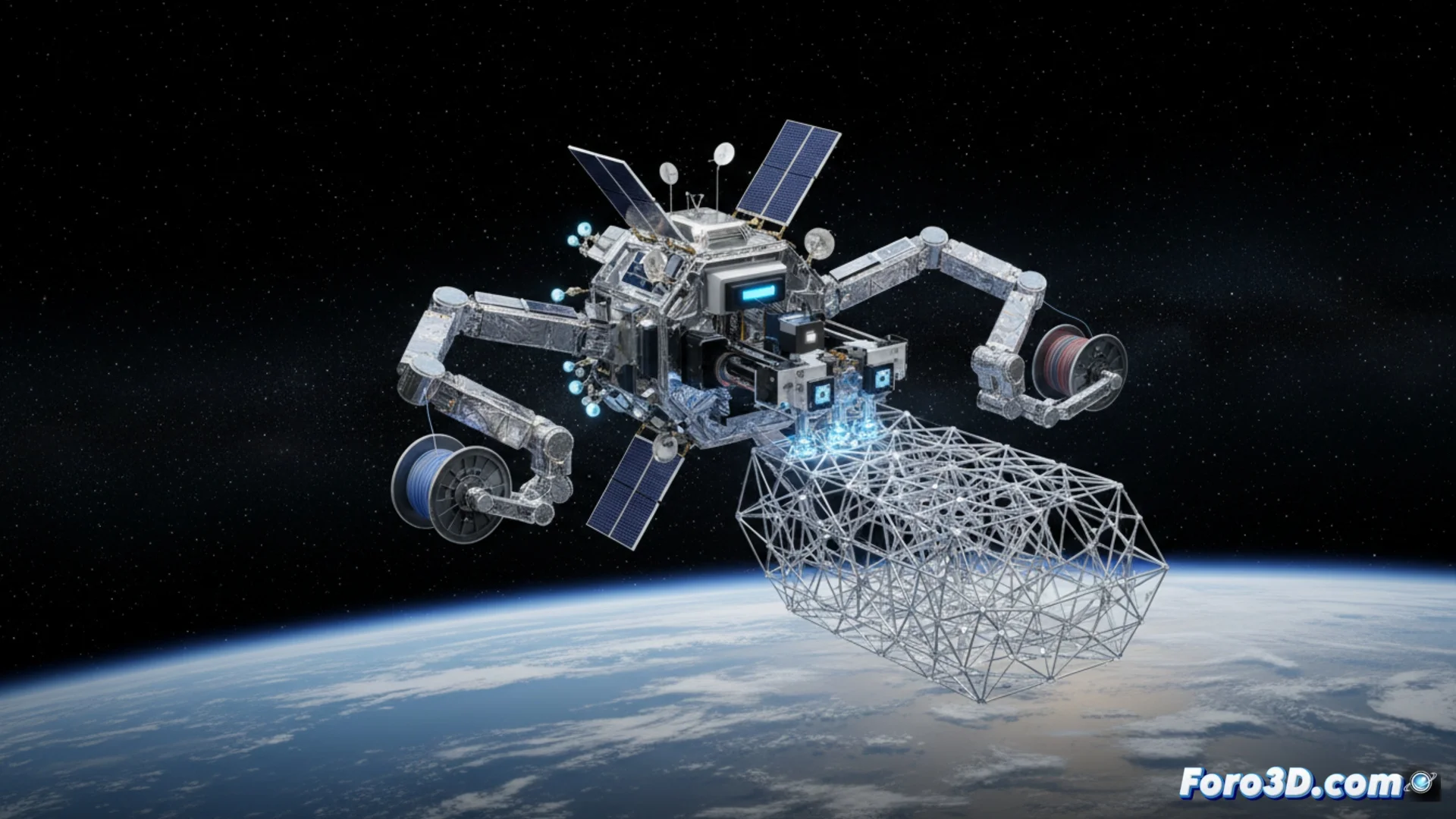
The company SpaceX has completed the launch of the Twilight mission, carrying a pioneering experiment that could change how we build in space. On board is the ARAQYS‑D1 satellite, developed by Dcubed, aimed at manufacturing a medium-sized structure directly in orbit. This step seeks to validate additive manufacturing in a microgravity environment, a concept that promises to free missions from the strict limitations of rockets. 🚀
The Core of the Experiment: ARAQYS‑D1 and Its Orbital 3D Printer
The heart of this mission is the ARAQYS‑D1 satellite, which integrates a complete system for 3D printing. Its main task is to produce a piece approximately 60 centimeters in size in the vacuum of space, a challenge of great technical magnitude. Achieving this milestone would demonstrate that it is feasible to produce components once in space, changing the current design paradigm. Engineers would no longer need to package huge and fragile structures; instead, they could send compact raw materials and manufacture what is needed in situ.
Key Advantages of Manufacturing in Orbit:- Overcoming Physical Limits: Restrictions on mass and volume imposed by the rocket fairing are reduced, allowing each shipment to be optimized.
- Enabling Larger Structures: Components of greater size and complexity than those that can be launched assembled today could be built.
- Repair Possibility: It opens the door to maintaining, repairing, or expanding satellites and other assets directly in space.
If successful, the technique would reduce the mass and volume restrictions imposed by rockets, as it would not be necessary to send all parts assembled from Earth.
Transforming Space Logistics and Infrastructure
Printing in space solves one of the biggest obstacles in space logistics: the limit of what a rocket can carry. By manufacturing structures after launch, volume barriers are overcome, and available mass can be used more efficiently. The Twilight mission, therefore, is not an isolated experiment, but a crucial step toward an operational capability that could radically transform how infrastructure beyond Earth is built and maintained.
Post-Launch Phases:- The satellite has been successfully deployed and is now entering a commissioning and systems checkout phase.
- After this initial phase, the active process of printing the test structure in microgravity will begin.
- Data collected during manufacturing will be analyzed to validate the technology's viability.
A Future Built Layer by Layer in the Void
The success of ARAQYS‑D1 would set a fundamental precedent for the space industry. Beyond demonstrating a technology, it would validate a new approach where space becomes not only a destination, but a manufacturing workshop. This advance would pave the way for building stations, telescopes, or habitats in ways previously impossible, marking the beginning of an era where we manufacture what we need, where we need it. 🌌