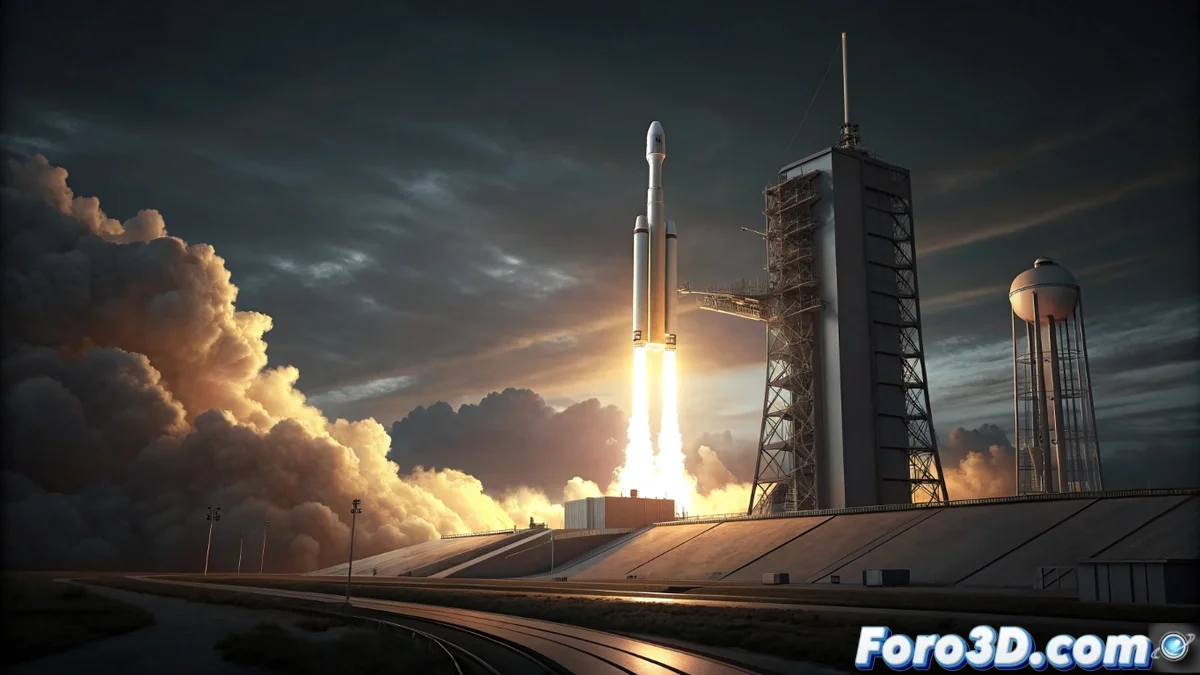
SpaceX Launches Group 6-92 and Reuses a Falcon 9 Booster for the 32nd Time
The company SpaceX successfully completed the Group 6-92 mission, sending another batch of satellites into space for its Starlink network. The launch took place from the iconic Launch Complex 39A at Kennedy Space Center, Florida, marking another step in the expansion of global connectivity. 🚀
The Starlink Constellation Grows to Connect the Planet
The central objective of this flight was to expand SpaceX's broadband internet infrastructure. Each satellite deployed joins a vast mesh designed to provide low-latency connectivity. This service is crucial in remote regions where terrestrial networks are scarce or nonexistent. After separating from the rocket, the satellites use their ion thrusters to ascend to their final operational orbit, a journey that can take weeks.
Key Mission Details:- Launch Vehicle: Falcon 9 rocket with first stage B1067.
- Payload: A new batch of next-generation Starlink satellites.
- Orbital Destination: Low Earth orbit to integrate into the existing constellation.
It seems the real mission of this booster isn't to reach space, but to prove it can find its way home more times than a college student on a weekend.
A Record-Breaking Booster Defines the Future of Launches
The first stage, identified as B1067, completed its thirty-second flight and landed autonomously on the droneship 'A Shortfall of Gravitas' in the Atlantic. This milestone surpasses its own previous record and validates SpaceX's business model, which is based on reducing costs by reusing the rocket's most valuable components. The company continues to collect data to analyze material wear and refine the process of preparing boosters between missions.
B1067 Stage Achievements:- Number of Flights: 32, setting a new industry standard.
- Landing Platform: Droneship "A Shortfall of Gravitas".
- Impact: Demonstrates the reliability and cost-effectiveness of large-scale reusability.
The Path to Sustainable Space Infrastructure
This mission consolidates the operational viability of routinely reusing rockets. Each successful recovery provides vital information to optimize maintenance cycles and extend booster lifespans. The advancement of Starlink and extreme reusability are two fundamental pillars that SpaceX continues to develop in parallel, transforming access to space and global communications. 🌍